What makes a baby carrier ergonomic for your back and your baby's posture
An ergonomic baby carrier supports your baby’s hips with the ‘M’ position and spine in a natural curve while distributing weight evenly across your shoulders and hips to reduce your back strain.
On this page (8 sections)
- What matters most
- What ergonomic means in baby carriers
- How ergonomic design supports baby’s hips and spine
- How ergonomic carriers reduce parent back strain
- Which ergonomic features fit parents with bad backs
- How to wear an ergonomic baby carrier properly
- What is an ergonomic baby carrier in summary
- Questions people still ask
Part of our guide on twin baby carrier options
The numbers
- Baby hip angle
- 40-60 degrees
- Weight distribution
- 60% hips, 40% shoulders
- Safe age range
- Newborn to toddler
- Back support needed
- Adjustable lumbar
- Baby leg support
- Thighs fully supported
What matters most
- Ergonomic means safe, natural positioning for baby plus comfort for the wearer.
- Baby’s hips must form an ‘M’ shape to avoid hip dysplasia risk.
- Wearing comfort comes from padded straps and wide waistbands distributing weight.
- Parents with back issues need carriers with lumbar support and adjustable fit.
- Proper wearing technique is crucial to maintain ergonomic benefits.
What ergonomic means in baby carriers
Ergonomic in a baby carrier means it positions the baby and the wearer in ways that do not cause strain or injury over time. For babies, it means supporting natural body postures. For parents, it means reducing pressure points and distributing baby’s weight evenly.
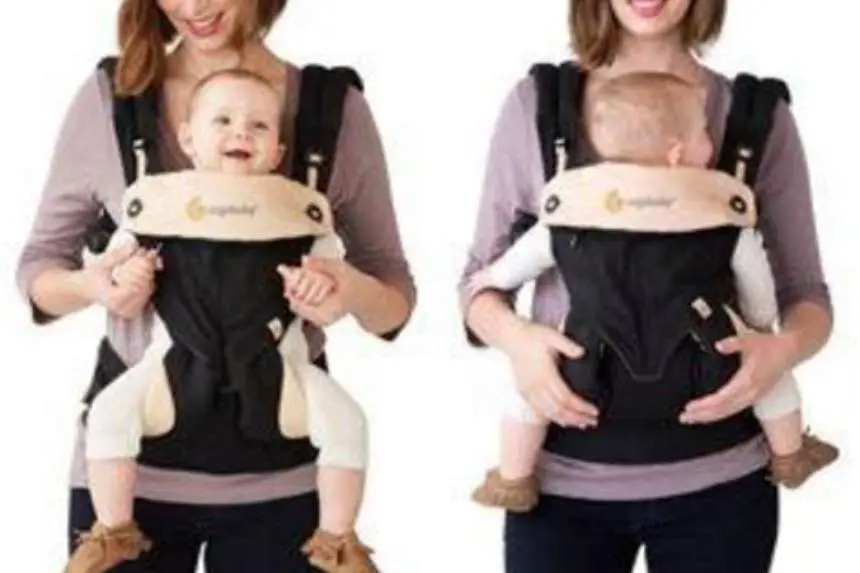
Specifically, ergonomic carriers keep babies’ hips spread and knees bent at roughly 40 to 60 degrees, forming a visible 'M' shape. This reduces risk of hip dysplasia. The spine should maintain its natural C-shape curve, especially important for newborns who cannot yet support their heads.
On the parent side, an ergonomic carrier spreads the baby's weight over the hips and shoulders, often in a 60/40 ratio. This prevents the wearer’s back and shoulders from becoming overstrained. Non-ergonomic carriers tend to put all the weight on the shoulders or cause the wearer to lean forward awkwardly.
The term ergonomic also implies that the carrier adapts as the baby grows. Some carriers feature adjustable seat widths or inserts to maintain the correct 'M' positioning through different stages of development, from newborn to toddler. This flexibility is crucial because an infant’s hip and spine needs evolve rapidly in the first year. People in this spot often ask about top carriers for summer heat as well.
Ergonomic design considers fabric breathability and padding placement to prevent pressure points on both baby and wearer. For example, mesh panels can improve airflow in warm climates, reducing sweating and discomfort, which indirectly supports better posture by avoiding shifting to compensate for irritation. These details ensure consistent ergonomic benefits in several conditions.
How ergonomic design supports baby’s hips and spine
Supporting the baby’s hips means their thighs are fully supported from knee to knee. The ‘M’ shape - knees higher than the bottom - keeps hips safe from strain and reduces developmental hip dysplasia risks. Holding baby legs dangling or straight out increases stress dangerously.
The baby’s spine in an ergonomic carrier should maintain a natural C curve, not forced straight. Carriers with structured seats that prevent the baby’s spine from bending naturally can cause discomfort or developmental issues. We cover what to know before using a baby carrier in its own article.
Material flexibility also matters: a carrier that molds to the baby’s body allows better alignment than stiff designs. Newborns especially need a snug fit that supports their head and spine since they can’t hold themselves up yet.
In addition to supporting hips and spine, ergonomic carriers ensure that the baby’s weight is centered close to the parent’s body. This proximity stabilizes the baby’s position and discourages slumping or leaning, which can alter spinal alignment. For instance, a carrier that allows the baby to lean forward while sitting leads to a flattened spine curve, increasing stress on vertebrae.
To illustrate, consider a baby weighing 12 pounds. An ergonomic carrier that supports the baby fully from knee to knee evenly distributes this weight across the hips and thighs, reducing pressure points. Conversely, if the baby’s legs dangle unsupported, the hips bear disproportionate force, risking discomfort and developmental strain. For the detail, see our notes on top ergonomic baby carriers.
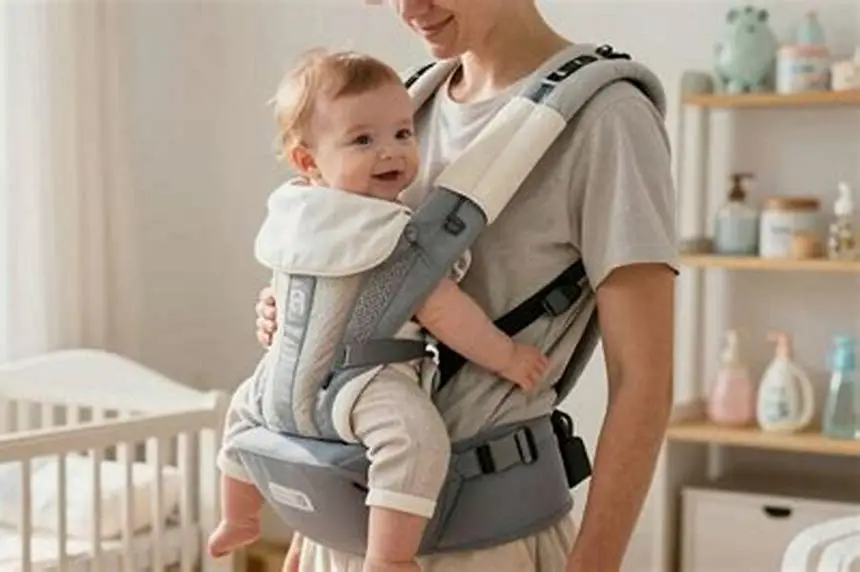
A good check for ergonomic support is to observe the baby from the side: the knees should be higher than the bottom, the spine curved naturally without stiff straightening. If the carrier forces the baby to straighten or extends legs downward, it signals poor ergonomic fit and the need for adjustment or a different carrier.
How ergonomic carriers reduce parent back strain
Parent comfort comes from how a carrier moves the baby's mass away from the shoulders and onto the stronger bones of the hips. An effective carrier routes most of the load into a wide, padded waistband that rests on the pelvic girdle; the shoulder straps still hold the baby close, but they do less of the heavy lifting. With a well-fitted waistband the load on the spine and upper trapezius muscles is significantly lowered, letting you carry longer with less fatigue.
Quantifying that change depends on the fit and design. A waistband that sits squarely on the iliac crests and is at least 3 inches wide transfers a much larger share of weight than a narrow strap; many parents will feel roughly a 60/40 hips-to-shoulders split in that case. If the band rides up on soft tissue or is loose, the split shifts toward the shoulders and any advantage disappears. Test fit before committing: tighten the waistband until it bears firm pressure on the hips, then lift - your shoulders should relax. There is more on how long can you carry a baby in a carrier in a separate guide.
Carriers without a supportive waistband force the shoulder straps to do almost all the work. That concentrates load on the neck, upper back and trapezius, which can produce the forward-head posture and rounded shoulders commonly reported with non-ergonomic designs. Adjustable, well-padded shoulder straps are still important; they prevent digging but cannot replace a correctly positioned waistband.
If you have an existing back condition, look for added lumbar support in the carrier or choose one whose waistband has a stiffened panel you can position against your lower back. Torso-length adjustability matters for people with shorter or longer torsos because it changes where the center of mass sits relative to your spine; moving that point just a few inches alters the lever arm and perceived strain.
You can measure how well a carrier is sharing weight using simple checks at home. First, put your baby in the carrier and tighten the waistband until it bears on your hip bones; then stand sideways to a mirror. If your shoulders are elevated, or you must lean forward to counterbalance the load, the carrier is not transferring load correctly. Second, try the bathroom-scale method: weigh yourself, then weigh yourself while holding the baby in the carrier; the difference is the load the carrier imposes on your body. Repeat with and without the waistband tightened to compare.
Small adjustments often make the biggest difference. Moving the waist higher onto the iliac crest, tightening the shoulder straps until the baby is snug against your chest, and using a lumbar pad when needed will all reduce muscle activity in the neck and upper back. When those cues show improvement (shoulders lower, standing upright easier) you have objective feedback that the carrier is alleviating back strain.
Which ergonomic features fit parents with bad backs
If you have back problems, look for carriers with specific lumbar support: padded panels or gussets that brace the lower back. This feature helps maintain natural spinal curve and prevents slouching during babywearing.
Wide, padded waistbands that sit on your hips are essential; they take most of the baby's weight off your spine. Thin waistbands or none at all will not protect your back.
Adjustability is key. Carriers that allow for lengthening or shortening of straps and waistbands let you customize fit to your torso size and shape, preventing uneven weight distribution that worsens pain.
Avoid carriers that require leaning forward or that cause your shoulders to hunch. Structured designs with ergonomic support points help maintain upright posture.
Parents with chronic back issues benefit most from carriers that provide customizable lumbar support. Some models feature removable lumbar pads that can be positioned where discomfort is greatest, offering targeted relief. This adaptability can be crucial for those recovering from injury or managing conditions like herniated discs.
Another useful feature is strap width. Wider shoulder straps reduce pressure points by spreading force over a larger area, avoiding localized pain. For parents with spinal stenosis or arthritis, this can prevent flare-ups during prolonged babywearing.
A worked example: a parent with a 34-inch waist and a 22-inch torso length will require a carrier with adjustable waistbands ranging at least from 28 to 40 inches and shoulder straps adjustable around 18 to 26 inches. This ensures ergonomic fit that supports healthy posture without overstretching or compressing the fabric or padding.
How to wear an ergonomic baby carrier properly
Proper wearing is the final step that ensures ergonomic benefits. Start by placing your baby high and close to your body, with their bottom seated deeply and knees above hips in the 'M' shape.
Tighten the waist belt first, so most of the baby's weight rests on your hips. Then adjust shoulder straps to hold baby close without pulling your shoulders forward.
Check that your baby’s spine is naturally curved and supported from head to bottom. Newborns may need additional head support inserts to keep their necks safe.
Confirm your posture remains upright and relaxed. Avoid leaning or leaning forward, which signals poor weight distribution.
Repeated checks during wear help avoid slipping that can cause baby or parent strain.
When putting on the carrier, avoid twisting your torso to secure straps, as this can strain your back before you even begin babywearing. Instead, sit or stand straight and reach straps symmetrically. This method reduces early posture problems and preserves ergonomic benefits throughout use.
A useful check after securing your baby is to gently bounce or walk a few steps. If you feel the baby shifting or your posture adjusting to compensate, re-tighten straps or adjust the seat to achieve a more stable and ergonomic hold.
If your baby is fussy or seems uncomfortable, reevaluate the fit and positioning. Discomfort in babywearing often signals poor ergonomic alignment, such as legs not properly seated or head unsupported. Addressing these promptly ensures continued safety and comfort for both parent and child.
- Place baby on your front or back in the carrier seat.
- Secure and tighten the waist belt snugly around your hips.
- Adjust shoulder straps so baby is close, and straps are comfortable.
- Ensure baby’s legs form the ‘M’ shape with knees above hips.
- Support baby's head if newborn with an insert.
- Check your own posture: stand upright without leaning.
What is an ergonomic baby carrier in summary
What is an ergonomic baby carrier? It is one engineered to keep your baby’s hips in a safe, spread-squat 'M' position and spine naturally curved while distributing their weight evenly on your hips and shoulders. This protects both baby’s development and your back health.
The key elements include a wide, padded waistband, adjustable padded shoulder straps, lumbar support for parent comfort, and a design that cradles baby from head to bottom with flexible fabric.
You must use it correctly for these benefits: tighten the waistband first, then straps, and check baby’s positioning regularly.
If you or your baby have specific needs, such as back problems or newborn head support, choose carriers with those features built in. That’s how you reclaim comfort and safety with babywearing.
Questions people still ask
Can any carrier be ergonomic if worn correctly?
No, carriers must have specific design features like a wide seat for the ‘M’ position and proper weight distribution. Wearing a non-ergonomic carrier correctly can reduce harm but won't provide full ergonomic benefits.
At what age can I stop using an ergonomic carrier for hip safety?
Typically, baby carriers support ergonomic hip positioning from newborn until toddlerhood, usually up to about 2 years or when baby can sit unsupported for long periods.
Do ergonomic carriers help with baby reflux or colic?
While ergonomic carriers keep babies upright and close, which can soothe some infants with reflux, they are not a treatment. Proper positioning must be combined with medical advice.
Are soft structured carriers more ergonomic than wraps?
Soft structured carriers often provide better lumbar support and adjustable fit, which can be more ergonomic for parents with back issues, while wraps offer excellent baby positioning but rely heavily on wearer skill.
How can I tell if my baby is seated ergonomically after putting on the carrier?
Look for the ‘M’ shape: knees higher than the bottom, thighs supported, and a naturally curved spine. Baby’s body should feel snug but not compressed.