Which organic cotton fabric makes a soft, safe baby blanket
Most parents pick the thickest organic cotton they can find, thinking thicker means softer. For a baby blanket 120-170 GSM in muslin or jersey stays breathable, softens with washing, and layers safely without overheating.
On this page (8 sections)
- What matters most
- Which organic cotton fabric for baby blanket stays soft and safe longest
- How weight and weave change softness and warmth
- Why organic cotton feels kinder on baby skin
- What thickness suits newborns versus toddlers
- How to check softness and safety before you buy or sew
- How to wash and keep the blanket soft without extra bulk
- Questions people still ask
Part of our guide on best sleep sack for newborns
The numbers
- Best all-round weight
- 120-170 GSM
- Most breathable weave
- muslin, 2-layer
- Warmest organic knit
- interlock, 180-220 GSM
- Newborn blanket size
- 30 x 40 inches
- Certification to trust
- GOTS certified
- Wash temperature
- warm, 30-40°C
What matters most
- Choose 120-170 GSM muslin or jersey for year-round softness and breathability
- Check weave first: open weaves cool, tight knits warm
- GOTS certification matters more than the word organic on the label
- Buy one weight for newborns, a slightly heavier one for toddlers who kick covers off
Which organic cotton fabric for baby blanket stays soft and safe longest
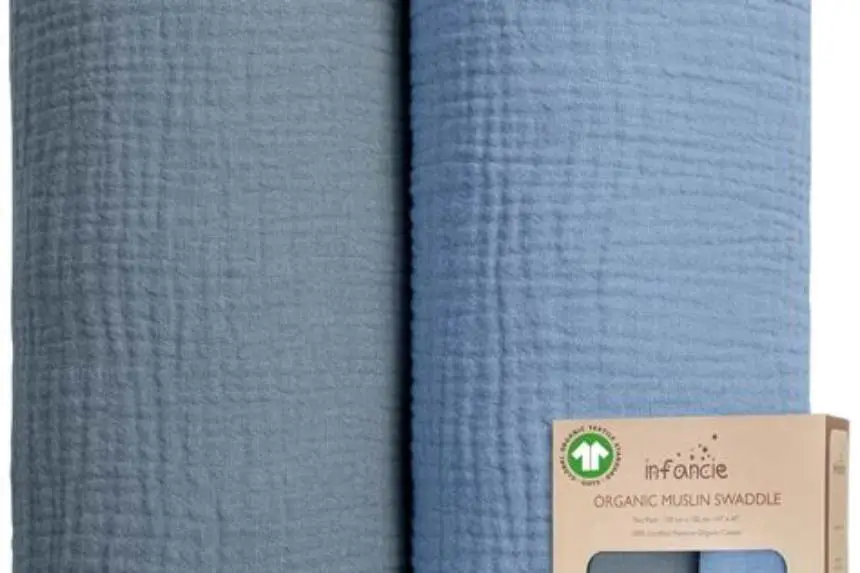
You asked about organic cotton fabric for baby blanket comfort, so start with the weaves that actually stay soft. Muslin in muslin and jersey knit in jersey lead for most families. Both breathe well, wash well, and get softer with use. That matters more than initial fluff.
Muslin is a loose plain weave, usually two to four thin layers stitched together. Air moves through it, so your baby is less likely to overheat during naps. Jersey is the t-shirt knit you know, with a smooth stretch. It drapes around a baby without stiffness and holds up to frequent washing.
Other organic cottons have trade-offs. Interlock is double-knit jersey, thicker and warmer, good for cool rooms. Flannel is brushed for fuzzy warmth but pills faster. French terry has loops on one side, cozy yet bulkier. Skip heavy canvas or twill. They feel sturdy but trap heat and stay stiff.
Getting the weave wrong costs you sleep and money. A bulky blanket that sleeps hot gets pushed aside, then you buy again. A thin single-layer gauze frays at the edges after a few washes. Pick the weave for your climate and washing rhythm, not just the hand feel in the store. For the detail, see our notes on bamboo baby fabric by the yard.
| Fabric | Feel after washing | Warmth | Durability for daily use |
|---|---|---|---|
| Muslin 2-layer, 120-150 GSM | soft, airy, slightly textured | light, breathable | strong if edges are bound |
| Jersey, 150-170 GSM | smooth, stretchy, t-shirt soft | light to medium | resists pilling, edges curl if unfinished |
| Interlock, 180-220 GSM | smooth both sides, cushy | medium to warm | holds shape, heavier to launder |
| Flannel, 170-200 GSM | brushed, fuzzy | warm | pills with friction |
- muslin breathes and layers well
- jersey stays smooth and stretchy
- muslin can snag if single layer
- jersey needs bound edges
Organic Muslin Baby Blanket
Does not publish GSM or layer count, so cannot confirm if it meets the 120-170 GSM and 2-layer muslin requirement.
How weight and weave change softness and warmth
Weight tells you how much fiber is in the blanket, and weave tells you how it traps air. Together they set softness and warmth. Weight in GSM matters more than thread count for cotton blankets. Think grams per square meter, not threads per inch.
For year-round use, 120-170 GSM hits the sweet spot. Below about 110 GSM a single layer feels airy but thin and wears faster. Above about 200 GSM the blanket holds heat and takes longer to dry. Your climate shifts the ideal within that band. Hot summers or warm nurseries favor 120-150 GSM. Cooler homes favor 160-190 GSM.
Weave changes how that weight feels. Open weaves like muslin let air pass, so a 140 GSM muslin feels cooler than a 140 GSM jersey. Tight knits like interlock trap still air, so they feel warmer at the same weight. Brushed weaves like flannel feel instantly soft because fibers stand up, but that nap also holds heat. The other half of this decision is what is a blanket sleeper.
Do a quick light test at home. Hold the fabric up to a window. You should see soft light through muslin and jersey at 120-170 GSM, not sharp glare and not total block. If you cannot see light, it will sleep warm. If you see big gaps, it will not hold shape long.
- GSM: weight of one square meter, higher means heavier and usually warmer
- Muslin weave: plain, open, breathable, gets softer with washes
- Jersey knit: smooth, slight stretch, drapes and recovers
- Interlock knit: double jersey, denser, warmer, less stretch
Why organic cotton feels kinder on baby skin
Baby skin is thinner and loses moisture faster than adult skin. Rough finishes, stiff coatings, and leftover chemicals make it itch or rash. Organic cotton helps because of how it is grown and finished, not just the plant itself. The benefit depends on certification and dyes.
Certified organic cotton is grown without synthetic pesticides and defoliants that can stay in fiber and in processing water. That alone does not guarantee softness. What matters is low-impact processing. GOTS certified with GOTS means the fiber and the finishing meet limits on harsh bleaches, formaldehyde, and heavy-metal dyes. You want that label, not just a hangtag that says organic. There is more on bamboo clothing suitability babies in a separate guide.
Dye and finish decide skin comfort as much as fiber. Undyed or low-impact dyed organic cotton usually feels softer after one wash because it is not coated to look crisp on the shelf. If color is deep and the fabric smells sharp or chemical, it was likely heavily treated. Babies mouth blankets, so that finish ends up near their face.
You cannot test chemistry by touch alone. Check the label for GOTS and for Oeko-Tex Standard 100 if GOTS is not listed. Both test for residues. Then wash once in warm water with a fragrance-free detergent before first use. That one wash removes most surface finish and tells you the true hand feel.
What thickness suits newborns versus toddlers
Newborns and toddlers need different blankets because they move and heat differently. Newborns cannot push heavy covers away and they nap often. Toddlers kick, bunch, and drag blankets around. Pick thickness for safety and for how the blanket will actually be used.
For newborns, choose light layers near 120-150 GSM in muslin or jersey. Use one layer for warm rooms, add a second light layer rather than one heavy blanket. That gives you control without bulk near the face. Keep any blanket out of the crib for sleep under 12 months and use it for tummy time, stroller walks, or while held.
For toddlers, go a touch heavier, 150-190 GSM in jersey or interlock, so the blanket stays put and still breathes. Toddlers lose covers and wake cold, so a little weight helps it drape. Avoid anything over about 220 GSM for sleep. It holds too much heat and is hard for small hands to adjust.
Buying wrong here wastes money fast. A too-warm newborn blanket gets used twice. A too-light toddler blanket gets kicked off and you buy a heavier one anyway. Start with one light muslin and one mid-weight jersey. You will reach for those two more than a closet full of extras.
- light muslin layers safely and dries fast
- mid jersey drapes and stays put for toddlers
- light single layer tears faster
- heavy fleece-like knits sleep hot
How to check softness and safety before you buy or sew
You can learn a lot in sixty seconds with your hands and eyes. Stores make blankets feel slick with starch, so judge after you imagine one wash. Softness that comes from finish fades. Softness that comes from yarn and weave stays.
Run these quick checks before you keep the receipt or cut yardage. They work for ready-made blankets and for fabric on the bolt. Bring a small water bottle if you are shopping in person. One drop tells you how the cotton will handle spit-up and washing.
If you are sewing, buy a quarter yard extra and wash it first. Measure before and after. Good organic cotton shrinks 3-5% after the first warm wash. If it shrinks more than that, your finished blanket will end up small and tight. That test saves a weekend of sewing.
- Rub test: rub the fabric briskly for 10 seconds, then feel. Lasting soft means yarn soft, not coating.
- Stretch test: pull gently on the bias. Jersey should spring back, muslin should not distort.
- Light test: hold to light. Even weave with no thick slubs means even wear.
- Water test: place one drop. It should soak in within 2-3 seconds, not bead.
- Smell test: no sharp chemical smell. Mild cotton smell is fine.
- Label test: look for GOTS on the tag or bolt end, plus care temps in °C.
How to wash and keep the blanket soft without extra bulk
Organic cotton softens with washing, but heat and residue make it stiff. Wash warm, not hot, and rinse well. Warm at 30-40°C cleans without baking fibers. Hot water above about 60°C can shrink and harden the hand, especially on jersey and interlock.
Use a small amount of fragrance-free liquid detergent. Powder can leave residue that feels scratchy. Skip fabric softener. It coats fibers with wax that blocks absorbency and can irritate skin. If the blanket feels rough after drying, the cause is usually detergent buildup, not the cotton itself.
Dry on low or line dry, then tumble for five minutes to fluff. High heat wears edges and sets wrinkles in muslin. If you like extra softness, add wool dryer balls. They lift the weave so it stays lofty without adding weight. That keeps breathability, which is the whole point.
You do not need a stack of blankets to stay ready. Two that wash and dry fast beat five heavy ones that stay damp. With this care, a good organic cotton blanket stays soft for a year or more of weekly washes, which is the real test.
- Detergent: fragrance-free liquid, half the cap for small loads
- Softener: skip it, use wool dryer balls for loft
- Water temp: 30-40°C for color and softness, warm rinse
- Drying: low heat or line dry, fluff 5 minutes
For most families a 120-170 GSM GOTS muslin or jersey is the softest safe bet, with interlock only for cool rooms.
Questions people still ask
Is muslin or jersey softer for a baby blanket?
Both soften with washing, but differently. Muslin feels airy and lightly textured, jersey feels smooth like a t-shirt. For sensitive cheeks, jersey often wins at first touch. After five washes, parents usually call it a tie.
What GSM should I pick if our nursery runs warm?
Stay at 120-150 GSM in two-layer muslin or light jersey. You can layer two light blankets for cool nights instead of one heavy one. That keeps airflow and lets you adjust without overheating.
Does GOTS matter if the label already says organic cotton?
Yes. Organic can refer only to farming. GOTS also limits bleaches, finishes, and dyes and requires testing. It is the simplest way to check skin safety without guessing.
How many baby blankets do we actually need?
Two to three is plenty for most homes. One light muslin for warm days and stroller use, one mid-weight jersey for cooler nights, and one spare for the wash. More than that often sits unused.
Will organic cotton shrink a lot?
Expect 3-5% after the first warm wash, a bit more if you wash hot or dry hot. Wash fabric before sewing and buy a little extra length to allow for that.