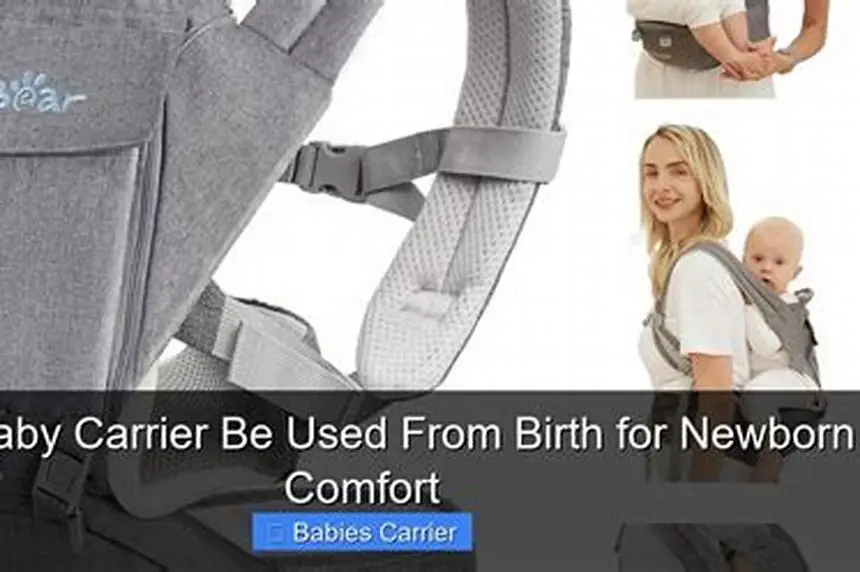
Momcozy vs Ergobaby Embrace: where each one stops working
Buy the Ergobaby Embrace if you want a structured carrier that holds up through the newborn months and you are of average height. Buy the Momcozy if you are petite, on a tight budget, and only need the first two months covered. Neither is a long-haul carrier past the low-teens weight range.
On this page (8 sections)
- What matters most
- Momcozy vs Ergobaby Embrace for newborn: the weight where each stops working
- How each carrier's structure changes as your baby grows
- Which parent body each carrier fits badly
- Newborn carry positions and head support under the minimum weight
- Washing and drying after spit-up and blowouts
- Price against realistic months of use, and who should skip both
- Questions people still ask
Part of our guide on boba wrap sizing guide
The numbers
- Stretchy support fades
- Low-teens lbs for many wearers
- Newborn minimum
- Check each maker's label
- Embrace stated range
- Per Ergobaby's current product page
- Momcozy stated range
- Ranges vary by model — check the label
- Wash behavior
- Cold wash, air dry per care labels
- Useful carry window
- Newborn to around 4 months for most families
What matters most
- Stretchy carriers lose their shape under load well before their printed maximum; many wearers report sagging once the baby reaches the low-teens in pounds.
- Check the label sewn inside the carrier, not the listing page, for the maker's own weight range: it can differ between models.
- Petite parents often fit the Momcozy wrap better; taller parents usually prefer the Embrace's structured straps.
- A carrier rated to a higher maximum does not mean your back agrees with the number.
- If you plan to carry past four months, budget for a woven wrap or a structured carrier instead.
Momcozy vs Ergobaby Embrace for newborn: the weight where each stops working
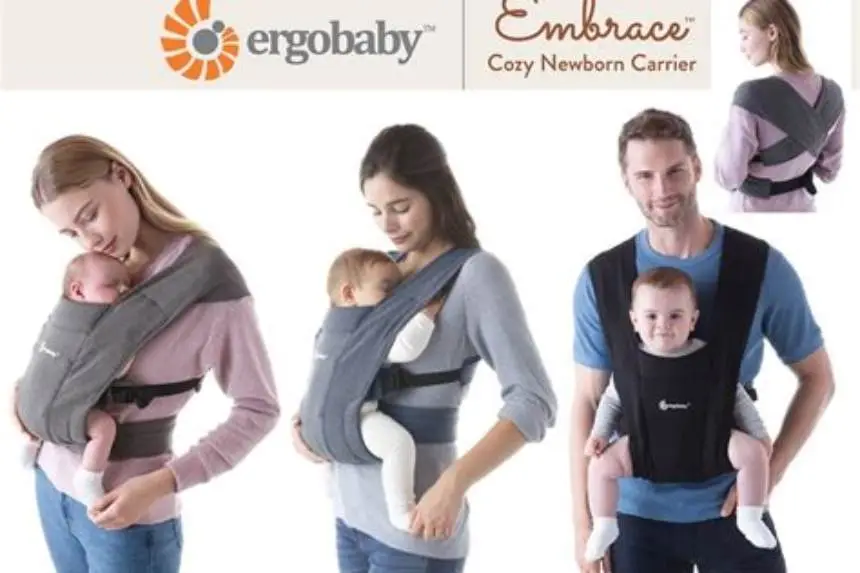
Printed maximums matter less than the weight where the fabric stops holding a shape. Stretchy knit carriers, which both of these are, gradually sag under load. In my own wearing and in countless reports from other parents, that point lands somewhere in the low teens in pounds: but it depends on your baby, your tension, and how often you wash the fabric. Treat it as a pattern, not a promise.
Both makers publish a weight range, and both ranges can change between fabric updates. Ergobaby's product page lists the Embrace's stated range as of the date you read it, and Momcozy's range varies by model: the Baby Wrap Carrier and its other newborn styles do not all share one number. Check the label sewn inside the carrier rather than the marketplace listing, since makers update trim without always updating the page.
Here is the problem with any 25 lb figure. A high maximum assumes a baby who can sit upright and a parent who re-tightens straps every carry. A newborn cannot sit upright, and you will not re-tighten every 20 minutes. So the practical window is much shorter than the label suggests.
For most families that means three to five months of daily use. After that, the fabric stretches under load, the seat drops, and your shoulders take over from your hips. We explain that mechanism once, here, and apply it to every other section below. The other half of this decision is can baby carrier be used from birth.
| Carrier | Where the stated range lives | Practical support limit | Typical months of daily use |
|---|---|---|---|
| Ergobaby Embrace | Ergobaby's product page and the sewn-in label — read both, dated to when you check | Low-teens lbs for many wearers | 3 to 5 months |
| Momcozy wrap style | The sewn-in label for your specific model — ranges vary by model | Low-teens lbs for many wearers | 3 to 4 months |
- both are designed for inward-facing newborn carries without a separate insert
- both pack small for a diaper bag
- both machine washable
- fabric sag is the shared weakness as the baby grows
- neither has a firm waist belt
How each carrier's structure changes as your baby grows
Below the newborn weight range, both carriers behave the same way. The panel cups the baby, the fabric spreads the load across your back, and the whole thing feels weightless. That is the easy phase.
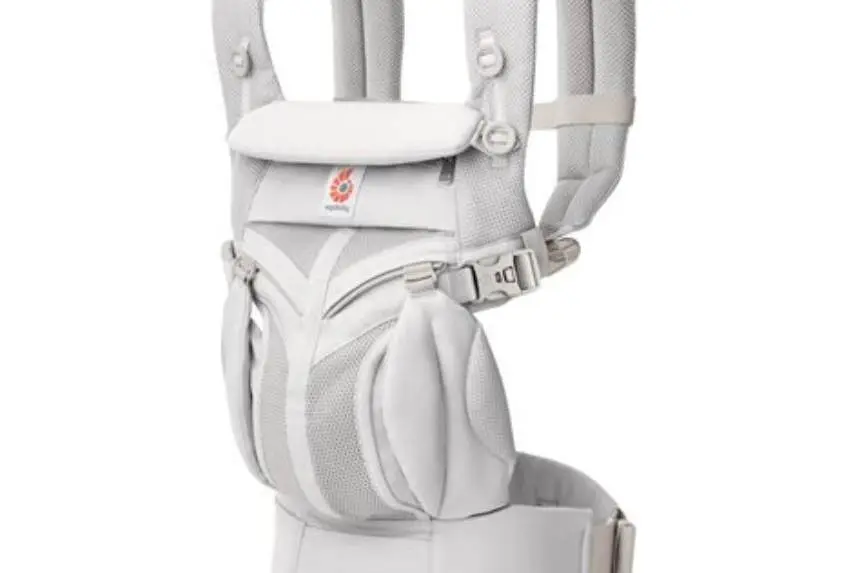
Past that phase the difference shows. The Embrace has a padded, structured waistband that starts carrying some of the load on your hips. Momcozy's wrap style has a softer, flatter band, so more weight stays on your shoulders as the fabric relaxes.
Seat support is the real issue. A stretchy panel cannot hold a deeper seat once the load grows, so the baby's bottom sinks toward your navel and the knees drop below the hips. Knees below hips loads the spine, and you feel it in your upper back after 20 minutes. Before you commit to anything, it is worth looking at best carrier for newborns.
Test this yourself before it becomes a problem. Put your baby in the carrier and slide two fingers between your baby's knee and their belly button. If the knee sits level with or above that line, the seat is still working. If the knee hangs lower, the carrier is done for that day.
Shoulder strain follows the same curve. Parents report the straps digging in around the same weight the seat drops, which is not a coincidence: both are the fabric giving up.
- Embrace waistband takes some load on hips
- Momcozy softer band packs flatter
- both lose seat support as the baby grows past the stretchy phase
- Momcozy loads shoulders sooner
- neither fits a toddler well
Which parent body each carrier fits badly
Fit is where the two carriers split most. Momcozy's wrap suits petite frames because the fabric is long and you wrap it to your own tension. In my experience wearing wraps at 5 ft, you can get a snug fit without excess fabric pooling: though that depends on your torso and the specific model's fabric length. It helps to understand hip seat carrier comfort for toddlers before going further.
The Embrace uses fixed straps and buckles. On a short torso, parents under about 5 ft 4 in often report the buckle rides high on the back and digs in below the shoulder blades. Try it on before you buy.
Larger busts are trickier in both. The wrap crosses over the chest and can feel tight unless you spread the fabric wide. The Embrace has a wider chest strap with more room, but its sternum strap can ride high on a full bust.
Plus-size parents often find the wrap harder because the fabric length runs out before you can tie it comfortably. Structured carriers usually adjust out further. Waist ranges differ between the wrap style and the buckle style, so check the maker's size chart: each maker publishes one on its own site. Do this once, when you buy, because the maker's chart is the one that applies to the product you receive.
| Parent body | Momcozy wrap style | Ergobaby Embrace |
|---|---|---|
| Petite frame | Good fit, wrap to own tension | Buckle often rides high on back — try first |
| Tall frame | Fabric may not reach a tie | Straps extend further |
| Larger bust | Fabric can pull tight, spread it wide | Wider chest strap, sternum rides high |
| Plus size | Fabric length may run out | Usually adjusts out furthest — confirm on the size chart |
Newborn carry positions and head support under the minimum weight
Both carriers use a single newborn-appropriate position: an inward-facing hug hold, high on the chest, with the baby's legs tucked in a natural frog-like position rather than spread. Do not attempt a forward-facing or hip carry in either one at this age: neither supports it, and a newborn's hips are not ready.
Head support is where they differ. The Embrace has a structured panel that flips up and stays up, held by its own stiffness. That is easier to manage one-handed while you are also holding a baby. Momcozy's wrap relies on the fabric itself: you pull the top edge up over the back of the head and it stays because the fabric grips. It works, but you need to recheck it after you sit down.
Airway safety is the one rule that overrides everything else. Chin off the chest, face visible, two fingers of space under the chin, every single time.
Check the maker's stated minimum before you buy. Both makers publish minimum weights, but they differ by model and can change, so read the label inside the carrier or the maker's own page as of your purchase date. Below that minimum, a stretchy wrap you tie yourself often fits a smaller newborn better because you control the tightness.
Weigh your baby at the pediatrician's office rather than guessing. The first visit is usually within a week, and that number decides whether the carrier is safe for your newborn yet.
- Embrace head panel stays up on its own
- single safe position in both: inward hug hold with tucked legs
- Momcozy head support needs rechecking
- both have a stated minimum weight to respect
Washing and drying after spit-up and blowouts
You will wash this carrier within the first two weeks. Probably sooner. Breastfed newborn spit-up is constant, and a blowout that reaches the carrier happens more often than anyone warns you about.
Both fabrics are machine washable, and both makers' care labels call for cold, gentle cycles and air drying. Follow those labels: they sit inside the carrier. As a general rule of thumb, heat and stretchy knits do not mix: a hot dryer cycle accelerates sagging in any stretch fabric, and with these carriers, sagging is the thing that ends their useful life early.
The Embrace has buckles and a small amount of padding. Fasten every buckle before washing so the straps do not tangle, and wash it inside a mesh bag.
Momcozy's wrap is a long length of fabric, sometimes with a small structured panel. It tangles easily, so tie it loosely in a knot or use a mesh bag, and check the panel's care tag separately if it has one.
Drying time is the practical difference. A wrap is one long piece of fabric and dries in a few hours on a line. The Embrace's padding holds water longer, so plan on overnight.
Buy two if you can afford it. One in the wash, one on your body. That is more useful than any feature on the box.
| Care step | Momcozy wrap style | Ergobaby Embrace |
|---|---|---|
| Wash cycle | Cold, gentle, mesh bag | Cold, gentle, buckles fastened |
| Dry method | Line dry, few hours | Air dry, often overnight |
| Tangle risk | High, tie it first | Low, buckle it first |
Price against realistic months of use, and who should skip both
Do the arithmetic with months, not list price. Momcozy's wrap typically sells well below the Embrace's price bracket (check both makers' current prices when you buy, since they move often) but the gap narrows once you account for how long each stays useful.
The cost that matters is buying twice. A cheap carrier you replace at three months costs more than one that lasts six, especially once you add a structured carrier on top. Plenty of parents walk that exact path.
Buy the Momcozy if your budget is genuinely tight, you have a petite frame, and you only need the first two months covered. It does that job fine.
Buy the Embrace if you want a structured waistband, plan to carry until around four months, and you are of average height. It fits a wider range of parents without wrapping skill.
There is a counter-position worth stating: if your baby was born large or is already trending well above the newborn range at the two-month visit, skip the stretchy phase entirely. Neither carrier rewards you for pushing it past its fabric limit: go straight to a woven wrap or a structured carrier with a firm waist belt.
Skip Momcozy specifically if you are plus-size or tall. The fabric length is the limit, and no adjustment fixes it. Skip the Embrace if you are petite and the buckle sits high on your back: try it in a store, or buy from a seller with a return window you trust.
- Momcozy cheaper entry point
- Embrace resells well
- neither covers past around five months
- buying both is the costly route
- poor fit wastes the whole purchase
Buy the Ergobaby Embrace for a structured fit through four months, or the Momcozy wrap if your budget is tight and your frame is small. Budget for a second carrier either way: the expensive path is buying twice.
Questions people still ask
Can I use the Ergobaby Embrace or Momcozy from day one?
Only if your baby meets the maker's stated minimum. Both makers publish minimum weights, but they differ by model and can change between fabric updates, so check the label sewn inside the carrier or the maker's own page as of your purchase date. Below that minimum, a wrap you tie yourself often fits a smaller newborn better.
Why do stretchy carriers feel fine early on and painful later?
Stretchy fabric holds a shaped seat well when the load is light. Somewhere in the low-teens weight range (reported by many wearers, not printed on any label) the panel stretches under the weight, the seat drops, and the load moves from your hips to your shoulders. The carrier did not fail; it reached its practical limit.
Which one fits a plus-size parent better?
The Embrace generally adjusts out further on both the waist and shoulder straps, and each maker publishes a size chart on its own site. Waist ranges differ between the wrap style and the buckle style, so read the maker's chart rather than the marketplace listing.
Do I need a second carrier if I buy one of these?
If you plan to carry past five months, yes. Both are newborn and young infant carriers. A woven wrap or a structured carrier with a firm waist belt carries a heavier baby without the sag. Many families use the stretchy one for the first months and switch.
How should I wash either carrier after a blowout?
Follow the care label inside the carrier: both makers call for a cold, gentle cycle and air drying. Fasten every buckle first and use a mesh bag. A wrap dries in a few hours; the Embrace's padding takes longer, often overnight.