Jordan step 1 toothbrush for 1 year old
Yes. For most one-year-olds the Jordan Step 1 works well: its head is around 15 mm long with extra-soft bristles and a short handle sized for a baby grip. Skip it only if your child's mouth is very small or teeth have not yet come through, when a finger brush is the better tool.
On this page (9 sections)
- What matters most
- What a 1 year old actually needs from a first toothbrush
- Why the Jordan Step 1 toothbrush works for a 1 year old
- How the alternatives compare on the numbers
- Who each option is wrong for
- How to brush a one-year-old's teeth with it
- When this brush is the wrong choice
- When to move up to the next step brush
- Questions people still ask
Part of our guide on sulfate-free tear-free shampoo
The numbers
- Head length
- about 15 mm
- Bristle softness
- extra soft
- Age fit
- roughly 0 to 2 years
- Toothpaste amount
- rice-grain smear
- Brushing count
- twice a day
- Replacement interval
- about 3 months
What matters most
- A first toothbrush needs a head of roughly 15 mm or less and extra-soft bristles
- The Jordan Step 1 clears that head-size figure for most one-year-olds
- The short handle doubles as a teething-safe grip, not a choke guard - you still brush
- Use a rice-grain smear of fluoride toothpaste from the first tooth onwards
- Replace the brush about every three months or after any illness
What a 1 year old actually needs from a first toothbrush
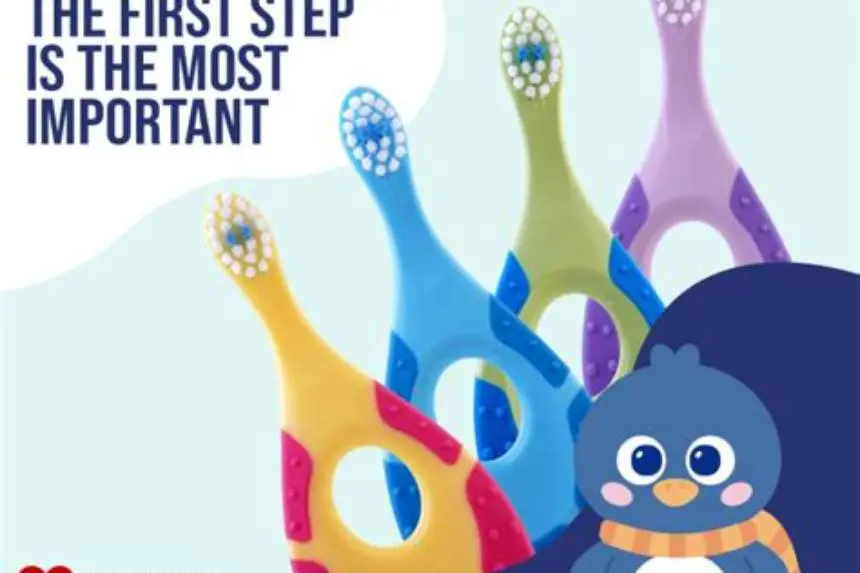
The problem with buying a first toothbrush is that the shelves are full of brushes aimed at toddlers twice this age. A one-year-old has a small mouth, a strong gag reflex and a habit of clamping down on whatever is in it. An adult-sized head skims the front teeth and never reaches the back ones, and the child fights because the thing literally does not fit.
So the fix has a threshold, and it is a number you can check in the store or in a listing photo. The bristled head should be roughly 15 mm long or shorter - about the width of one or two baby teeth. Bristles need to be extra soft, because enamel on first teeth is thin and gums bleed easily. The handle should be short, so an adult can steady it while the child holds on too.
Everything else on the packaging is decoration. Colors, cartoon characters and musical handles do not remove plaque. What matters is head length, bristle softness and whether an adult can actually steer the brush while the child grips it.
- Head about 15 mm or less - reaches back teeth without gagging
- Extra-soft bristles - thin first enamel and tender gums
- Short handle an adult and a baby can both hold
- Rounded bristle tips - no scratched gums
Why the Jordan Step 1 toothbrush works for a 1 year old
The Jordan Step 1 is built to that exact threshold. Its bristled head runs about 15 mm, which clears the figure with room to spare for most one-year-old mouths, and the bristles are graded extra soft. The handle is deliberately short and tapered, which sounds like a quirk until you realize it exists so a baby can hold the brush at the same time as the parent - a grip that keeps the child cooperative. It helps to understand baby toothbrush electric for 6 month old before going further.
The material matters too. The Step 1 is molded from a soft, flexible plastic rather than rigid polystyrene, so when your toddler inevitably chews on it, the handle gives instead of jabbing the roof of the mouth. Jordan states the brush is intended from the first tooth up to around two years, which matches the age range a one-year-old shopper is buying for.
The honest caveat: some parents find even this head slightly large for the smallest mouths, and a determined chewer can flatten the bristles in a few weeks. Neither is a flaw in the design - it is just the limit of what a bristle brush can do at this age.
- head around 15 mm
- extra-soft bristles
- short flexible handle
- rated from the first tooth
- still slightly large for the smallest mouths
- chewers flatten bristles fast
How the alternatives compare on the numbers
The Step 1 is not the only brush that clears the threshold, and for some children something else clears it better. A silicone finger brush has no rigid head at all, so it cannot gag or jab, but an adult finger does the work and the child learns nothing about holding a brush. A stage-1 brush with an anti-choke guard adds a shield that stops the handle sliding too far in - useful for a grabby baby, unnecessary for a calm one. If that sounds like your situation, read up on first aid kit for babies under 1 year next.
Here is the comparison on the figures that matter, so you can redo it against whatever listing is in front of you.
| Option | Head length | Bristles | Best for |
|---|---|---|---|
| Jordan Step 1 | about 15 mm | extra soft | most one-year-olds with several teeth |
| Silicone finger brush | none - fingertip | silicone nubs | one or zero teeth, very small mouths |
| Stage 1 with choke guard | 15 mm or less | extra soft | babies who shove the brush deep |
| Two-pack of stage 1 | about 15 mm | extra soft | homes wanting a spare brush |
Who each option is wrong for
The finger brush is wrong once your child has a full row of front teeth and bites - silicone does not survive a determined bite, and your finger takes the force. The choke-guard brush is wrong for a child who already brushes calmly, because the shield gets in the adult's grip. And a regular child's toothbrush sold for ages three and up is wrong for every one-year-old: the head is far past the threshold and the handle is too long to control.
How to brush a one-year-old's teeth with it
The brush is half the job; the technique is the other half. Pediatric dental guidance is simple and the same whether you use the Step 1 or anything else that clears the head-size threshold: twice a day, every day, from the first tooth onwards, with a rice-grain smear of fluoride toothpaste. Before you commit to anything, it is worth looking at elbow rest for deep tub.
Kneel or sit your child on your lap facing away from you, head resting against your chest. That position lets you see the back teeth, which is where decay shows up first. Brush in small circles, spending most of the time on the gum line. Expect protest for the first couple of weeks; it fades.
- Sit your child on your lap, facing away, head against your chest
- Smear a rice-grain amount of fluoride toothpaste across the bristles
- Brush in small circles along the gum line, front and back teeth
- Let the child chew and mouth the brush afterwards to make it a normal object
- Spit or wipe - no rinsing needed at this age
When this brush is the wrong choice
Being honest about who a pick does not fit is what makes the rest of this page worth trusting, so here are the three cases where the Step 1 is the wrong answer.
First, no erupted teeth yet. Before the first tooth breaks through, there is nothing for bristles to clean. A silicone finger brush or a clean damp gauze wiped over the gums does the job without poking sensitive gum tissue. The Step 1 becomes the right tool the week the first tooth appears. The other half of this decision is removing cradle cap safely.
Second, a habitual hard chewer. Some one-year-olds treat every object as a teether, and soft bristles flatten under that treatment within weeks. If the bristles splay in under a month, either replace more often or switch to a silicone finger brush until the chewing phase passes.
Third, expecting independence. At one year old, the child cannot brush their own teeth, no matter what the packaging implies. The brush is designed for an adult hand with a toddler hand alongside it. If nobody in the house will do the brushing twice a day, no toothbrush fixes that.
When to move up to the next step brush
The Step 1 is a stage, not a forever brush. Jordan's own staging moves children up around age two, and the signal is head size again: once the brush head covers three or four teeth in a stroke, it is doing less work per pass than a bigger head would. When your child's mouth and coordination have grown, the step-2 brush with a slightly longer head and handle clears a higher threshold - around 20 mm - which suits a toddler rather than a baby.
Until then, replace the Step 1 about every three months, or sooner if the bristles splay, the handle cracks or anyone in the house has been ill. A splayed brush does not clean along the gum line; it just pushes plaque around. Check the bristles the way you would check your own: hold it up to the light and look at the tips.
For most one-year-olds with erupted teeth, the Jordan Step 1 is the right first toothbrush; a silicone finger brush takes over for the toothless months before it.
Questions people still ask
Can a one-year-old use the Jordan Step 1 toothbrush unsupervised?
No. It is designed for an adult to brush the child's teeth with the child holding on too. Any toothbrush is a choking hazard in the hands of a one-year-old who is left alone with it.
Does the Jordan Step 1 work before any teeth have come through?
It is not the best tool then. Wipe the gums with clean damp gauze or a silicone finger brush instead, and switch to the Step 1 once the first tooth erupts.
How much toothpaste should go on the Step 1 brush?
A rice-grain smear of fluoride toothpaste, from the first tooth onwards. The pea-sized amount you see on adult-directed packaging is for children around three and older.
How often should I replace the Step 1 brush?
About every three months, or sooner if the bristles splay or someone in the household has been ill. A chewed-flat brush will not clean along the gum line.
My toddler chews the brush instead of letting me brush. Is it the wrong brush?
Chewing is normal at this age and the flexible Step 1 handle is built to survive it. Let the child chew a spare brush while you brush with the other, and check bristles weekly for splaying.