How to make a baby onesie that fits safely and lasts through wash
Discover clear steps to make a baby onesie that fits well, stays safe, and endures washing with practical sewing and fabric advice.
To make a baby onesie safely and durable, use 100% cotton knit fabric suited to babies, size it based on baby age and measurements, sew with stretch stitches, and add secure, non-chokable closures like flat snaps.
On this page (8 sections)
Part of our guide on warming milk without electricity
Make a baby onesie that fits well, stays safe, and endures washing with straightforward sewing and fabric tips.
| Fabric Type | 100% cotton knit |
|---|---|
| Stretch Required | 50-70% stretch |
| Size Range | Newborn to 12 months |
| Closure Type | Flat snap buttons |
| Typical Seam Allowance | 3/8 inch |
| Wash Cycle | Gentle, cold water |
| Drying | Low heat or air dry |
Key takeaways
- Choose soft, breathable fabric with at least 50% stretch
- Use snap closures, avoiding small buttons or Velcro
- Follow basic size charts from newborn to 12 months
- Customize minimally to maintain safety and washability
- Sew with stretch stitches for durability and comfort
How to sew a basic baby onesie
Start with a simple pattern designed for babies under 12 months, preferably one that includes stretch allowance. Cut 100% cotton knit fabric with 50-70% horizontal stretch to allow movement and comfort.
Use a sewing machine equipped with a stretch stitch or a narrow zigzag stitch to join pieces. A typical seam allowance is 3/8 inch to keep seams flat and flexible.
Construct the body by sewing shoulders and side seams, then attach the sleeves. Hem edges with stretch-friendly stitches to avoid stiffness.
Add a neckband from the same stretch fabric, cut slightly smaller than the neckline circumference to hold its shape without restricting movement. It helps to understand dressing babies in onesies before going further.
Before sewing, test your stitch tension on a scrap of the knit fabric to ensure the stitches stretch without breaking. A tension that is too tight will cause seams to pucker and may restrict the fabric's stretch, while too loose tension may result in weak seams that won't hold up to washing and wear. Aim for a balanced stretch that allows the fabric to recover after being pulled.
When sewing curves such as armholes and necklines, clip the seam allowance carefully without cutting the stitches to allow the fabric to lay flat without puckering. This step is crucial for a smooth finish that fits comfortably against baby's skin.
After sewing, check the seam integrity by gently stretching the fabric along the seams. The seams should stretch with the fabric and return to their original shape without gaps or thread breakage. This test confirms a durable construction that will withstand active babies and repeated laundering.
- Cut fabric following a baby onesie pattern with stretch allowance
- Sew shoulder seams using a stretch stitch
- Attach sleeves and sew side seams
- Hem sleeve and leg openings with zigzag or stretch stitch
- Attach neckband slightly smaller than neckline circumference
How to add buttons or closures safely
Flat snap buttons made of plastic or metal with rounded edges are safest for baby onesies. They reduce choking risk compared to small sewn-on buttons.
Sew snaps securely by reinforcing the fabric with interfacing where they attach to prevent tearing during diaper changes.
Avoid Velcro closures as they can irritate sensitive skin and lose grip after washing. Zippers are also discouraged due to potential skin pinching.
Position closures along the crotch or shoulder seams for easy access without compromising fit or comfort.
- Snap buttons: low choking risk, durable, secure
- Avoid small buttons: choking hazard, can come loose
- No Velcro: irritates skin, wears out quickly
- No zippers: risk of pinching delicate skin

FabricLA Cotton Spandex Jersey Knit Fabric by The Yard 12OZ
This fabric is a 95% cotton and 5% spandex blend with 4-way stretch, suitable for making baby onesies requiring stretch and softness, but stretch percentage and weight are not specified.
Ideas for easy customization
Crochet trim or applique made from soft cotton provides gentle decoration without bulk. Use materials that withstand frequent washing and avoid stiff or scratchy yarns.
Embroidery adds personal flair but keep it flat and sparse to avoid discomfort under clothing layers. Use thread colors that won’t bleed or fade.
Tie-dye with baby-safe fabric dyes creates unique patterns. Test any dye for colorfastness and wash separately to avoid staining other clothes.
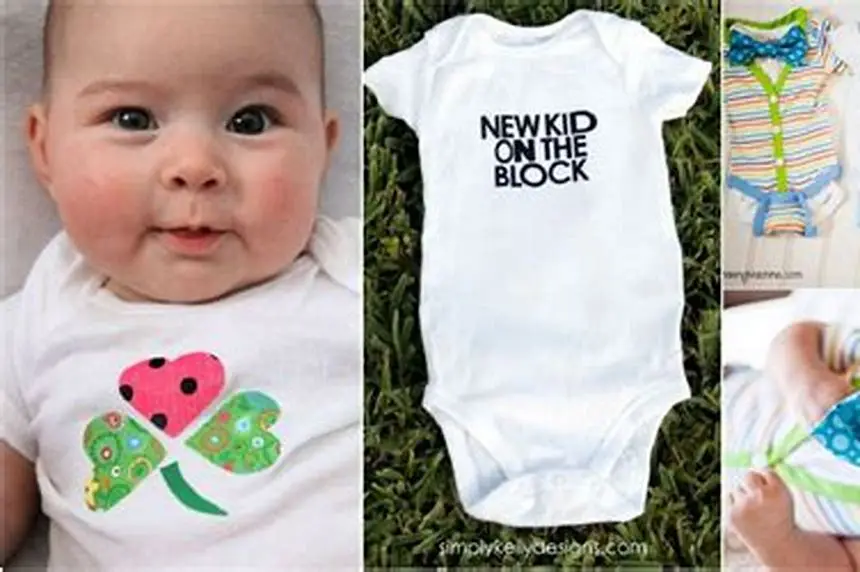
Heat transfer vinyl designs offer bold visuals but choose soft, flexible vinyl made specifically for knit fabrics to maintain stretch.
Limit embellishments to areas that don’t contact baby’s skin directly, to reduce irritation risk.
- Crochet trim: soft cotton, washable
- Embroidery: flat, minimal to avoid irritation
- Tie-dye: test colorfastness, use baby-safe dyes
- Heat transfer vinyl: flexible, designed for knits
How to choose fabric suitable for babies
Select 100% cotton knit fabric with at least 50% stretch sideways to ensure comfort and ease of dressing. Cotton breathes well, helping regulate baby’s temperature.
Avoid synthetic blends that can trap heat or irritate sensitive skin. Some babies react to polyester or nylon fibers under their clothes.
Check the weight of the knit: mid-weight jerseys around 150-220 grams per square meter (gsm) offer durability without being heavy or too thin.
Look for Oeko-Tex certification or equivalent to ensure the fabric contains no harmful chemicals.
Prewash fabric before cutting and sewing to minimize shrinkage later and eliminate residual dyes or treatments.
- 100% cotton knit: breathable, soft
- 50-70% horizontal stretch: freedom of movement
- Mid-weight 150-220 gsm: durable yet light
- Prewash fabric to prevent shrinkage
- Certification: Oeko-Tex or similar for safety
Basic sizing tips for newborn to 12 months
Measure baby’s length and chest circumference as the primary fit indicators. Newborn onesies usually fit up to 21 inches length and 16 inches chest, growing up to 28 inches length and 19 inches chest at 12 months.
Allow for growth by choosing patterns with 1-2 inches of ease in length and width, so the onesie doesn’t become tight prematurely.
Remember babies grow unevenly; longer torso or chunkier thighs may require slight pattern adjustments.
Use size charts from reliable babywear sources but personalize fit when possible by measuring actual baby dimensions.
Check sleeve and leg opening circumference to avoid restricting circulation or leaving marks on skin.
| Age | Length (inches) | Chest Circumference (inches) | Sleeve Length (inches) |
|---|---|---|---|
| Newborn | 19-21 | 15-16 | 7-8 |
| 3 months | 22-24 | 16-17 | 8-9 |
| 6 months | 24-26 | 17-18 | 9-10 |
| 9 months | 26-27 | 18-19 | 10-11 |
| 12 months | 27-28 | 19-20 | 11-12 |
How to make a baby onesie
Making a baby onesie requires selecting suitable fabric, choosing the right pattern size, and sewing with stretch techniques to ensure fit and comfort.
Start by cutting fabric pieces including front, back, sleeves, and neckband, following the sizing guidelines.
Sew shoulder seams, then attach sleeves and side seams using a stretch stitch for flexibility.
Add snap closures along the crotch with reinforced interfacing to withstand frequent opening and closing.
Finish edges with stretch hemming and attach a neckband slightly smaller than the neck opening to maintain shape without tightness.
Test fit on the baby or a similarly sized doll, check for snugness without restricting movement or circulation.
Finish with washing on a gentle cycle and drying on low or air to maintain fabric integrity.
- Select 100% cotton knit fabric with 50-70% stretch
- Choose pattern size based on baby measurements
- Cut fabric pieces for front, back, sleeves, neckband
- Sew shoulders, attach sleeves, sew sides with stretch stitch
- Attach snap closures with interfacing reinforcement
- Hem edges with stretch-friendly stitches
- Attach neckband slightly smaller than neckline
- Test fit for comfort and adjust if necessary
- Wash gently to preserve fabric and fit
Questions people still ask
Can I use cotton blends for baby onesies?
Cotton blends may reduce breathability and cause skin irritation. For sensitive baby skin, 100% cotton knit with good stretch is safer and more comfortable.
Are Velcro closures safe for baby clothes?
Velcro can irritate delicate skin and loses grip after washing, so it is generally not recommended for baby onesies.
How often should I wash a homemade baby onesie?
Wash after every few uses, ideally on a gentle cold cycle, to keep fabric soft and prevent wear. Avoid harsh detergents to preserve safety and comfort.
What size onesie should I start with for a newborn?
Choose a newborn size fitting babies about 19-21 inches long with 15-16 inch chest circumference, allowing ease for growth and diaper bulk.
Can I add embroidery to a onesie?
You can add flat, minimal embroidery if the thread is soft and securely stitched, but avoid heavy or bulky designs to prevent discomfort.