What kind of play helps your child's development at each stage?
Play supports development by matching your child's current abilities. Sensory play and grasping work for infants; cause-and-effect play for babies 6–12 months; pretend play and problem-solving for toddlers 12–36 months. Progress shows as new skills emerging within weeks of focused play.
On this page (8 sections)
Part of our guide on choosing safe toys for 6 month olds
The numbers
- Birth to 3 months
- Sensory input and face-to-face interaction
- 4–6 months
- Reaching, grasping, and mouthing objects
- 7–12 months
- Cause-and-effect, emptying and filling
- 12–18 months
- Pretend play begins, climbing and throwing
- 18–36 months
- Problem-solving, role play, cooperative games
- Sign of progress
- New skill within 2–4 weeks of practice
What matters most
- Match play to what your child can almost do, not what they already master or what's years away
- Repetition matters more than variety; babies learn by doing the same thing dozens of times
- Watch for a new skill emerging 2–4 weeks after you introduce the right type of play
- Toys don't have to be fancy; household items and your own body are often the best tools
- If your child avoids a type of play other children their age enjoy, mention it at the next checkup
How play supports development at each age
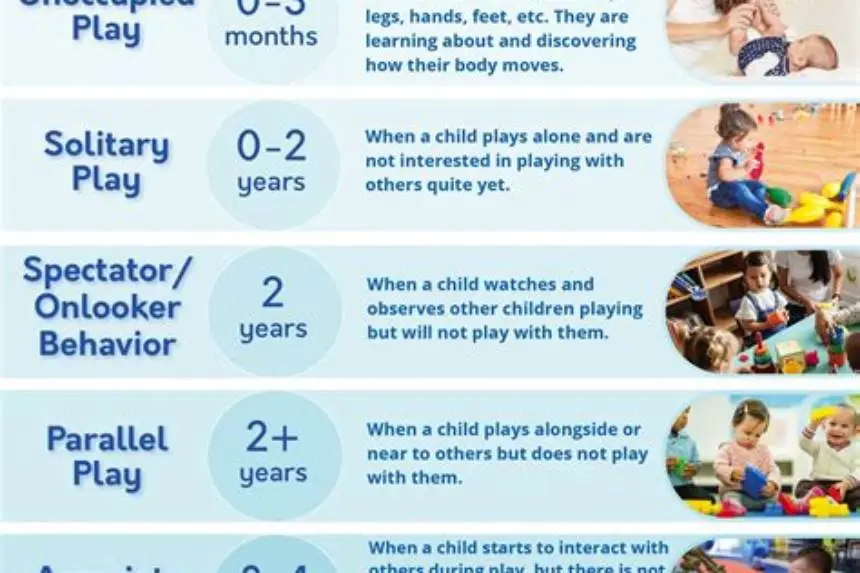
Play supports development through repeated practice. Children test movement, attention, language, problem-solving, and social skills during play. The best activity matches what your child can almost do.
From birth to three months, use faces, voices, and gentle touch. Narrate care, make expressions, and let your baby watch your mouth. Your interaction supports early communication and social attention.
At four to six months, babies reach, grasp, mouth, and bang objects. Offer safe items with different textures and weights. Check every item for loose parts before use.
From seven to twelve months, babies learn through dropping, pulling, pushing, and finding hidden objects. Play peek-a-boo, hide a toy under a blanket, and offer cups to stack and knock down. We cover bike for 12 month old in its own article.
Between twelve and eighteen months, toddlers often copy familiar actions in pretend play. Offer a doll, toy phone, or dishes, then follow their lead. From eighteen to thirty-six months, use simple sorting, building, and rule-based games. Attention and persistence usually grow with age.
How to choose age-appropriate play activities
Choose an activity just beyond what your child does easily. It should invite effort without requiring skills they don't have yet. Stop or simplify it if frustration takes over.
Watch your child's actions more than the age label. Reaching, copying, filling, emptying, and carrying show what they want to practise next. Children develop at different rates. People in this spot often ask about when play mats are necessary as well.
Use household objects when they're safe. A pot and spoon offer sound, weight, and movement. A container with a lid supports fitting and removal. Your face, hands, and voice also invite useful interaction.
Repeat activities, but put fewer toys out at once. Novelty can draw attention when familiar items disappear and return. Keep play child-led, then join when your child invites you.
- Choose objects with no loose parts small enough to fit in the mouth.
- Use lightweight items that won't break or hurt when dropped.
- Stay close during mouthing, water play, and container play.
- Offer help only after your child has tried independently.

Socub Baby Teething Toys for 0-6 6-12 Months
Gives your baby soft food-grade silicone beads to mouth and two beech rings to grab and turn, built as one interlocked piece so nothing can come apart in their hands.
Signs play is aiding development effectively
Change is gradual and easier to see by comparing over weeks than day to day. Your child may handle two objects instead of one, replace items in a container, or repeat a game without your help. The other half of this decision is baby swing age limit.
Watch for longer focus on familiar play. Longer focus might mean staying with a puzzle, container, or book after previously moving away quickly. The exact duration varies with age, sleep, mood, and setting.
Repeated attempts also matter. Your child may miss a shape opening, adjust the piece, and try again. Walking away can simply mean the activity needs less challenge or more support.
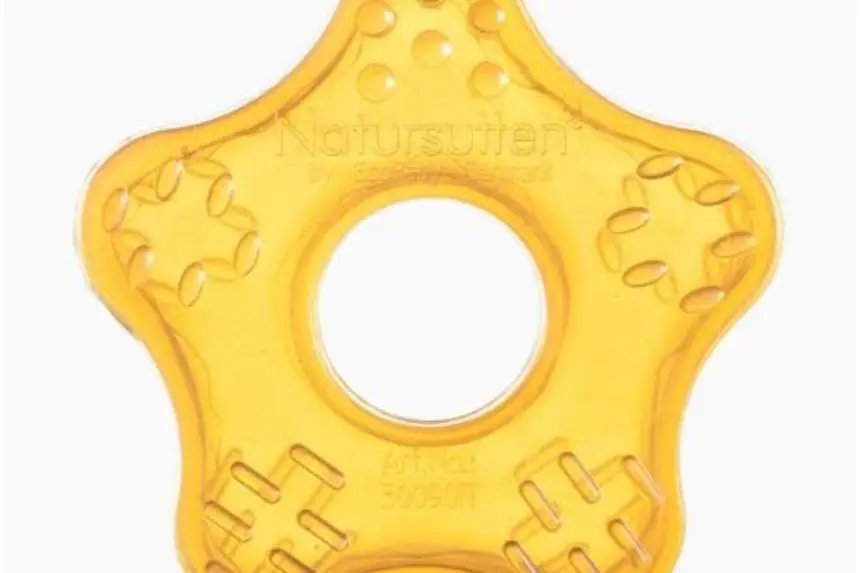
Notice intentional copying. A toddler may pretend to drink, feed a doll, or use a toy phone after watching you. Vocabulary often arrives in bursts, so parents may notice new words in clusters. We cover natural rubber teether for 3 month old in its own article.
Your child may seek the game independently. They might bring a blanket for peek-a-boo or return to a container activity. If your toddler isn't imitating by eighteen months, raise it at the next checkup.
What different types of play teach
Sensory play (touching different textures, hearing different sounds, watching movement) builds the basic brain connections that underlie all learning. Babies aren't 'playing' in a goal-directed way yet, but they're absorbing information about the world. Narrate as your baby experiences sensory input: "That's cold. That's soft. That's loud." The language paired with sensation speeds learning.
Grasping and mouthing teaches hand-eye coordination and the relationship between intention and action. When your baby reaches for a toy and grabs it, they're learning they can make things happen. When they mouth it, they're learning about texture and weight through their most sensitive tool: their mouth. This stage lasts several months and is essential for the fine motor skills that later become holding a pencil.
Cause-and-effect play (dropping, pulling, pushing, banging) builds the foundation for problem-solving. Your baby learns actions have consequences and learns to predict what will happen next. This is the beginning of logic. Without this stage, later learning about how things work (machines, tools, how to fix problems) doesn't have a base.
Object permanence play (peek-a-boo, hiding toys) teaches that things exist even when you can't see them. This seems obvious to adults, but babies don't know this naturally. It takes months of repeated experience. Object permanence is essential for memory, for understanding that people still exist when they leave the room (crucial for bonding), and for playing games with rules.
Pretend play builds language, empathy, and abstract thinking. When your toddler feeds a doll, they're imagining what the doll feels and needs. They're using language in a new way: not just labeling ("cup") but narrating action ("baby drink milk"). Pretend play is the bridge between concrete, physical learning and the abstract thinking needed for reading and math.
Physical play (climbing, throwing, running) builds gross motor skills and body awareness. It also teaches risk assessment. Your toddler tries to climb something, finds it's too hard, and learns their own limits. They throw a ball, miss, and adjust their aim next time. Physical play shouldn't be rushed through or avoided because it looks risky; it's how children learn what their bodies can do and when to be careful.
| Type of play | Age it usually starts | What it builds | How long it lasts |
|---|---|---|---|
| Sensory | Birth | Brain connections, attention, language foundation | Throughout childhood |
| Grasping and mouthing | 4–6 months | Hand-eye coordination, intention and action link | Until about 12 months |
| Cause and effect | 7–12 months | Problem-solving, prediction, understanding consequences | Builds throughout life |
| Object permanence | 7–12 months | Memory, understanding of hidden objects, bonding | Until about 18 months |
| Pretend play | 12–18 months | Language, empathy, imagination, abstract thinking | Throughout childhood |
| Physical play | Throughout | Gross motor skills, body awareness, risk assessment | Throughout childhood |
Common play mistakes and what to do instead
Many parents believe more toys mean more learning. The opposite is true. Too many toys overwhelm your child and reduce focus. They move from toy to toy without staying with any one long enough for real learning to happen. Instead, keep five to eight toys visible and rotate them every few weeks. Your child will play with less available more deeply than with everything at once. Rotating toys also keeps them interesting.
Another mistake is assuming your child should enjoy age-appropriate play because a chart says they should. Children develop at different paces. Some fifteen-month-olds love pretend play; others aren't interested until twenty months. Some twelve-month-olds can't stack blocks; others can stack four. Watch your own child, not the chart. If they're not ready for a type of play, forcing it creates frustration, not learning. Set it aside for a month and try again.
Parents often interrupt play to teach something, turning play into a lesson. "Point to the duck. Can you say duck?" But the magic of play is that learning happens without instruction. Your child looks at because they want to, not because you told them to. Sometimes narrate what you see ("You're stacking blocks"), but don't direct or quiz. The play itself does the teaching.
Assuming expensive toys are better is a costly mistake. A wooden spoon and a pot teach cause and effect as well as any toy costing forty dollars. Water play teaches as much as a twelve-toy learning center. Your presence, your face, and your narration are free and work better than any screen or battery-powered toy. The toys that teach best are the ones your child chooses to use, not the ones you chose because the box promised development.
When to talk to your pediatrician about play
Most children follow a predictable sequence of play development with normal variations in timing. Some children skip stages or loop back and forth. That's usually fine. But a few patterns warrant mentioning at a checkup. If your child shows no interest in play at all (doesn't reach for toys, doesn't respond to your face or voice, doesn't try to grab things) mention it by three months. If they're not making sounds back and forth with you (babbling when you talk) by six months, bring it up.
Watch for play that looks repetitive without variation. A baby drops a toy thirty times is learning. A toddler spinning a toy wheel repeatedly for an hour without changing the activity might not be, depending on context. If your child lines toys up instead of playing with them, spins wheels without interest in the toy's other features, or gets upset if the routine changes, mention it at eighteen months or earlier if it concerns you.
If your child avoids types of play that most children their age enjoy, mention it. At eighteen months, most toddlers like to stack things or knock them down. If yours shows no interest in this but obsesses over another activity instead, it could be nothing or it could be a sign worth looking at. At twelve months, most babies enjoy playing with you: peek-a-boo, songs with hand movements. If your baby seems uninterested in joining your games or doesn't watch your face, mention it.
Lack of pretend play by two years can signal a concern. Some children aren't ready until two and a half, which is normal. But if your child shows no interest in pretending, doesn't copy you, and doesn't use toys to represent other things, that's worth mentioning. Language delay often comes with play delay; they're connected. Trust your instinct. If something feels off, an early evaluation is free and confidential in most US states and can help or reassure you quickly.
Questions people still ask
My baby seems bored with the toys I bought. Should I buy more?
No. Boredom with toys usually means they've mastered them, not that you need to buy more. Rotate the toys you have by putting half away for two weeks, then swapping them. The familiar toys will seem new. You'll spend less money and your child will play more deeply.
How much screen time is okay during play development?
The American Academy of Pediatrics recommends no screen time before eighteen months except for video calling. After that, limited high-quality programming is okay, but it doesn't teach as much as hands-on play. Apps marketed as educational aren't proven to teach skills better than real objects and your presence.
My toddler plays the same way my friend's child does, but my child is two months younger. Is that a problem?
No. Children develop at different paces, and two months of variation at this age is normal. Watch your own child's progress over weeks, not against other children. If you notice your child isn't progressing (learning something new every few weeks), mention it at a checkup.
Should I buy toys designed for development, or do regular toys work?
Regular toys work. A wooden spoon teaches cause and effect as well as a toy hammer. A plastic container teaches fitting as well as a shape sorter costing thirty dollars. The toys your child reaches for themselves matter more than the ones marketed as educational.
How do I know if I'm doing play wrong?
Watch whether your child is focused and trying things, not whether you're following the 'right' method. If your child stays interested for a few minutes and attempts new things within that play type, something's working. If they ignore it or get frustrated immediately, try a different type of play or wait a few weeks.
Does my child need toys, or can I teach play skills without buying anything?
You can teach everything without toys. Your hands, your face, household objects like pots and spoons, and your body are enough. Toys are helpful but not necessary. If you're on a tight budget, focus on your presence and attention, not on gear.