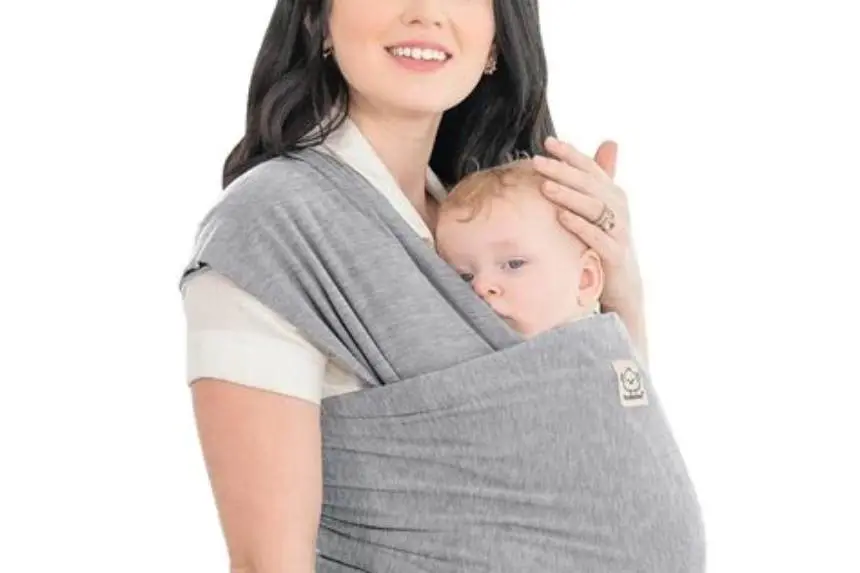
Do baby carriers cause bow legs or affect natural leg development?
This article clarifies if baby carriers cause bow legs, explains natural leg development, and advises how to choose carriers that support healthy legs.
Baby carriers do not cause bow legs when used correctly; most infants have natural bowing that they outgrow. Proper carriers support the hips and knees in a spread-squat position that avoids stressing leg joints or bones.
On this page (8 sections)
Part of our guide on boba wrap size chart for 5'9" parent
Most babies have natural bow legs that carriers do not cause; proper leg support in carriers prevents harm and promotes healthy development.
| Natural bow legs at birth | Almost 100% of infants |
|---|---|
| Typical outgrowth age | 12-24 months |
| Safe leg spread angle | 45-60 degrees |
| Hip safe position | M-shape or frog-leg |
| Carrier leg stress risk | High if legs hang straight |
The short version
- Nearly all newborns have natural bow legs that usually resolve by age 1 to 2.
- Bow legs in babies mainly reflect prenatal bone shape and fetal position, not carrier use.
- Carriers that support a spread-squat leg position help prevent hip or leg problems.
- Avoid carriers that dangle the legs straight down or put pressure on the inner knees.
- Monitor your baby’s leg positioning and consult a pediatrician if bowing worsens beyond infancy.
Are all babies born with bow legs
Virtually all newborns show some degree of bow legs medically termed genu varum. This is a normal physiological condition where the lower legs curve outward. It stems from the cramped fetal position in the womb combined with the shape of developing bones.
At birth, the tibias (shin bones) typically curve outward to an average angle between 15 and 20 degrees depending on baby size and genetics. This outward bowing is most visible when the baby lies on their back with legs extended naturally.
Infants’ soft bones and flexible joints allow some variation in leg shape at birth without indicating a disorder. This bowing is not a deformity but an expected stage in leg development that almost all infants share.
In some cases, the angle of bowing at birth may range from as little as 5 degrees to as much as 25 degrees depending on factors such as gestational age and intrauterine positioning. For instance, babies born prematurely often display less pronounced bowing due to shorter time spent in the curled fetal position. Careful clinical examination includes measuring the intercondylar distance (the space between the knees when ankles touch) to quantify bowing. Normal values vary with age but typically fall between 2 to 5 centimeters in newborns, confirming physiological bowing. If that sounds like your situation, read up on are baby wraps bad for babies next.
Doctors and pediatricians use physical examinations to distinguish normal bowed legs from pathological cases in newborns. If bowing is extreme or asymmetrical, further imaging like X-rays may be ordered to check bone structure. In normal cases, repeated clinical checks over months show gradual improvement without intervention, helping reassure parents about the harmless nature of this common newborn trait.
Why babies have bowed legs
The primary cause of bowed legs in babies is mechanical. The position in the uterus often forces the legs into a flexed, crossed, and slightly bowed posture. These prenatal forces mold bone shape and position.
After birth, muscle strength is low and bones remain pliable, so the bowed shape persists for some months. Growth plates at the knees and ankles allow gradual realignment as weight bearing begins and muscles strengthen.
Genetics and ethnicity also influence the degree and duration of bowing. For example, some populations have a higher average angle of bow legs in infancy without pathology.
Rarely, medical conditions such as rickets or Blount’s disease cause persistent or worsening bow legs, but these are exceptions diagnosed by a pediatrician.
The degree of bowing can also be influenced by the baby's overall growth rate and nutritional status. For example, insufficient vitamin D or calcium during infancy may delay proper bone mineralization, potentially worsening bowing beyond physiological norms. This highlights the importance of monitoring infant nutrition alongside typical mechanical causes.
A typical range for the inward curvature angle of the tibia in healthy newborns extends from about 10 to 20 degrees but can reduce steadily as the child grows. In some ethnic groups, slight bowing up to 25 degrees may persist longer without indicating pathology. Understanding these variations helps avoid unnecessary concern or treatment.

Digital Protractor Angle Finder
Supports measuring leg spread angles safely with 0~999.9° range and 0.1° resolution for precise baby leg position checks.
Do babies outgrow bow legs
Most babies naturally outgrow bow legs by the time they start walking, usually between 12 and 24 months. As the child bears weight and stands upright, leg bones remodel under normal stresses.
During toddlerhood, the bowed tibias gradually straighten as growth plates adjust and muscle tone improves. By age 2, the legs typically look straight or may shift briefly to a mild knock-knee shape, which also corrects with age.
If bowing persists strongly beyond age 2 or worsens, especially if one leg is more bowed, medical examination is warranted to rule out underlying disorders.
Parents should watch for signs such as limping, pain, or asymmetry in leg shape, which differ from normal physiological bowing.
Monitoring leg alignment through toddlerhood is essential to confirm natural correction. For example, a baby measured with a 20-degree tibial bow at 6 months might show improvement to around 10 degrees by 18 months as walking and weight bearing increase. This measurable improvement is a key clinical sign that bow legs are resolving.
Occasionally, bow legs may transiently shift to knock knees (genu valgum) between ages 2 and 4, which also self-corrects. Tracking this progression by measuring intermalleolar distance (the gap between the ankles when knees touch) can help determine if development is on track. Values typically range from 0 to 5 centimeters during this phase. Persistent abnormalities beyond these ranges require evaluation.
How baby carriers might influence leg positioning
Baby carriers can influence leg positioning but do not cause bow legs when used properly. Carriers that hold baby with hips and knees bent and legs spread in an “M-shape” support healthy joint development.
This spread-squat position means thighs are apart, knees higher than the buttocks, and legs supported from knee to knee. It aligns with the natural fetal position and reduces strain on immature bones and joints.
Conversely, carriers that allow legs to dangle straight down, such as narrow sling styles or front wraps without proper support, can increase pressure on the knee joints and may exacerbate existing leg alignment issues.
Healthy carriers distribute the baby’s weight evenly and prevent inward twisting or pressure on the inner knees or ankles. This reduces the risk of stressing developing bone structures.
How to prevent or avoid worsening bow legs with carriers
Choose carriers designed for ergonomic hip support that maintain the spread-squat leg position with a seat wide enough for the thighs and sufficient padding under the knees.
Check that the carrier supports the baby’s knees higher than their bottom and that their legs are not dangling straight down. Adjust straps and seating to fit your baby’s size and keep hips aligned.
Limit the time spent in carriers that do not support this position, especially for babies under 12 months whose bones remain soft and developing.
Observe your baby’s leg posture regularly and consult a pediatrician promptly if you notice worsening bowing, irregular leg shape, or discomfort during or after carrier use.
A simple tool to ensure proper leg positioning is a flexible angle gauge or protractor to measure leg spread between 45 to 60 degrees; many ergonomic carriers meet this standard.
Do baby carriers cause bow legs
Current evidence and expert consensus indicate that baby carriers do not cause bow legs. The natural bowing seen in infants is a normal developmental stage unrelated to carrier use when proper technique and carriers are chosen.
Improper use of carriers that suspend the legs or place uneven pressure on joints can worsen existing leg alignment problems but is unlikely to be the root cause of bowing.
The critical factor is ensuring the carrier maintains hips and knees in the correct spread-squat position, which promotes healthy joint development and mitigates any risk of leg deformity.
If you have concerns about your baby’s leg shape or carrier safety, consult a pediatrician who can assess leg angles, growth, and rule out medical causes.
| Carrier type | Leg position | Risk of leg stress | Impact on bow legs |
|---|---|---|---|
| Ergonomic carrier | Spread-squat (M-shape) | Low | Does not cause or worsen |
| Narrow sling | Legs dangling straight | High | May worsen existing bow legs |
| Wrap carrier (properly used) | Spread-squat | Low | Safe, no impact |
| Wrap carrier (improper use) | Legs unsupported | Medium | Possible worsening |
Questions people still ask
Can bow legs in babies indicate a serious health problem?
Usually, bow legs in infants are normal and temporary. However, if bowing worsens after 2 years, is severe, or accompanied by pain or limping, consult a pediatrician to rule out conditions like rickets or Blount’s disease.
What is the best position to carry a baby to protect their hips?
The best position is the spread-squat or M-shape, where the knees are bent and spread apart, with thighs supported and knees higher than the bottom. This supports healthy hip and leg development.
How long can a baby safely stay in a carrier each day?
No exact limit exists, but infants should not be kept in one position for excessively long periods. Vary carrying time and positions, ensuring carrier support is ergonomic to avoid strain.
Are certain baby carrier types safer for bow-legged infants?
Yes, carriers designed with a wide seat supporting a spread-squat leg position are safest. Narrow carriers or slings that allow legs to hang straight increase risks and should be avoided.
Should I be concerned if my baby’s bow legs seem uneven?
Uneven bowing or one leg more curved than the other warrants medical evaluation. It could indicate an underlying orthopedic condition needing treatment.