What a car seat load leg does and when your infant seat needs one
A load leg braces an infant car seat against the vehicle floor to cut rotation in a crash by up to 50% compared to a seat anchored by belts alone.
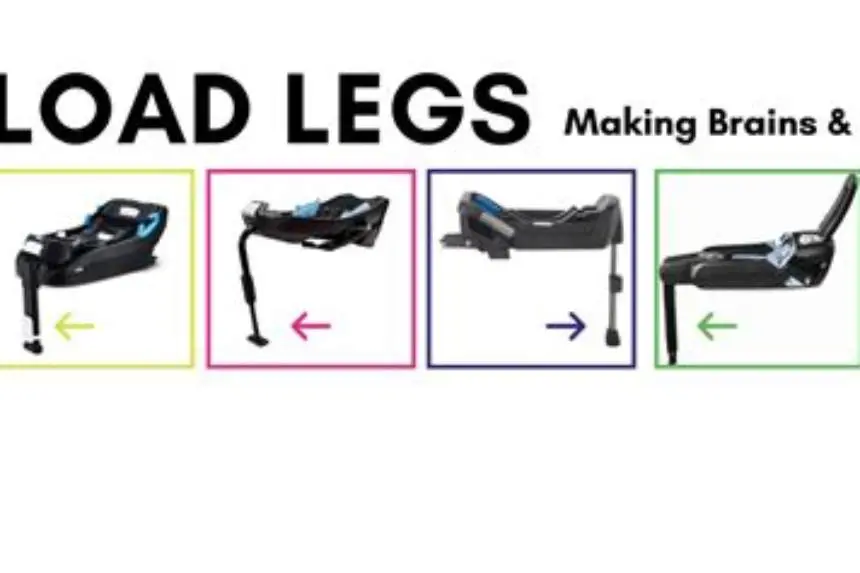
A load leg is a telescoping support bar that extends from the base of an infant car seat to the vehicle floor. It braces the seat during a frontal crash, reducing forward rotation by 30 to 50% and keeping the child's head from pitching toward the front seat.
On this page (9 sections)
- Fit check
- The short version
- What a load leg is and how it works in a crash
- How a load leg improves car seat stability
- Which car seats include or need a load leg
- How to install and use a load leg properly
- Vehicle compatibility and floor requirements
- Common questions about load leg safety and compatibility
- Questions people still ask
Part of our guide on choosing the right car seat base
A load leg cuts the rotation that causes head injuries in infant seats, but only if your vehicle floor can take the force without flexing.

UPPAbaby Aria V2 Lightweight Infant Car Seat
Features an adjustable load leg designed to reduce movement and absorb crash forces for enhanced stability
Check it on Amazon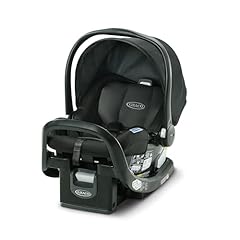
Graco SnugRide SnugFit Infant Car Seat
Provides an anti-rebound bar that offers an additional layer of rear-facing safety without a load leg.
See this alternative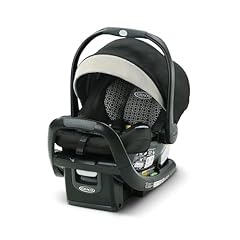
Graco SnugRide SnugFit LX Infant Car Seat
Includes an anti-rebound bar that provides an additional layer of rear-facing safety as an alternative to a
See this alternative| Product | Load leg presence (yes/no) | Verdict | |
|---|---|---|---|
| UPPAbaby Aria V2 Lightweight Infant Car Seat UPPAbaby | Load leg presence confirmed in feature bullets | Meets it | View on Amazon |
| Evenflo LiteMax DLX Infant Car Seat Base with LoadLeg Evenflo | Load leg reduces crash forces up to 50% stated in feature bullets | Meets it | View on Amazon |
| Graco SnugRide SnugFit Infant Car Seat Graco | Anti-Rebound Bar presence confirmed in feature bullets | Meets it | View on Amazon |
| Graco SnugRide SnugFit LX Infant Car Seat Graco | Anti-Rebound Bar presence confirmed in feature bullets | Meets it | View on Amazon |
| Graco SnugRide SnugFit DLX Infant Car Seat Graco | Anti-Rebound Bar presence confirmed in feature bullets | Meets it | View on Amazon |
| Rotation reduction | 30 to 50% in frontal crashes |
|---|---|
| Typical adjustment range | 6 to 12 inches |
| Installation time | Under 2 minutes once base is in |
| Floor requirement | Solid surface, no storage bins |
| Common on | European seats, some US models |
The short version
- A load leg reduces forward rotation in a crash by 30 to 50% compared to a seat held only by belts or LATCH
- European-design seats often require a load leg; US seats more often use an anti-rebound bar instead
- The vehicle floor must be solid where the leg touches it: check your manual before installing over a storage compartment
- Adjust the leg so it touches the floor firmly without lifting the seat base or leaving a gap
- If your vehicle prohibits load legs or has a soft floor, choose a seat with an anti-rebound bar
What a load leg is and how it works in a crash
A load leg is a telescoping metal or reinforced plastic bar that extends from the base of a rear-facing infant car seat down to the vehicle floor. You adjust it so it touches the floor firmly, creating a third point of contact in addition to the LATCH anchors or seat belt holding the base. It looks like a short table leg and adjusts in half-inch or one-inch increments, usually from 6 to 12 inches depending on the seat model and your vehicle's floor height.
In a frontal crash, the car decelerates suddenly but the infant seat wants to keep moving forward. Without a load leg, the seat pivots around its belt or LATCH attachment points, and the top of the seat rotates forward. The child's head pitches toward the front seat. A load leg braces the base against the floor and resists that rotation. The force travels down the leg into the vehicle floor instead of all into the belt anchor points. The seat stays more upright and the child's head moves 30 to 50% less than it would without the leg.
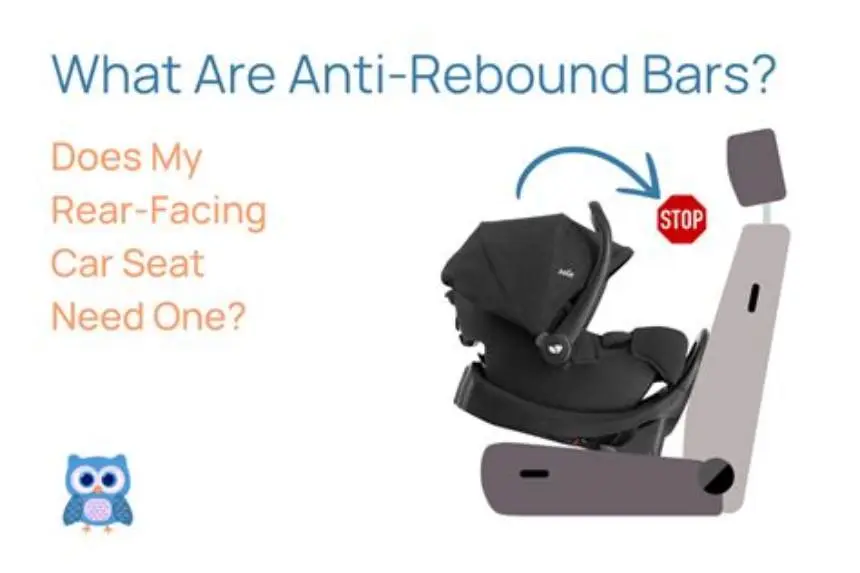
The load leg does not prevent all forward movement. The seat still rides down with the vehicle's deceleration. What it stops is the rotation that turns a controlled deceleration into a head strike. European crash tests under regulation R129 show that infant seats with a load leg keep the child's head farther from hard surfaces than seats using belts or LATCH alone. US seats more often use an anti-rebound bar that presses against the vehicle seat back, which solves the same problem from the opposite direction.
The effectiveness depends on how firmly the leg is set. A leg adjusted too short leaves a gap and does nothing until the seat has already rotated several inches. A leg cranked down so hard it lifts the rear of the base off the vehicle seat changes the recline angle and can put the infant too upright. You want the leg just touching the floor with light pressure, the way you would set a camera tripod on uneven ground. If that sounds like your situation, read up on how to install booster seat with latch next.
How a load leg improves car seat stability
A load leg does three things that a belt or LATCH anchor alone cannot do. First, it transfers crash force to a third location on the vehicle structure. The belt anchor points sit high on the seat bight or the vehicle frame rail. The load leg pushes straight down into the floor pan, spreading the load across a wider area of the car. That matters because the seat bight flexes under heavy load and the floor pan is stiffer.
Second, it shortens the moment arm of the rotating seat. When the seat pivots around the LATCH anchors, the child's mass acts at the end of a lever several inches long. The load leg puts a pivot point closer to the center of mass, so the same force produces less angular acceleration. The result is a slower, shorter rotation and less head travel. The difference shows up clearly in side-by-side crash test footage: the seat without a load leg tips forward sharply in the first 50 milliseconds, while the one with a leg rotates half as far over the same interval.
Third, it keeps the seat at the correct recline angle throughout the crash. Rear-facing infant seats install at a recline between 30 and 45 degrees from vertical, depending on the seat and the child's age. As the seat rotates forward, that recline steepens and the infant slides higher in the shell. A load leg limits that change. The child stays cradled in the seat instead of climbing toward the harness slots. That keeps the harness geometry correct and prevents the child's head from snapping forward once the seat stops rotating. We go through lowest lower anchor weight limit seats step by step elsewhere on the site.
The trade-off is compatibility. A load leg works only if the vehicle floor where it touches is solid and roughly horizontal. Vehicles with under-floor storage bins, removable panels, or sloped footwells may prohibit load legs in their owner's manual or make them ineffective. An anti-rebound bar is less picky because it pushes rearward into the vehicle seat back, which is always there and always upholstered.
UPPAbaby Aria V2 Lightweight Infant Car Seat
Features an adjustable load leg designed to reduce movement and absorb crash forces for enhanced stability and protection from day one.
- Weight 6.0 Pounds
- Height 15.2 inches
- Length 30.6 Inches
Which car seats include or need a load leg
Most European infant seats meet R129 and therefore include or require a load leg. Manufacturers such as Cybex, Maxi-Cosi, Nuna, and BeSafe usually ship bases with a leg. US-market infant seats more often use an anti-rebound bar or just LATCH or the vehicle belt.
Some US bases have mounting points for an optional load leg. You buy that leg separately. The optional leg keeps the base lighter and cheaper for buyers whose vehicle forbids legs or who do not want one. If that sounds like your situation, read up on ensuring safe anti-rebound bar use next.
If a manual states a seat must be used with the load leg, that seat requires the leg to reach its crash rating. Do not add a leg to a seat whose manual does not list one. If your vehicle prohibits load legs, contact the manufacturer for compatible models before buying.
Convertible and all-in-one seats rarely include a load leg. A few European convertible models have a leg for rear-facing use only. If you need load-leg stability past infancy, choose a rear-facing-only seat rated to 40 or 50 pounds.
- European infant seats: nearly always include or require a load leg for
R129compliance - US infant seats: typically use anti-rebound bars; optional load legs exist on some bases
- Convertible seats: rarely include load legs; those that do usually limit use to rear-facing
- Required legs: if the manual mandates a load leg, you cannot safely omit it

Evenflo LiteMax DLX Infant Car Seat Base with LoadLeg
Includes an adjustable load leg that helps stabilize the seat base and reduces crash forces up to 50%, providing strong rotation control.
- Size DLX Base
- Weight 8.9 pounds
- Height 8.54 inches
How to install and use a load leg properly
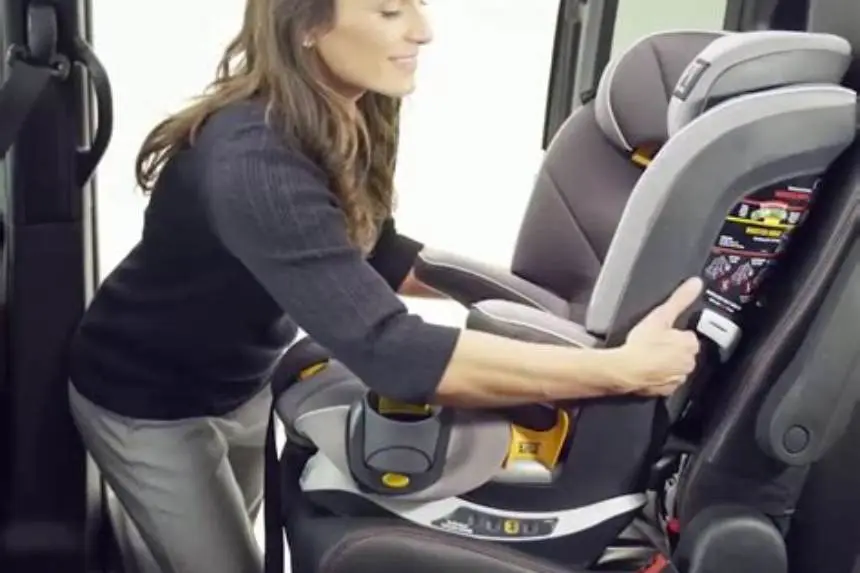
Install the base using LATCH or the vehicle belt. Tighten until movement is under 1 inch side to side at the belt path. Set recline to the marked correct zone, usually green.
Release the lock and pull the leg down until the foot touches the floor. Most legs click every 0.5 to 1 inch. Keep extending until you feel light resistance without lifting the rear of the base. If the base rocks up, retract one or two clicks.
Press down on the seat shell. The base must stay planted and not shift forward. Recheck after five minutes because cushions compress. Inspect the leg weekly for the first month and after moving the seat or hard braking.
If the foot swivels, make it sit flat. Avoid installing the leg at a slant. If the floor is uneven and the manufacturer forbids shims, move the base or choose a different seat.
- Install the car seat base using LATCH or seat belt, and tighten until movement is under
1 inchside to side - Set the recline to the correct angle using the recline foot or indicator on the base
- Release the lock and extend the load leg by pulling down until the foot touches the vehicle floor lightly
- Press down firmly on the car seat shell to check that the base does not rock or shift
- Recheck the load leg tension after five minutes, then weekly for the first month
Graco SnugRide SnugFit Infant Car Seat
Provides an anti-rebound bar that offers an additional layer of rear-facing safety without a load leg.
- Size Base
- Length 15.3 inches
- Width 17.6 Inches
Vehicle compatibility and floor requirements
A load leg works only if the vehicle floor where it touches is solid and fixed. The floor pan under the front seats of most cars and SUVs is welded sheet metal or composite strong enough to handle several hundred pounds of vertical force without deforming. That is where a load leg should land. Rear seats often have under-floor storage bins, fold-flat mechanisms, or removable panels that flex or collapse under crash force. Installing a load leg over one of these features is dangerous because the floor gives way and the leg does nothing.
Check your vehicle's owner's manual before installing a load leg. Many manufacturers list prohibited seating positions for child seats with support legs. Honda, Toyota, and some GM models explicitly prohibit load legs in the second row outboard positions because of under-seat storage. Tesla Model 3 and Model Y have a false floor over a storage well, and the manual says not to use load legs there. If your manual prohibits load legs, believe it. The floor may look solid but the structure underneath is not designed for point loads.
If your manual does not mention load legs at all, look at the floor where the leg would land. Press down hard with your hand. The floor should feel rigid, with no flex or hollow sound. Open any storage compartments and check whether they sit directly under the load leg position. If they do, move the car seat to the center position or choose a seat with an anti-rebound bar. The center seat floor is nearly always solid because it spans the transmission tunnel or battery pack, both of which are structural.
Some vehicles have a raised or contoured floor that leaves a gap under a fully retracted load leg. If the gap is more than an inch, the seat is not compatible with that vehicle position. A few load legs have extension kits that add another section, but most do not. The seat manufacturer's website usually lists compatible vehicles, and many publish a PDF fit guide. Check it before buying if you drive anything other than a sedan or crossover with a flat floor.
| Floor type | Load leg safe? | Check for |
|---|---|---|
| Flat metal or composite pan | Yes | Standard in most sedans and front outboard positions |
| Floor over under-seat storage | No | Common in minivan and SUV second rows; check owner's manual |
| Fold-flat floor or removable panel | No | Flex under load; Toyota Sienna, Honda Odyssey often prohibit |
| Center seat over tunnel or battery | Usually yes | Solid and structural in most vehicles |
| Sloped or contoured footwell | Check manual | May leave gap under load leg foot or cause angled installation |
Graco SnugRide SnugFit LX Infant Car Seat
Includes an anti-rebound bar that provides an additional layer of rear-facing safety as an alternative to a load leg.
- Weight 9.0 Pounds
- Height 30.7 inches
- Length 16.2 inches
Common questions about load leg safety and compatibility
A load leg and an anti-rebound bar both reduce rotation. A leg transfers force to the floor. An anti-rebound bar presses into the vehicle seat back.
Use an anti-rebound bar if your vehicle manual forbids load legs or the floor is soft. Use a load leg if the seat back reclines a lot or there is a gap behind the seat.
Do not fit a load leg and an anti-rebound bar together unless the manual allows it. Over-constraining the seat can stop the seat from riding down and increase forces on the child.
A load leg does not normally damage the floor. The foot spreads force over a few square inches. In a severe crash you might see a dent or scuff. A thin rubber pad under the foot can protect finish. Never use soft or compressible padding; that reduces effectiveness.
You do not change the leg length as the child grows unless you move the base or the base shifts. The leg length depends on floor height and recline, not the child's weight.
- Works in vehicles where seat back reclines or has a gap behind it
- Transfers force to solid floor structure
- Compatible with most flat-floor seating positions
- No contact with vehicle seat back or upholstery
- Requires solid vehicle floor without storage bins
- Some vehicles prohibit load legs in owner's manual
- Can leave cosmetic dent in floor after severe crash
- Adds weight and complexity to car seat base
Questions people still ask
Can I install a car seat with a load leg using the seat belt instead of LATCH?
Yes, as long as the seat manual allows belt installation. The load leg works the same way whether the base is held by LATCH or a seat belt. Just make sure the belt is locked and the base is tight before you extend the load leg. Some seats require LATCH when a load leg is used, so check the manual for your specific model.
What do I do if the load leg does not reach the floor even when fully extended?
Move the car seat to a different seating position with a lower floor, usually the center seat. If that does not work, the seat is not compatible with your vehicle. A few manufacturers sell load leg extension kits, but most do not. Contact the seat manufacturer to see if an extension exists or choose a seat with an anti-rebound bar instead.
Is a load leg required by law in the US?
No. US federal safety standard FMVSS 213 does not require a load leg or any other anti-rotation device. European regulation R129 strongly encourages them, which is why European-designed seats sold in the US often include one. A load leg improves crash performance but is not legally required.
Can I add a load leg to a car seat base that did not come with one?
Only if the manufacturer sells a load leg accessory specifically for that base model and the manual says it is compatible. You cannot retrofit a generic load leg from another brand. Installing an incompatible leg can interfere with the seat's crash performance and void the warranty.
Does a load leg prevent the car seat from rotating during installation?
No. A load leg reduces forward rotation during a crash, not during installation. You still install the base with LATCH or a seat belt, and the base may swivel slightly side to side if it has a rotating feature. The load leg only braces the seat under crash force.
How much weight can a car seat load leg support?
The load leg is not supporting the child's weight during normal use. It braces against crash force, which can reach several hundred pounds for a fraction of a second. The vehicle floor and the load leg are both designed to handle this. You do not need to check a weight rating, only that the floor is solid and the leg is adjusted correctly.