A double stroller is two seats, not a type: the width decides
A double stroller is any stroller with two seats on one frame.
On this page (10 sections)
- What matters most
- The word double describes a seat count, not a safety class
- Why no standard sits behind the word
- Twins versus a toddler and a newborn: recline is the deciding feature
- Side by side against tandem: measure the door before the frame
- Whether a wagon advertised as a double counts
- Where the wagon wins
- Converting a single to a double changes the frame's stated limits
- Four figures to measure before you compare anything
- Questions people still ask
Part of our guide on choosing strollers for twin infants
The numbers
- What double means
- two seats, one frame
- Safety category
- none exists
- Side by side width
- varies; check model spec
- Tandem width
- narrower than side by side
- Per-seat limit
- check maker's manual
- Newborn recline
- check stated angle per seat
What matters most
- Double is a seat count. The maker's per-seat limit is your only hard number.
- One flat-reclining seat is the line between twins and a toddler plus newborn setup.
- Side by side needs a wider gap, tandem needs a longer folded box. Both get measured before you compare.
- Wagons marketed as doubles often lack the recline or harness a newborn needs.
The word double describes a seat count, not a safety class
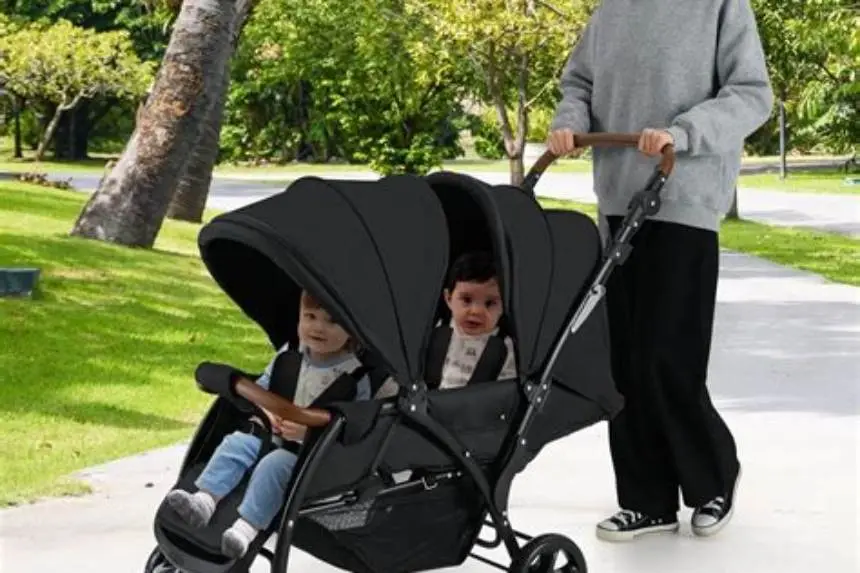
Two seats on one frame. That is the whole definition. Nothing in US or EU rules certifies a stroller as a "double," and no test exists that a single cannot also pass. So the phrase in a listing tells you how many children it carries, not how safe it is.
What actually governs your purchase is the maker's per-seat weight limit and the maker's minimum age for each seat. Strollers are built for the load the brake was tested against. Add a third rider or strap a heavy bag on the handle and you are past that limit.
Weight limits vary widely by model. So do minimum ages, which many makers set around six months for seats that do not recline flat. That single line rules out more doubled setups than width ever will.
Before you compare models, decide which of your two children is the younger. Newborns change every answer that follows. There is more on choosing a stroller for two newborns in a separate guide.
Why no standard sits behind the word
Stroller rules in the US under ASTM and in the EU under EN 1888 set requirements for strollers generally. They cover brake strength, restraint security and structural integrity. They do not create a double category, because the tests apply to the stroller as sold with the seats it has.
Makers can therefore sell a two-seat stroller that passes every applicable test, and another that would fail if you loaded each seat to its own stated limit. Checking the stated limit is your job, not the standard's.
Twins versus a toddler and a newborn: recline is the deciding feature
Twins arrive together, so both seats must lie near flat from day one. Toddlers paired with newborns are harder in one way: one seat reclines flat and the other does not need to. That asymmetry decides which frames work. For the detail, see our notes on checking stroller width for doorways.
Second seats you bolt onto a single usually sit upright or recline just partway. Those seats are built for a child who can sit up. Newborns in them lean forward and have no head control to fight it, which is the mistake most parents make when they add a seat to save money.
The practical test: read the recline figure for each seat separately, not for the stroller. "Reclines to near flat" on the front seat means nothing for the back one. You want the figure in degrees or the words "flat" against both seats if twins are coming.
If the younger child is a newborn and the older one is past two, a single with a flat-reclining second seat can do the job. If both children are newborns, you need flat on both, and that narrows the field sharply. We cover transitioning between car seat stages in its own article.
| Your two children | Recline each seat needs | What that rules out |
|---|---|---|
| Twins, both newborn | Flat on both seats | Most add-on second seats |
| Toddler 2 years plus, newborn | Flat on the younger seat only | Upright-only second seats |
| Two toddlers over 2 | Partway is fine on both | Nothing much |
| Newborn and 3 year old | Flat on one, upright the other | Side by side with one fixed seat |
Side by side against tandem: measure the door before the frame
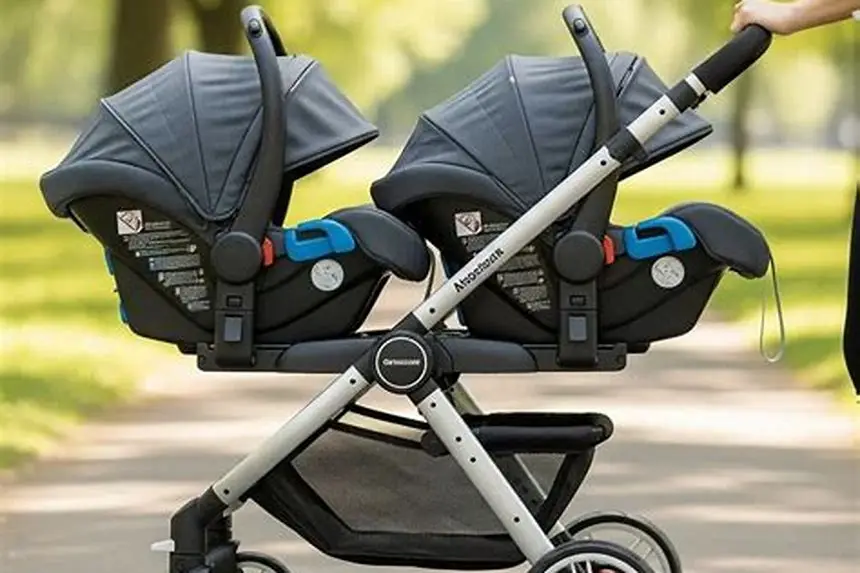
Side by side puts the children next to each other. Both seats get the same recline and the same view, and both lie flat at once. Side-by-sides are generally the widest configuration, so check the listed width against your narrowest door.
Measure your narrowest door, then the tightest aisle in the shop you actually walk through, then subtract half an inch for your knuckles. That gap is where the choice is made.
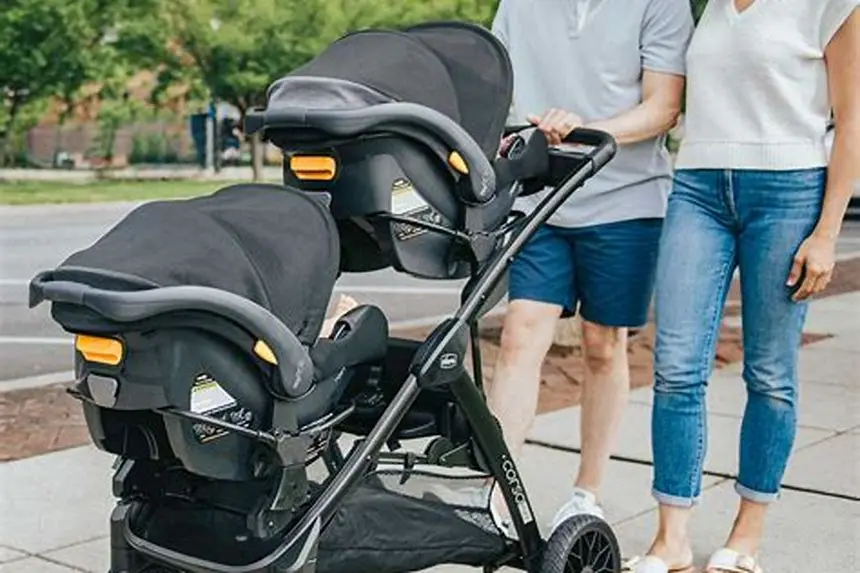
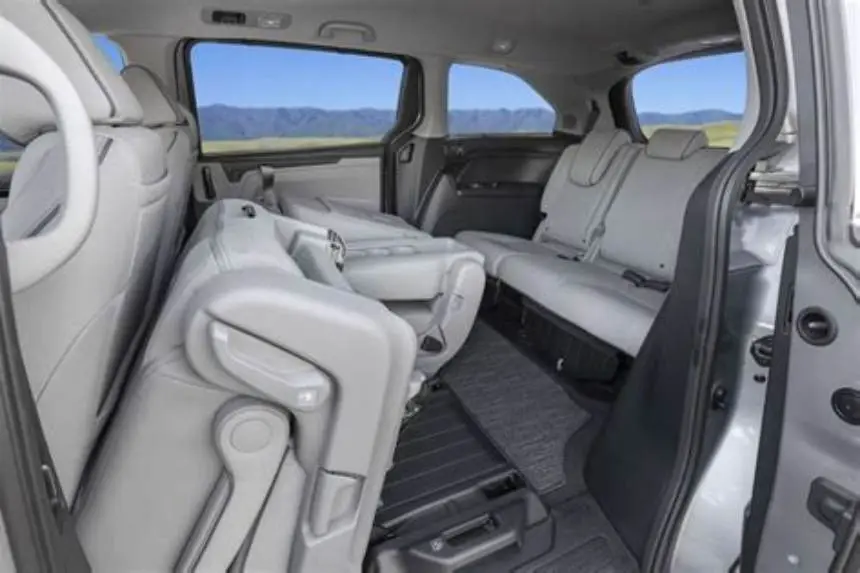
Tandem puts one seat behind the other and runs narrower, so it passes most doors and shop aisles. The cost moves to the length. Folded tandems are long boxes, and compact car trunks may not take them with the seats on. For the detail, see our notes on minivan with removable 2nd row seats.
Turning is the other figure nobody quotes. Long tandems swing a wider arc in a shop aisle, and reversing one through a doorway takes practice. Side-by-sides turn like a single.
| Layout | Width to clear | Folded shape | Turning in an aisle |
|---|---|---|---|
| Side by side | Check model spec; widest config | Wide and shallow | Turns like a single |
| Tandem | Narrower; measure yours | Long and narrow | Wide arc, needs room |
Whether a wagon advertised as a double counts
Often it does not, and the label hides why. Wagons sold as doubles have two seats, which meets the definition. What decides their use is whether each seat reclines and what each harness is rated to hold.
Wagon per-seat limits are typically lower than stroller limits, and many seats recline only partway. That makes the wagon fine for two toddlers who sit and look out, and wrong for a newborn or for a child near the top of the limit.
Harness is the second figure. Wagons may offer a lap belt where a stroller seat gives five points. Children who still slump sideways need the five-point harness around the shoulders, not just across the waist.
Check three lines on the spec sheet: per-seat weight limit, whether every seat reclines flat, and the harness type on each seat. If any one fails for a child you have, the wagon is a single for that child.
Where the wagon wins
On firm ground and short trips, wagons carry gear and children together in a way no stroller does. If your two are past two years old, sit upright and weigh under the limit, the wagon is the more useful shape. If a newborn is coming, it is the wrong one.
Converting a single to a double changes the frame's stated limits
Adding a second seat to a single is the cheapest route to two children. It works, and it has a limit nobody reads. The frame, brake and wheels were rated for one child's weight plus the model's own load. Bolting on a seat adds weight in a place the brake test never covered.
Makers state a combined or per-seat limit for the doubled setup. Read that number, not the single figure on the box, because it is usually lower per child.
Recline is where conversions usually fall short. Add-on seats tend to sit upright, so newborns in them have no flat support. That rules the conversion out for twins and out for a toddler plus newborn unless the add-on itself reclines flat.
Check the maker's own doubled configuration and its stated limits. Buying a compatible seat from a different maker and strapping it on is outside every limit quoted.
- cheapest route to two seats
- keeps the single you already own
- narrow where the parent frame is narrow
- lower per-seat limit when doubled
- add-on seat often upright only
- brake tested for one child, not two
Four figures to measure before you compare anything
One tape measure, four readings, ten minutes. Do this first and half the models on your shortlist drop out before you read a review.
The tightest aisle counts as much as the door, because it is the one you meet in a shop with a queue behind you. Stated fold length is taken with the seats off on some models. Take your own reading with the seats on.
Each child's weight now, and in a year, settles the per-seat limit question fast. Use your child's growth curve, not an average.
Write the four numbers on your phone. Every comparison after that is arithmetic, not opinion.
- Measure your narrowest door and the tightest aisle on your usual route. Write both in inches.
- Measure your trunk opening and its depth with the seats on the stroller, not off.
- Weigh each child, then add a year's growth using your child's percentile curve.
- Compare each figure against the maker's per-seat limit and folded width, in that order.
| What you measure | Why it varies | What it decides |
|---|---|---|
| Narrowest door | Trim and frame reduce clear width | Whether side by side fits indoors |
| Tightest aisle | Shop layout and fixture placement | Whether you can pass a queue |
| Trunk with seats on | Car model and folded stroller length | Whether the fold goes in the car |
| Each child's weight in a year | Growth follows child's own curve | Which per-seat limit you need |
Treat double as a seat count, measure four things, and the right configuration picks itself.
Questions people still ask
Is a double stroller the same thing as a twin stroller?
No. Twin describes two children of the same age, usually born together. Double only means two seats. Doubles can carry twins, or a toddler and a newborn, depending on the recline and per-seat limits. The word twin tells you the children match; the word double tells you the seat count.
Do I need a double stroller if my older child can walk?
Not automatically. Children who walk reliably over the distances you travel do not need a seat. What you may want is a board or a place to rest a tired three-year-old mid-afternoon. That is a different purchase from a full second seat, and cheaper.
Can I use a double stroller from birth?
Only if the seat the newborn rides in reclines near flat and the seat's minimum age allows it. Check the stated recline angle on the seat the newborn will use.
How wide is too wide for a doorway?
Interior door openings vary; measure yours. If the stroller width and the clear door opening are within an inch, that doorway is a struggle and your knuckles will tell you.
Does a wagon count as a double if it has two seats?
By seat count, yes. By use, only if each seat's per-seat weight limit covers your child, each seat reclines flat enough for the age riding in it, and each harness holds a child who slumps. Most wagons fail on at least one of those for a newborn.