Which double stroller fits two infants within newborn weight and size limits
Most double strollers claim newborn use but fail real infant fit. We name which models meet weight minimums and hold two infants safely.
A double stroller fits two infants when each seat reclines fully flat to at least 170 degrees, supports a minimum weight of 5 pounds per seat, and accommodates infants from birth without requiring a separate insert that crowds the space.
On this page (8 sections)
- The short version
- What weight and age limits define infant suitability
- Which stroller types support two infants safely
- How stroller design affects infant comfort and safety
- Car seat adapters versus built-in recline for newborns
- Bassinet attachments for the earliest weeks
- What to test before buying a double stroller for infants
- Questions people still ask
Part of our guide on stroller for twins with car seats
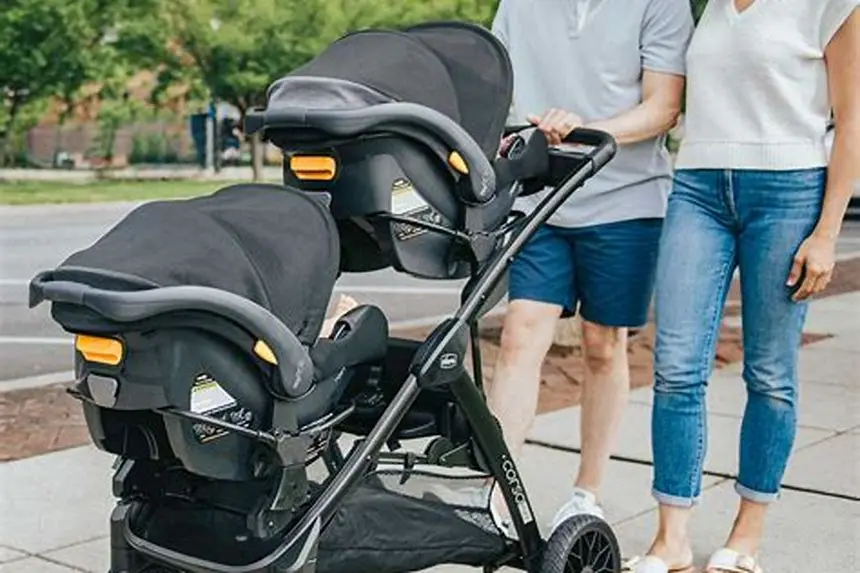
Most double strollers claim newborn readiness but only a handful actually support two infants under three months without adapters or inserts that expire fast.
| Minimum recline | 170-180 degrees for safe newborn use |
|---|---|
| Weight floor | 5 pounds per seat |
| Bassinet lifespan | Birth to 6 months or 20 pounds |
| Car seat adapter limit | 8-12 weeks typical |
| Harness adjustment | Must reach lowest slot for newborns |
| Seat width needed | 13-14 inches minimum per infant |
The short version
- Each seat must recline to at least 170 degrees and support a minimum of 5 pounds to meet newborn safety guidelines
- Side-by-side models with independent recline let both infants lie flat; most tandem strollers force one infant upright
- Car seat adapters work for the first 8-12 weeks but leave you without a stroller once infants outgrow the carrier
- Bassinet attachments fit newborns best but add $200-400 to the base price and expire around 6 months
- Test the harness buckle with one hand before buying: you'll be holding a second infant while you strap the first one in
What weight and age limits define infant suitability
A stroller seat meets infant safety standards when it supports a child from 5 pounds and birth onward. That floor comes from pediatric guidelines for safe recline and airway positioning. Strollers that set a 6-month or 10-pound minimum aren't designed for newborns, no matter what the marketing says. The age rating matters less than the recline angle and the harness fit: a seat that reclines flat but sets its minimum at 15 pounds forces you to wait months before using it.
The recline angle is the deciding factor. Infants under four months lack the neck and core strength to sit upright without slouching forward, which can compress the airway. A 170-degree recline or flatter keeps the spine neutral and the airway open. Anything steeper than 150 degrees is meant for older babies who can hold their heads up. Most tandem strollers recline the rear seat fully but leave the front seat at 140 degrees, which rules out two infants unless you rotate positions every walk.
Harness slot height is the detail most parents miss until the stroller arrives. The lowest harness slot must sit at or below the infant's shoulders when they're lying flat. Newborns measure around 9 to 10 inches from shoulder to seat, so the bottom slot needs to be within 8 inches of the seat base. Strollers designed for toddlers start the harness slots higher, and no amount of padding will fix that. You end up with straps pulling down on the infant's chest instead of across the shoulders.
Head and body support built into the seat matters more than aftermarket inserts. A contoured seat back with a shaped headrest holds an infant's head centered without extra padding that can shift or bunch. Inserts sold separately often reduce the usable seat width by an inch or more on each side, and twins or two small infants already push the width limits of most double strollers. If the stroller needs an insert to be newborn-safe, it wasn't designed for newborns. For the detail, see our notes on adapting seats from infant to toddler.
Which stroller types support two infants safely
Side-by-side strollers with independent recline on both seats are the only layout that lets two infants lie flat at the same time. Each seat operates separately, so one infant can nap fully reclined while the other sits up to look around once they're old enough. The catch is width. Most side-by-side doubles measure 29 to 32 inches wide, which clears standard doorways at 32 inches but jams in narrow store aisles and older building entries. You gain simultaneous flat recline but lose some access.
Inline tandem strollers put one seat behind the other, which solves the width problem but creates a recline conflict. The rear seat usually reclines flat, but the front seat stops at 140 to 150 degrees to leave legroom for the child behind. That front seat works for a four-month-old who can sit supported, but not for a newborn. If both your infants are under three months, a tandem forces you to choose which one gets the safe recline. Some parents rotate the infants between seats on every outing, which works until one infant learns to prefer the view from the front.
Convertible strollers with a stadium-style second seat mounted higher solve the tandem recline problem. Both seats recline independently to 170 degrees or more because the upper seat hangs above the lower one instead of pushing into its legroom. The Uppababy Vista and the Bugaboo Donkey are the two best-known examples. They cost $900 to $1,400 for the frame and both seats, but they're the only tandem layout that holds two infants flat from birth. The second seat is sold separately and adds $200 to $300 to the base price. Before you commit to anything, it is worth looking at compatible toddler boards.
Sit-and-stand strollers and models with a rear platform or jump seat don't count for two infants. The rear position is a bench or standing platform meant for a toddler who can climb on and off independently. There's no harness, no recline, and no back support. These are useful once your older child is two or three and your younger one is still in the main seat, but they do nothing for twins or two children under six months.
| Layout | Both recline flat | Fits standard door | Base price range |
|---|---|---|---|
| Side-by-side | Yes, independently | Tight at 29-32 inches | $400-$700 |
| Inline tandem | Rear only | Yes, 25-27 inches | $350-$600 |
| Stadium tandem | Yes, both seats | Yes, 25-27 inches | $900-$1,400 |
| Sit-and-stand | Front seat only | Yes | $200-$400 |

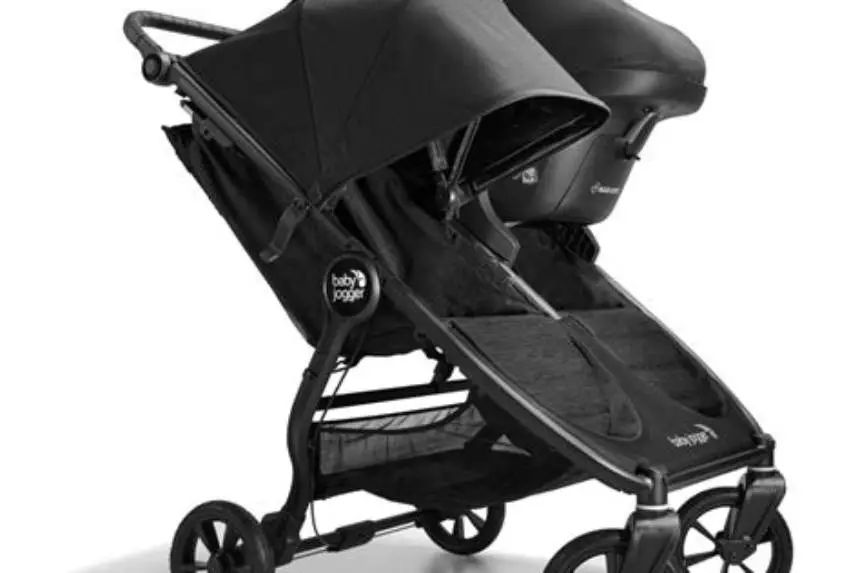
Double Stroller for Twins Infants and Toddlers
No recline angle or independent recline data published
How stroller design affects infant comfort and safety
Seat depth and width set the real capacity, not the weight limit printed in the manual. Each infant seat needs at least 13 inches of width to fit an infant comfortably in a sleep sack or bunting during cold weather. Seats narrower than that force you to choose between warm outerwear and a safe harness fit: the fabric bunches under the straps and creates slack. Side-by-side strollers typically give 13 to 15 inches per seat, while tandem seats run 14 to 16 inches because they don't share the frame width.
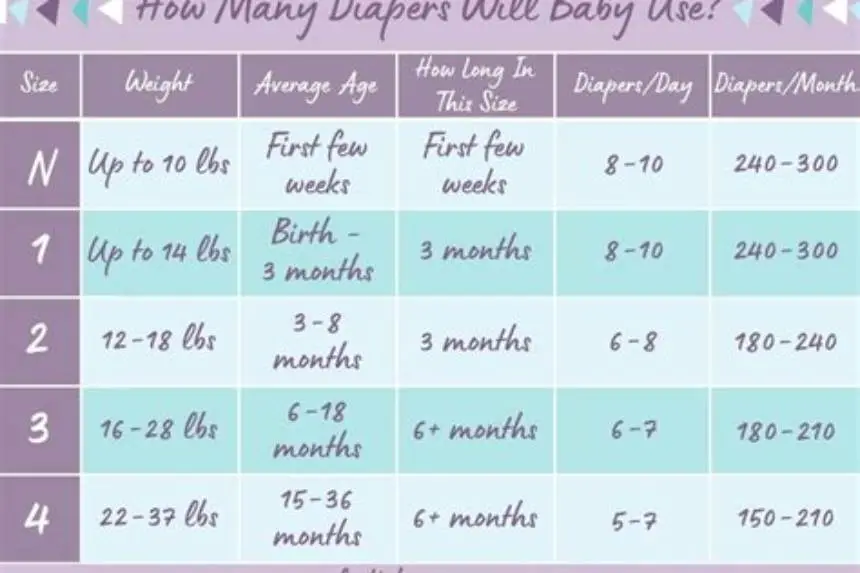
Seat depth from the seat back to the front edge should measure at least 18 inches when fully reclined. Infants grow fast in the first six months, and a short seat leaves their legs dangling or their head pressed against the canopy by four months. Most convertible strollers extend the seat as the child grows, but budget side-by-sides often use a fixed seat pan that works well at birth and feels cramped by the time the infant can sit up. Check the specs before you buy, because the only fix is a new stroller. People in this spot often ask about extra diapers needed for twins as well.
Suspension and wheel size matter more for infants than for older children. A newborn's head weighs about a pound and their neck muscles can't stabilize it against bumps. Strollers with air-filled tires and independent suspension on all four wheels absorb sidewalk cracks and gravel better than hard plastic wheels with no give. The ride difference is obvious the first time you push the stroller across a parking lot: infants stay asleep over rough pavement in a suspended stroller and wake immediately in a rigid one.
Canopy coverage becomes critical when both infants are lying flat. A reclined infant's face points up at the sky, which means direct sun exposure unless the canopy extends far enough forward to shade the entire seat. Look for canopies that reach within 6 inches of the bumper bar when deployed, and check that both canopies operate independently so you can shade one infant while the other gets airflow. Fixed canopies that cover both seats as a single panel work poorly: one infant always ends up in full sun or full shade regardless of the time of day.
- Air-filled tires: smoother ride, need a pump every few weeks, better for sidewalks and parks
- Foam-filled tires: no flats, slightly rougher ride, good enough for smooth pavement
- Hard plastic wheels: cheapest option, transmit every bump, acceptable only for indoor mall walking
Car seat adapters versus built-in recline for newborns
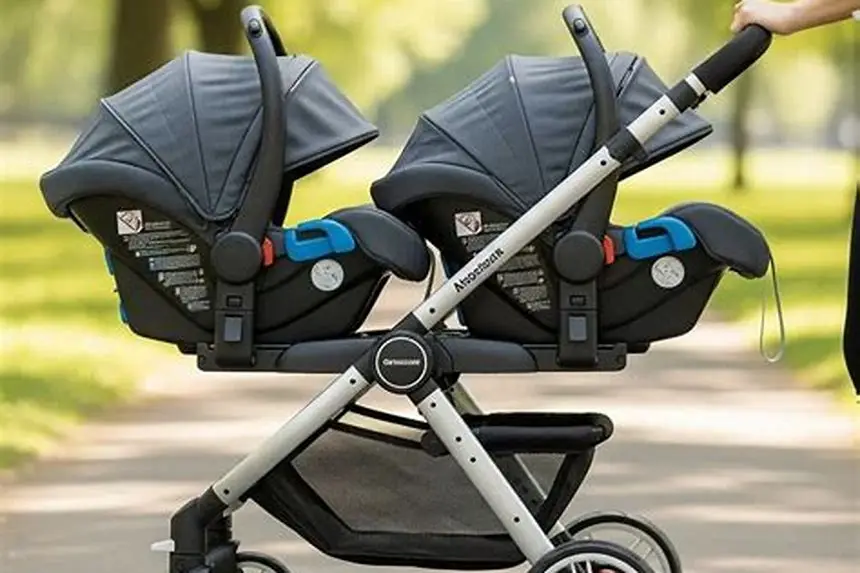
Car seat adapters let you click two infant car seats directly onto the stroller frame without using the stroller seats at all. This setup is popular for the first two months because you can move a sleeping infant from the car to the stroller without unbuckling them. The infant stays in the car seat they're already familiar with, and you avoid adjusting a new harness. Most double stroller frames accept adapters for Graco, Chicco, and Britax infant seats, sold separately for $50 to $80 per pair. For the detail, see our notes on minivan with removable 2nd row seats.
The appeal fades fast. Infant car seats have a weight limit of 22 to 35 pounds depending on the model, but most pediatricians and car seat techs recommend moving the child to a convertible car seat by 12 weeks or when their head is within an inch of the car seat's top edge. After that point, the car seat is a bulky shell you're carrying around for no reason. You still have the double stroller, but now you need to buy and learn to use the actual stroller seats you've been ignoring for three months.
Car seats are also heavier and less comfortable for long strolls than a stroller seat designed for walking. An infant car seat with a newborn inside weighs 12 to 18 pounds, and you're pushing two of them. That's 30-plus pounds before you add the diaper bag. Stroller seats with full recline weigh less and position the infant lower in the frame, which makes the stroller easier to push and turn. The lower center of gravity also reduces the chance of the stroller tipping backward when you hang a bag on the handlebar.
If you're going to use car seat adapters at all, plan for them to be a short-term convenience, not a primary setup. They're useful for quick errands during the first eight weeks when the infant is small enough to stay asleep through a car-to-store transfer. Beyond that, the stroller's own seats should be your main option. Some parents skip adapters entirely and go straight to the stroller seats from day one, which works fine if the seats meet the recline and weight minimums.
Bassinet attachments for the earliest weeks
Bassinet attachments are separate infant carriers that click onto the stroller frame in place of the regular seats. They're designed specifically for newborns and provide a flat, firm sleep surface with mesh sides for airflow. Each bassinet holds one infant from birth to around 20 pounds or 6 months, whichever comes first. The flat surface and rigid sides are safer and more comfortable for a newborn than a reclined stroller seat with a padded insert, and the infant can nap in the bassinet for longer stretches without positional concerns.
The downside is cost and lifespan. Bassinets for double strollers are sold as a pair and add $200 to $400 to the stroller price, depending on the brand. You'll use them for six months at most, then switch to the stroller's regular seats once the infants can sit with support. That's a steep price for half a year of use, but parents of twins and closely spaced siblings often consider it worth the cost for the flexibility it provides during the newborn phase. The bassinet lets the infant sleep for a full naptime walk, whereas a reclined seat is fine for 30 to 45 minutes but not for a two-hour outing.
Not every double stroller accepts bassinet attachments. Side-by-side models from brands like Bugaboo, Uppababy, and Baby Jogger offer them, but most budget double strollers under $400 don't have a compatible bassinet option. If you're planning to buy bassinets, confirm compatibility before you buy the stroller. Some brands sell a bassinet stand separately so you can use the bassinet as a bedside sleeper at home, which stretches the value slightly: but that stand adds another $100 to $150.
Bassinet attachments are the best option if you're planning long daily walks during the first few months or if one or both infants have reflux or other conditions that require them to lie completely flat. For parents who mainly use the stroller for quick errands or indoor mall walks, a stroller seat with a full recline and good head support does the job without the added expense.
What to test before buying a double stroller for infants
Fold and unfold the stroller with one hand while standing. You'll be holding an infant in the other arm when you're loading the stroller into the car, so a two-handed fold or a fold that requires you to pull two levers on opposite sides of the frame is a deal-breaker. The best double strollers have a single foot-activated fold or a handlebar release that lets you collapse the frame and pull it toward you with one motion. Test it three times in the store: if you can't get it smooth by the third try, it's not going to get easier in a parking lot with a crying infant.
Check the harness buckle with one hand as well. The buckle should snap together with light pressure and release with a single squeeze. Buckles that require you to thread two or three straps through a central hub or press a button while pulling the straps apart add 15 seconds to every transition, and those seconds matter when one infant is already strapped in and fussing while you're trying to buckle the second one. Magnetic buckles are faster than traditional squeeze buckles but are only available on higher-end strollers in the $700-plus range.
Push the stroller through a tight turn and over a threshold or curb. The turning radius should let you pivot the stroller 180 degrees within a 5-foot-wide hallway without hitting the walls. Side-by-side strollers are harder to turn than tandems because the wheelbase is wider, but a well-designed side-by-side should still respond to one-handed steering. If you have to use both hands and put your weight into it to make the stroller turn, you're going to hate that stroller within a week.
Measure the folded dimensions and compare them to your car trunk. Double strollers fold smaller than you'd expect from looking at them set up, but they still take up a lot of cargo space. A folded side-by-side typically measures 30 inches wide and 15 inches tall, which fits in most SUV and minivan trunks but overflows a sedan trunk unless you drop the rear seats. Tandem and convertible strollers fold narrower but longer, usually around 25 inches wide and 35 inches long. Bring a tape measure to the store and check both the stroller and your trunk before you commit.
- Fold the stroller one-handed three times to confirm the mechanism works smoothly without looking at it.
- Buckle and unbuckle the harness on both seats using only one hand, with the other hand held behind your back.
- Push the stroller in a figure-eight pattern and over a door threshold to test steering and curb handling.
- Measure the folded stroller width, length, and height, then compare those numbers to your car trunk dimensions.
- Recline both seats fully and check that the canopies extend far enough forward to shade an infant's face in each seat.
- Lift the stroller by the handlebar and by the frame near the wheels to judge the weight and balance when you're carrying it up stairs.
Questions people still ask
Can I use a double stroller with one infant and one toddler instead of two infants?
Yes, as long as the toddler weighs less than the seat's maximum (usually 40 to 50 pounds) and can sit upright safely. Most parents keep the infant in the rear seat of a tandem stroller so the toddler can see out the front. Side-by-side strollers work well for this pairing because both children get the same view and the weight stays balanced.
Do I need to buy two of everything if I'm using bassinets or car seat adapters?
Yes. Each infant needs their own bassinet or car seat adapter, and those are always sold separately or in pairs. Budget for the pair when you're calculating the total stroller cost. Some brands bundle the bassinets with the stroller frame, but most charge $200 to $400 extra for the pair.
How do I know if my infants are too big for a reclined stroller seat?
Move your infant to the upright position once they can sit with minimal support, usually around 6 months. Signs they've outgrown the recline include pushing themselves upright against the straps, fussing when laid flat for more than a few minutes, or their feet hanging past the footrest when reclined. Weight limits rarely come into play before the upright milestone.
Will a side-by-side stroller fit through my front door?
Measure your door width first. Standard interior and exterior doors are 32 inches wide, and most side-by-side strollers measure 29 to 31 inches, so they clear with about an inch on each side. Older homes and narrow bathroom or closet doors may be 28 or 30 inches, which won't work. Tandem strollers are a safer choice if your home has tight doorways.
Can I jog or run with a double stroller designed for two infants?
Not until both infants are at least 6 to 8 months old and can hold their heads steady against the bouncing motion. Jogging strollers for doubles have a fixed front wheel and require stronger neck control than walking strollers. Even with a jogging stroller, most manufacturers recommend waiting until 6 months minimum, and many pediatricians suggest 12 months for regular running.