Which fits a newborn on light day hikes: baby carrier or offroad stroller
For light day hiking with a newborn under about 12 pounds (5.5 kg), a baby carrier designed for infants provides better safety and terrain access than an offroad stroller, which usually fits older babies and smoother trails.
On this page (9 sections)
- Fit check
- What matters most
- Newborn Weight and Age Suitability
- Terrain and Trail Difficulty for Carriers vs Strollers
- Parent Physical Effort and Comfort
- Safety Considerations for Newborns on Hikes
- Space and Packing Implications
- Light Day Hiking with Newborn: Baby Carrier or Offroad Stroller
- Questions people still ask
Part of our guide on boba wrap size chart for 5'9" parent

Baby Stroller, 2 in 1 Convertible Bassinet Mode Newborn to
Supports newborns to toddlers with no minimum weight stated but designed for newborn use with bassinet and
Check it on Amazon
Accombe 2-in-1 Convertible Baby Stroller for Newborn to Toddler
Supports newborns to toddlers with no minimum weight stated but includes bassinet and shock absorbing wheels
See this alternative| Product | minimum baby weight support lbs | Verdict | |
|---|---|---|---|
| Baby Stroller, 2 in 1 Convertible Bassinet Mode Newborn to Toddler | usofrint | No minimum baby weight support lbs published | No rating published | View on Amazon |
| Accombe 2-in-1 Convertible Baby Stroller for Newborn to Toddler ACCOMBE | No minimum baby weight support lbs published | No rating published | View on Amazon |
| Graco Modes Pramette 3-in-1 Stroller Graco | No minimum baby weight support lbs published | No rating published | View on Amazon |
| Mompush Wiz 2-in-1 Bassinet Stroller Reversible Seat mompush | No minimum baby weight support lbs published | No rating published | View on Amazon |
| besrey Baby Carrier with Hip Seat Newborn to Toddler besrey | No minimum baby weight support lbs published | Not published | View on Amazon |
The numbers
- Newborn weight limit
- under 12 lbs / 5.5 kg
- Typical stroller minimum
- 15 lbs / 6.8 kg
- Trail difficulty carrier
- light to moderate
- Trail difficulty stroller
- mostly smooth
- Parent effort carrier
- higher
- Parent effort stroller
- lower
What matters most
- Newborns under 12 pounds require carriers rated for infant support.
- Offroad strollers suit babies over 6 months or 15 pounds, on easy trails.
- Carriers offer superior terrain versatility but require more parent effort.
- Strollers add bulk and weight but reduce physical strain on parents.
- Safety depends on correct weight limits and secure baby positioning.
Newborn Weight and Age Suitability
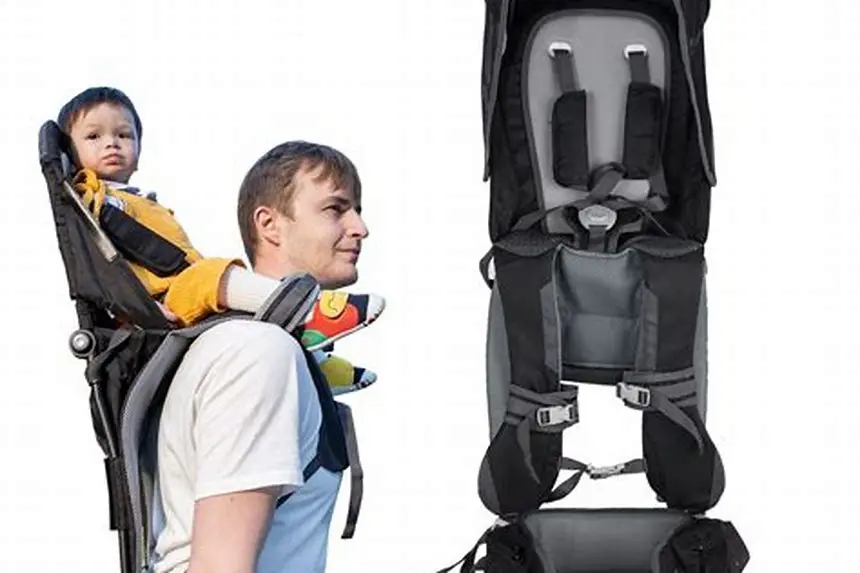
Newborns typically weigh between 5.5 and 10 pounds (2.5 to 4.5 kg). Safety standards for baby carriers require a minimum weight capacity, commonly around 12 pounds (5.5 kg), to ensure proper head and neck support. Infant carriers include padded inserts to stabilize newborns under this threshold.
Offroad strollers generally specify a higher minimum weight limit around 15 pounds (6.8 kg), often not suitable for the earliest newborn stage. Their bassinet attachments or reclining seats may accommodate younger infants, but these usually require the baby to have some head control, typically after 3 to 6 months.
Choosing a carrier designed specifically for newborns ensures compliance with safety recommendations and comfort. Using an offroad stroller too early risks inadequate support and increased jostling on trails.
| Type | Usual Minimum Weight (lbs) | Typical Newborn Suitability |
|---|---|---|
| Newborn Baby Carrier | 12 | Yes, with infant insert |
| Offroad Stroller | 15 | No, usually 3-6 months or older |
Terrain and Trail Difficulty for Carriers vs Strollers
Baby carriers excel on uneven, narrow, or root-strewn trails where strollers cannot roll safely or easily. Carriers allow parents to navigate inclines, steps, and softer surfaces without trail restrictions. There is more on best baby carrier for twins in a separate guide.
Offroad strollers perform best on wide, compact or groomed trails with packed dirt or gravel. Their suspension systems improve ride comfort but cannot fully absorb shocks from highly technical terrain.
If your hike crosses moderate slopes or rough patches, a carrier offers superior mobility. Choose a stroller only for relatively smooth, obstacle-free paths or park trails.
When considering terrain, keep in mind that offroad strollers vary widely in wheel size and suspension quality, affecting their capability. For example, models with 16-inch pneumatic tires handle gravel and dirt paths better than those with smaller wheels closer to 8 to 12 inches, which struggle in loose or uneven surfaces. We cover selecting appropriate carriers in its own article.
An offroad stroller with adjustable suspension can improve shock absorption but still cannot match the flexibility of a carrier on very technical trails. If the trail includes creek crossings or requires frequent lifting of the stroller over obstacles, carriers are far more practical.
For trails rated as easy or moderate with well-maintained surfaces and minimal obstacles, strollers provide a smooth ride. However, on trails where footing is uncertain and maneuverability is critical, the baby carrier’s direct contact with the parent’s body and ability to shift weight dynamically makes it safer and less tiring.
| Measure | Baby Carrier | Offroad Stroller |
|---|---|---|
| Trail Width | Any width and narrow paths | Wide, groomed trails only |
| Surface Type | Dirt, roots, rocks, uneven | Compact dirt, gravel, paved |
| Incline Handling | Good on steep inclines | Limited incline capability |
Baby Stroller, 2 in 1 Convertible Bassinet Mode Newborn to Toddler |
Supports newborns to toddlers with no minimum weight stated but designed for newborn use with bassinet and shock absorption
- Height 41.34 inches
- Length 21.26 inches
- Weight 21.28 Pounds
Parent Physical Effort and Comfort
Carriers place the baby’s weight directly on your back and shoulders, requiring sufficient upper-body strength and endurance on hikes over a mile or with elevation gain. A well-fitted carrier with padded straps distributes weight evenly, reducing strain. The other half of this decision is best lumbar support for baby carriers.
Offroad strollers significantly reduce physical effort by carrying the baby’s weight on wheels. However, pushing a stroller over uneven terrain, uphill, or through sand increases effort and can be tiring, especially if the stroller is heavy.
Parents must assess their fitness and trail length. Carriers suit those comfortable carrying 12-20 pounds for an hour or more. Strollers help on easier terrain but add bulk and require storage space.
Parents should consider the cumulative weight of the baby plus gear when choosing between carrier and stroller. Carrying a newborn plus a day pack can quickly add 25 pounds or more, which impacts endurance. In this scenario, even a well-padded carrier may cause discomfort after 90 minutes without breaks.
Pushing a stroller reduces upper body strain but can increase lower body fatigue, especially on uphill stretches. For example, pushing a 25-pound stroller loaded with a 15-pound baby up a 10% grade trail requires sustained leg power, which can be challenging without frequent rest.
Comfort can also vary with the parent’s height and body type. Taller parents may find carriers with adjustable torso lengths more comfortable, while shorter parents might struggle with stroller handle height, leading to back strain. Testing gear before a hike can reveal these issues early.
Accombe 2-in-1 Convertible Baby Stroller for Newborn to Toddler
Supports newborns to toddlers with no minimum weight stated but includes bassinet and shock absorbing wheels
- Size 40.5x32x23
- Height 5.90 inches
- Length 9.84 inches
Safety Considerations for Newborns on Hikes
Safety depends on secure, ergonomic positioning with head and neck supported to prevent slumping, which can obstruct breathing. Only carriers rated for newborns with proper inserts ensure this.
Offroad strollers must have a stable frame and good suspension to minimize jolts. Buckles and harnesses need to fit snugly. Avoid strollers that do not recline fully for newborns.
Environmental factors matter: sun protection, insect shielding, and weather-appropriate clothing must be considered regardless of carry method.

Graco Modes Pramette 3-in-1 Stroller
- Height 42.5 inches
- Length 25.6 inches
- Width 34.6 inches
Space and Packing Implications
Carriers are compact and lightweight, easy to pack in a backpack or stash in a car. They free your hands but limit capacity for additional gear due to body space occupied.
Offroad strollers carry extra supplies in storage baskets and cup holders but require trunk space for transport and more effort to fold and unfold. Their bulk can be a burden on car storage and narrow trail sections.
Consider your packing needs and vehicle size. For minimal gear and quick outings, carriers win. For longer excursions with more baby items, a stroller might be a better fit.

Mompush Wiz 2-in-1 Bassinet Stroller Reversible Seat
- Height 41.3 inches
- Length 36.8 inches
- Weight 23.1 pounds
Light Day Hiking with Newborn: Baby Carrier or Offroad Stroller
Light day hiking with a newborn under 12 pounds favors soft-structured baby carriers with infant inserts for safety and trail versatility. Carriers let you navigate varied terrain and keep your baby close, crucial for temperature regulation and quick attention.
Offroad strollers become practical once your baby passes 15 pounds and can handle gentle trails, enabling you to carry more gear and reduce physical load. They are less suited to rough or narrow paths where pushing is difficult.
Your choice depends on your newborn’s size, trail conditions, and your strength. I pick a newborn carrier for safety and agility on day hikes under 3 miles with up to 500 feet elevation gain, trading off added effort for control.
- Carrier: close contact and warmth
- Carrier: greater terrain access
- Stroller: less parent fatigue
- Stroller: more gear capacity
- Carrier: more physical effort
- Carrier: less gear space
- Stroller: limited to smooth trails
- Stroller: bulkier to transport
For newborns on light day hikes, a properly rated baby carrier is the safer, more versatile choice than an offroad stroller.
Questions people still ask
Can newborns use offroad strollers safely?
Only if the stroller includes a fully reclining seat or bassinet rated for newborn weight, usually above 12 pounds. Many offroad strollers require babies to have some head control, often at least 3 months old.
What trail conditions exclude an offroad stroller?
Steep, rocky, narrow, root-filled, or muddy trails typically are unsuitable for strollers. These terrains risk tipping or damaging the stroller and increase parent effort to push.
How long can I comfortably carry a newborn in a baby carrier on a hike?
Most parents manage 1 to 3 hours carrying 12 to 20 pounds comfortably with a well-fitted carrier, depending on fitness. Take breaks to avoid fatigue and ensure your posture is good.
Which is safer for a newborn on bumpy trails?
A baby carrier designed for infants offers better control and less jolting as the parent can absorb shocks. Strollers depend on suspension quality but cannot match the parent’s ability to adapt to uneven terrain.
Can I use a convertible stroller with a removable infant car seat for hiking?
Infant car seats add safety in vehicles but generally provide poor shock absorption on trails and add bulk. They are not optimized for hiking but fine for smooth rides or errands.
How does weather affect choice between carrier and stroller?
Carriers keep baby closer and allow better temperature control with layers, but expose the parent to elements. Strollers often have weather shields but can be harder to maneuver in wind or rain.