Is the Infantino Flip 4-in-1 safe for front-facing out use by your infant?
Learn the exact conditions under which the Infantino Flip 4-in-1 carrier is safe for front-facing out use by your infant.
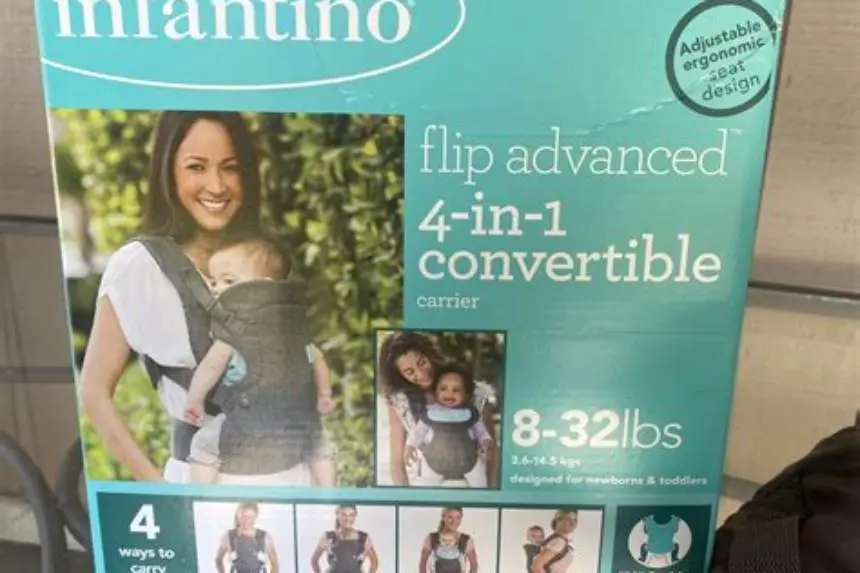
The Infantino Flip 4-in-1 carrier is safe for front-facing out use only when your baby is at least 5 months old and weighs between 15 and 32 pounds, supporting proper posture and head control.
On this page (8 sections)
- The short version
- Is front-facing out safe with the Infantino Flip 4-in-1 carrier?
- What are the manufacturer’s weight and age guidelines for front-facing use?
- How does the carrier support infant posture front-facing?
- Are Britax car seats safe and how do they compare on safety standards?
- How to decide if front-facing out is right for your baby in the Infantino Flip 4-in-1
- Common mistakes to avoid with the Infantino Flip 4-in-1 front-facing out mode
- Questions people still ask
Part of our guide on boba wrap size chart for 5'9" parent
Discover exactly when and how to use the Infantino Flip 4-in-1 carrier front-facing safely, avoiding common errors that compromise infant safety.
| Minimum age front-facing | 5 months |
|---|---|
| Minimum weight front-facing | 15 lbs |
| Maximum weight front-facing | 32 lbs |
| Number of carry modes | 4 |
| Weight capacity overall | 32 lbs |
The short version
- Front-facing out is safe from about 5 months and 15 pounds on.
- Baby must have good head and neck control for front-facing out.
- Carrier supports ergonomic posture but requires correct fit.
- Manufacturer weight limit for front-facing out is 32 pounds.
- Use rear-facing modes for younger or lighter infants.
Is front-facing out safe with the Infantino Flip 4-in-1 carrier?
The Infantino Flip 4-in-1 carrier is designed to be safe for front-facing out use starting when your infant is about 5 months old and weighs at least 15 pounds. This aligns with the infant’s ability to hold up their head and neck independently, which is critical for safety when facing outward.
The manufacturer explicitly states that front-facing out mode is intended for babies with adequate neck strength, generally around 5 months or older. Using it before this age or before your baby reaches the minimum weight risks insufficient head support and potential airway compromise.
Front-facing out allows your baby to see the world but places different demands on their spinal alignment and hip positioning. The Flip 4-in-1 carrier supports ergonomic hip positioning, but improper adjustment or premature switching to this mode can cause posture issues or discomfort.
Therefore, front-facing out is safe only within the recommended weight and developmental limits, and only if the carrier is adjusted properly to maintain your baby's posture.
What are the manufacturer’s weight and age guidelines for front-facing use?
Infantino sets a minimum of 15 pounds and at least 5 months of age for front-facing out, with a maximum weight of 32 pounds for all carry modes. These figures depend on your infant’s developmental readiness, not just the scale.
The carrier has four modes: infant inward-facing, toddler inward-facing, front-facing out, and back carry. The front-facing out mode is the third in developmental order, suitable once the baby has solid head and neck control.
Age guidelines are approximate since infants develop unevenly, so weight and head control tests matter more. For example, some babies under 5 months may meet the neck control requirement but weigh less than 15 pounds, making front-facing out unsafe.
Exceeding 32 pounds is unsafe as the carrier’s harness and structure are not tested for higher loads, risking breakage or improper support. Always check your infant’s weight and developmental signs before switching modes.
| Carry Mode | Minimum Weight | Minimum Age | Maximum Weight | Notes |
|---|---|---|---|---|
| Infant inward-facing | 7 lbs | Newborn | 25 lbs | Supports newborns with head support |
| Toddler inward-facing | 15 lbs | About 4 months | 32 lbs | For babies with head control |
| Front-facing out | 15 lbs | 5 months | 32 lbs | Baby must hold head independently |
| Back carry | 15 lbs | 6 months | 32 lbs | For older infants and toddlers |
How does the carrier support infant posture front-facing?
The Infantino Flip 4-in-1 uses a wide seat base designed to promote ergonomic hip positioning front-facing out, aiming for the “M” shaped leg posture advised by pediatric orthopedists to reduce hip dysplasia risk.
The carrier’s adjustable straps and padded waistband help keep your baby close for lumbar support, which is important because front-facing out mode can place more pressure on the spine and hips than inward-facing modes.
However, despite these design features, maintaining posture depends on correct adjustment. The height of the seat and strap tightness must fit your baby’s size precisely to avoid slouching or leg dangling, which can strain hips and spine.
If your infant begins to slump or does not maintain a natural curve in the spine, stop front-facing out immediately and revert to inward-facing carry modes until posture improves.
Are Britax car seats safe and how do they compare on safety standards?
Britax car seats are widely regarded as safe, meeting or exceeding federal safety standards including FMVSS 213 in the U.S. They undergo rigorous crash testing beyond minimum requirements.
Comparing safety between a baby carrier like the Infantino Flip and Britax car seats is apples to oranges. Car seats are crash safety devices designed for vehicles, while carriers are for carrying and bonding outside of cars.
Britax car seats feature side-impact protection, steel frames, and energy-absorbing foam designed specifically for crash scenarios, unlike carriers which offer no crash protection.
Parents should never use a baby carrier in place of a proper car seat during vehicle travel. Both are safe in their intended uses but fulfill very different safety functions.
- Meets or exceeds federal crash standards
- Side-impact and energy-absorbing features
- Steel-reinforced frame for durability
- Not designed for carrying outside cars
- Heavier and less portable than carriers
How to decide if front-facing out is right for your baby in the Infantino Flip 4-in-1
To decide when to use front-facing out, assess your baby’s developmental milestones first. Ensure your infant can hold their head steady without support and weighs at least 15 pounds.
Check the carrier’s fit before each use: the seat should support thighs fully, and straps must be tight enough to keep your baby close without restricting circulation.
Follow a four-step check: 1) Confirm weight and age meet guidelines, 2) Observe head and neck control, 3) Adjust carrier for ergonomic posture, 4) Monitor baby’s comfort and positioning during use.
If any of these checks fail or your baby fusses excessively, do not use front-facing and revert to inward-facing modes for safety.
- Confirm baby weighs at least 15 pounds and is roughly 5 months old.
- Ensure baby can hold head and neck stable without support.
- Adjust carrier straps and seat to support ergonomic posture.
- Observe baby during use; stop if slouching or discomfort occurs.
Common mistakes to avoid with the Infantino Flip 4-in-1 front-facing out mode
One common mistake is using front-facing out too early, before baby can hold up their head. This risks airway obstruction and spinal strain.
Another is failing to adjust the carrier properly, which can lead to poor hip positioning or slouching, increasing discomfort and potential long-term posture issues.
Parents sometimes continue front-facing out use beyond the 32-pound weight limit, stressing the carrier and risking failure of straps or buckles.
Ignoring fussing or signs of discomfort during front-facing out can indicate poor fit or developmental mismatch and should prompt immediate reevaluation of carry mode.
Avoid these errors by closely following manufacturer guidelines and regularly checking your baby’s comfort and posture.
- Early use: Wait until 5 months and 15 pounds minimum.
- Poor fit: Adjust straps and seat for ergonomic support.
- Overweight use: Do not exceed 32 pounds in any mode.
- Ignore cues: Stop if baby fusses or slouches.
Safe front-facing out only for well-head-controlled infants 15-32 pounds; proper fit is essential.
Questions people still ask
Can I use the Infantino Flip 4-in-1 front-facing out for a newborn?
No, the carrier is not safe front-facing out for newborns. They lack the head and neck control required, and must be carried inward-facing until about 5 months or 15 pounds.
What if my baby weighs less than 15 pounds but wants to face forward?
Weight and developmental readiness both matter. Using front-facing out below 15 pounds risks unsafe head support. Wait until your infant meets both criteria.
How do I know if the carrier fits my baby properly front-facing out?
Proper fit means thighs are fully supported, the baby’s back is rounded in a natural curve, and straps hold the baby snugly but comfortably.
Are there any risks associated with front-facing out positions in any carrier?
Yes, front-facing out can cause hip strain or airway risks if the baby lacks sufficient head control or if the carrier fit is poor. Follow manufacturer limits carefully.
Can I use the Infantino Flip 4-in-1 carrier in a car?
No, baby carriers like this one are not designed or tested for vehicle travel. Use a proper car seat, such as a Britax, for safety on the road.