Can a 4-month-old safely face forward in a baby carrier?
Most 4-month-olds should not face forward in a carrier unless they meet key developmental milestones like strong head and neck control, typically developing between 4 and 6 months. Always check your carrier’s age and weight limits for front-facing use.
On this page (8 sections)
- What matters most
- Minimum age and developmental milestones for front-facing
- Risks of forward-facing too early for babies
- How to check carrier specifications for age and weight limits
- When to switch from inward to outward facing safely
- Can a 4-month-old safely face forward in a baby carrier?
- Choosing a carrier that fits both parent and baby for safe front-facing use
- Questions people still ask
Part of our guide on fit advice for average height
The numbers
- Minimum age
- 4-6 months
- Head control needed
- Yes, firm neck
- Weight range
- Check carrier limits
- Hip safety
- M- or frog-leg position
- Switch timing
- Based on milestones
What matters most
- Front-facing requires strong head and neck control, often from 4-6 months.
- Carriers have specific age and weight limits: always check before use.
- Early forward-facing risks include neck strain and poor hip support.
- Switching from inward to outward facing depends on baby’s development and carrier specs.
- Proper positioning protects baby's spine, hips, and airway.
Minimum age and developmental milestones for front-facing
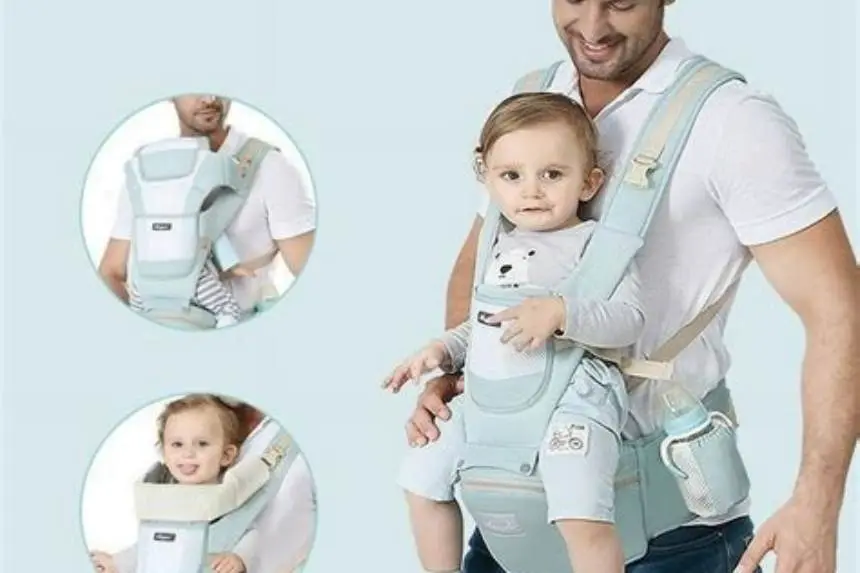
A baby’s ability to safely face forward in a carrier depends foremost on developmental milestones rather than strictly on age. Most infants gain the necessary head and neck control between 4 and 6 months. At 4 months, many babies are just beginning to hold their heads steady without support for several seconds but may not have consistent control yet.
Proper head control is essential because forward-facing puts the baby’s head and neck under more strain than inward-facing positions. Without it, a baby risks sudden head flops that can strain muscles or obstruct breathing. A baby should have some trunk stability to sit upright with minimal slumping.
Hip development also matters. Carriers that face forward should support the hips in an 'M' or frog-leg position to prevent hip dysplasia. Many babies’ hip joints are still developing in early months, so ensuring proper hip positioning reduces future joint issues.
Watch for these milestones before attempting forward-facing in a carrier: steady head and neck control, ability to hold torso upright, and no signs of discomfort or slumping while seated. If your 4-month-old meets these, you may consider front-facing but with caution. The other half of this decision is baby carrier use for two month olds.
Risks of forward-facing too early for babies
Facing forward too early can lead to several safety and developmental risks. The biggest concern is neck strain: babies without full neck muscle strength cannot support their heads, risking sudden forward or sideways head flops that may injure muscles or the airway.
Poor spinal support is another risk. At 4 months, many infants still need curved spine support that inward-facing carriers provide. Forward-facing carriers may encourage a straighter posture that the baby’s spine is not ready for, possibly leading to discomfort or long-term postural problems.
Hip development may suffer if the baby’s legs dangle without proper support. Forward-facing positions sometimes fail to maintain the recommended 'M' shape, raising risks of hip dysplasia or other joint issues if used before the hips mature sufficiently. People in this spot often ask about is infantino flip 4-in-1 safe for front facing out as well.
Behaviorally, facing outward too early can overstimulate young babies who are not yet ready for the sensory input of facing the world. This may cause fussiness or stress, negating the comfort that carriers are supposed to provide.

Beurer BY80 Digital Baby Scale
Accurately weighs infants up to 44 lbs with hold and tare functions for stable readings.
How to check carrier specifications for age and weight limits
Each baby carrier model lists age and weight limits for both inward- and outward-facing positions. These limits originate from safety testing and manufacturer guidelines. Check your carrier’s manual or the label sewn on the carrier before using it front-facing with a 4-month-old.
Typical front-facing minimum ages start around 5-6 months and weights around 15-16 pounds (lbs), but they vary widely. Some carriers specify minimum ages of 4 months if the baby meets developmental criteria. Weight limits usually max around 25-33 pounds but check for your model.
Weight is easier to measure than developmental milestones, so combining scales and milestone checks is best. You can weigh your baby with a home scale or at health visits. For age, always confirm with your baby’s physical development.
If your carrier lacks clear front-facing specs, do not use that position. Some carriers are unsafe for outward-facing use before 6 months or do not support front-facing at all, focusing instead on inward or hip carries.
- Locate and read the carrier’s instruction manual or label.
- Find the section on front-facing use: note minimum age and weight.
- Confirm your baby’s current weight with a scale or doctor visit.
- Assess your baby’s neck and head control milestones.
- Decide whether your baby fits both the carrier limits and developmental needs.
When to switch from inward to outward facing safely
Switching your baby from inward to outward facing in a carrier depends on reaching key developmental milestones and matching your baby’s comfort with carrier specs. Generally, this switch happens between 5 and 7 months, but individual variation is significant.
Look for consistent head control: your baby should hold their head steady without wobbling for at least 10 seconds while seated. Check trunk and back strength too: your baby should be able to sit upright with minimal support in the carrier.
Your baby’s behavior also signals readiness. If they seem interested in surroundings, gaze outward calmly, and do not slump or fuss excessively, they may be ready. Discomfort, fussiness, or slumping suggests staying inward-facing longer.
The carrier must support outward facing safely, with solid head, neck, and hip support. If the carrier lacks padding or adjustability for forward-facing, wait until you can upgrade or supplement with another model.
Some parents gradually switch by alternating inward and outward positions to see how their baby responds.
Can a 4-month-old safely face forward in a baby carrier?
Carrying a 4-month-old facing forward is conditionally safe if the baby has achieved firm head and neck control and your carrier explicitly supports front-facing use starting at this age. However, many 4-month-olds lack consistent head control, making front-facing risky.
The carrier must meet manufacturer’s specifications for minimum age and weight in the forward-facing position. For example, if the carrier requires at least 15 pounds (lbs) and 5 months, carrying a 4-month-old forward would violate safety guidelines.
Before attempting, test your baby’s head control by gently releasing support while holding the carrier in a front-facing position and observing any head flop. If the baby’s head bobs forward or sideways, do not carry forward-facing.
If your baby qualifies developmentally and the carrier fits, start with short periods of front-facing carries and watch for signs of discomfort or fatigue.
Choosing a carrier that fits both parent and baby for safe front-facing use
Selecting a carrier that supports front-facing safely at an early age requires considering both your baby’s needs and your body size and comfort. Many carriers excel in ergonomic support for parents but limit front-facing to older infants.
Adjustability is critical. Look for carriers with padded shoulder straps, waist belts distributing weight to hips, and options to customize seat width to your baby’s developmental stage. A baby carrier that fits well reduces strain for you and maintains the baby’s safe posture.
Materials also matter: breathable fabrics and good ventilation help prevent overheating, especially with a forward-facing baby who is more exposed.
As your baby grows, the carrier should accommodate changes in weight and posture without compromising safety. Consider carriers with multiple carry positions and certified safety standards (like ASTM or JPMA).
If your current carrier does not support front-facing safely at 4 months but your baby is ready, you may need a different model that lists lower minimum age and weight for that position.
| Feature | Carrier A | Carrier B | Carrier C |
|---|---|---|---|
| Minimum front-facing age | 6 months | 4 months (with milestones) | 5 months |
| Weight range for front-facing | 16-33 lbs | 14-30 lbs | 15-25 lbs |
| Adjustable seat width | Yes | Yes | No |
| Ergonomic parent support | Padded straps & belt | Basic straps | Padded straps |
| Certified safety standards | ASTM | JPMA & ASTM | None |
Questions people still ask
Is it safe to face a 4-month-old baby forward if they have good head control?
If your 4-month-old has consistent head and neck control and your carrier’s guidelines permit front-facing from that age and weight, it can be safe. Always test your baby’s comfort and monitor for any signs of distress.
What are the main signs my baby is ready to switch to forward-facing in a carrier?
Look for steady head control without support, ability to sit upright with minimal slumping, and interest in surroundings without fussiness. These signs usually appear around 5-7 months but vary individually.
Can I modify my carrier to make it safe for front-facing before the recommended age?
Modifying a carrier for front-facing use before the manufacturer’s recommended age or weight is unsafe and not advised. Use the carrier as designed to avoid risks.
How do I ensure my baby’s hips are protected in a forward-facing carrier?
Ensure the carrier supports the baby’s legs in an 'M' shape with knees higher than the bottom. Avoid carriers that let legs dangle or straighten, as this can affect hip joint development.
What are the dangers of carrying a 4-month-old forward-facing for too long?
Extended forward-facing carries can cause neck strain, discomfort, and overstimulation. Limit forward-facing time and watch your baby for signs of fatigue or fussiness.