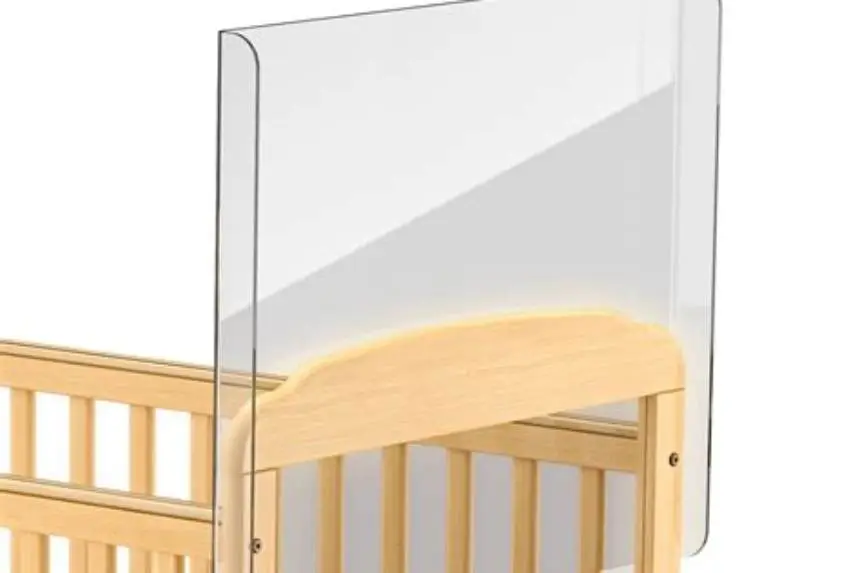
Is a crib still safe and suitable for your 3 year old?
Weight limits, climbing ability, and your child's height determine whether a crib remains safe at age three.
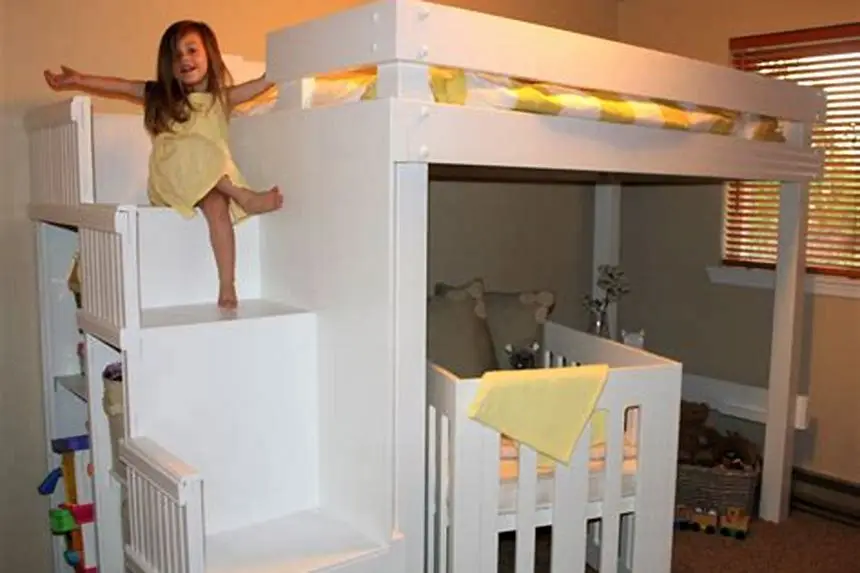
Most 3 year olds have outgrown their crib. The typical 3 year old stands 35 to 38 inches tall and weighs 28 to 32 pounds, putting them at or past the point where they can climb out. Once a child's chest reaches the rail or they attempt climbing, the crib is no longer safe.
On this page (8 sections)
- The short version
- Age and weight limits for cribs and what they actually mean
- Safety concerns when 3 year olds sleep in cribs
- When to move your 3 year old to a toddler bed
- Why 3 year olds often resist or outgrow the crib suddenly
- What happens if you keep a 3 year old in a crib too long
- How to make the crib-to-bed transition smooth at age 3
- Questions people still ask
Part of our guide on co sleeper mattress height fit
The crib becomes unsafe the moment your child can get a leg over the rail, regardless of what the weight limit says.
| Standard crib rail height | 26 inches from mattress |
|---|---|
| Climbing risk threshold | chest at or above rail |
| Average 3 year old height | 35-38 inches |
| Typical weight limit | 50 pounds |
| Safe transition age | 18 months to 3 years |
The short version
- Transition out of the crib when your child's chest reaches the top rail in the lowest mattress position
- Most 3 year olds stand 35-38 inches tall, tall enough to climb a standard 26-inch rail
- A 50-pound weight limit means little if your child can already scale the side
- Lowering the mattress to the floor inside the crib does not make climbing safe
- Expect disrupted sleep for 1-3 weeks after switching to a toddler bed
Age and weight limits for cribs and what they actually mean
Federal crib standards set a 50-pound weight limit for most cribs, but that figure tells you almost nothing about when your child outgrows theirs. The Consumer Product Safety Commission requires cribs to withstand that load without structural failure. Your 3 year old probably weighs 28 to 32 pounds, well under the limit, yet the crib may still be unsafe.
Height matters far more than weight. A standard crib rail sits 26 inches above the mattress when the mattress is in its lowest position. Most 3 year olds stand between 35 and 38 inches tall. That puts their chest right at the rail or above it. Once a child's chest clears the top rail, they can lever themselves over. The fall from a crib rail to the floor outside the crib is typically 35 to 40 inches, enough to cause head injury or a broken bone.
The American Academy of Pediatrics says to transition out of the crib when your child reaches 35 inches tall or can climb out, whichever comes first. Some children figure out climbing at 18 months. Others stay content until age three. Your child's coordination and willingness to test boundaries decide the timeline more than the calendar does.
Convertible cribs often list higher weight limits, sometimes 75 pounds or more, because they transform into toddler beds or daybeds with the rail removed. That limit applies to the bed configuration, not the crib configuration. The same 26-inch rail height and climbing risk still apply when the crib is assembled as a crib. For the detail, see our notes on features of waterproof protectors.
| Child height | Chest height (approximate) | Standard 26-inch rail | Risk level |
|---|---|---|---|
| 30-32 inches | 18-20 inches | Well below rail | Low |
| 33-35 inches | 20-22 inches | Approaching rail | Moderate |
| 36-38 inches | 23-25 inches | At or above rail | High |
| 39+ inches | 26+ inches | Above rail | Immediate |
Safety concerns when 3 year olds sleep in cribs
Climbing is the primary danger. Once your child gets a leg over the rail, they typically go headfirst toward the floor. They lack the coordination to turn around and lower themselves feet-first. Emergency departments see thousands of crib-related injuries each year, and falls account for most of them. A 3 year old who lands on their head from 36 inches can suffer a concussion or skull fracture.
Entrapment between the mattress and rail becomes more likely as children grow taller and more mobile during sleep. If the mattress does not fit snugly against all four sides, a gap forms. A child's head or limbs can wedge into that gap. Cribs manufactured after June 2011 must meet tighter slat spacing and mattress fit standards, but older cribs passed down from siblings or bought secondhand may not comply. The gap between any two slats must not exceed 2⅜ inches.
Strangulation from cords, mobiles, or crib bumpers is another risk that grows as children gain dexterity. A 3 year old can reach farther and manipulate objects a younger infant cannot. Remove all soft bedding, bumpers, and hanging toys. Keep the crib at least three feet from window blind cords and drapery pulls. We cover ensuring compatibility with crib size in its own article.
Some parents lower the mattress all the way to the floor inside the crib frame, thinking it prevents climbing. It does not. Your child can still climb over the rail, and now the rail is even higher relative to the mattress inside, making it harder for you to lift them in and out safely. The frame also creates a narrow well that limits how you can position yourself to help a distressed child in the middle of the night.
- Head injuries: falls from crib height cause concussions and fractures, especially when a child lands on hardwood or tile
- Entrapment: gaps between mattress and rails or between slats can trap limbs or heads
- Strangulation: drapery cords, mobiles, and bumper ties become accessible as reach and coordination improve
- Repeat attempts: a child who climbs out once will try again, often when you are asleep

oaskys Toddler Floor Bed
Keeps your 3 year old safe with a 19.7 inch height and 9 inch guardrails on a low-to-ground toddler floor bed.
When to move your 3 year old to a toddler bed
Transition when your child's chest reaches the top rail, when they attempt climbing, or when they ask for a big-kid bed, whichever happens first. For most children, that window opens between 18 months and 3 years. A 3 year old who has not yet tried to climb is an outlier, and you should still measure the rail height against their chest when they stand in the crib.
Other signs that it is time include your child refusing to sleep in the crib, repeatedly trying to climb out during the day, or expressing fear or frustration about being confined. Some children become distressed by the rails once they understand they cannot get out independently. That distress disrupts sleep more than the transition to an open bed would. People in this spot often ask about bassinet safety for overnight use as well.
A second child on the way often forces the timeline. If you need the crib for a newborn and your older child is close to 3, start the transition at least six to eight weeks before the baby arrives. That gives your older child time to adjust before their world shifts again. Rushing the move in the same week you bring a newborn home links the loss of the crib to the arrival of a rival, and resentment follows.
A toddler bed keeps the sleeping surface low, usually 6 to 8 inches off the floor, and includes a guardrail on one or both sides. Many toddler beds use the same crib mattress you already own, which saves money and keeps one familiar element in place. The guardrail prevents rolling out during sleep but does not cage your child in. They can climb over it or walk around it when awake, which is the point. If your budget is tight, putting the crib mattress directly on the floor works and costs nothing. Add a pool noodle under the fitted sheet along one edge to create a small lip that discourages rolling.
- Measure your child's height and compare their chest height to the crib rail. If their chest meets or exceeds the rail, transition now.
- Choose a toddler bed with a low frame and at least one guardrail, or place the crib mattress on the floor as a no-cost option.
- Childproof the bedroom by securing furniture to walls, covering outlets, and removing anything dangerous within reach.
- Introduce the new bed during the day. Let your child help make it or choose new sheets to build ownership.
- Keep the bedtime routine identical. Same books, same songs, same order. Only the furniture changes.
- Expect your child to test boundaries by getting out of bed. Walk them back calmly and consistently without engaging in conversation or negotiation.
Why 3 year olds often resist or outgrow the crib suddenly
Physical growth accelerates between ages 2 and 3, and most children gain 3 to 4 inches in height during that year. A crib that felt spacious at age 2 becomes cramped by age 3. Your child's legs may press against the ends, and they can no longer stretch out fully. Discomfort leads to restless sleep and early waking. We cover crib options for unsettled babies in its own article.
Cognitive development drives some of the resistance. A 3 year old understands that they are confined and that you are not. They see older siblings or peers in open beds and want the same autonomy. Saying no to the crib is a way of asserting independence. Forcing them back into it after that realization sets up a nightly power struggle you will lose.
Some children develop a fear of the crib after a bad dream or a fall. Once the crib becomes associated with distress, getting them into it at bedtime becomes a battle. You cannot reason a 3 year old out of a fear, and you cannot make them sleep in a place that frightens them. The path of least resistance is usually the right one here.
Potty training complicates crib use. A child who is learning to use the toilet at night needs to get out of bed independently. Calling for help and waiting for you to lift them over the rail leads to accidents, shame, and regression. An open bed lets them reach the potty chair or bathroom on their own, which reinforces the habit you are trying to build.
- Sudden growth spurt: a 3-year-old body simply does not fit the same way it did six months earlier
- Awareness of confinement: cognitive leaps make the rails feel like a cage rather than a safe boundary
- Fear after a fall or nightmare: one bad experience can turn the crib into a source of anxiety
- Potty training: independent toilet access requires an open bed, not a gated enclosure
What happens if you keep a 3 year old in a crib too long
The American Academy of Pediatrics and the Consumer Product Safety Commission both emphasize that no sleep environment is safe once a child can climb out of it. The crib's containment, which protected an infant, becomes a hazard for a mobile toddler. The same structure that kept your baby from rolling onto the floor now creates a high edge to fall from. You are better off with a low bed and a childproofed room than a tall crib your child is determined to escape.
How to make the crib-to-bed transition smooth at age 3
Childproof the bedroom as if your child will wander it unsupervised, because they will. Anchor dressers, bookshelves, and any furniture taller than two feet to the wall using furniture straps rated for at least 400 pounds of tip force. Cover electrical outlets, remove cords, and relocate anything breakable or dangerous to a higher shelf or a different room. Install a baby gate across the doorway if you need to contain your child to their room, but leave the gate low enough that you can step over it quickly in an emergency.
Keep the bedtime routine identical except for the bed itself. Same bath time, same books, same songs, same order. Your 3 year old is watching for what else will change, and consistency everywhere else reassures them. Do not introduce a new stuffed animal, a new pajama rule, or a new reward chart on the same night you debut the bed. One change is enough.
Expect your child to get out of bed repeatedly for the first few nights, sometimes a dozen times or more. Walk them back without speaking, without eye contact, and without negotiation. Make it boring. If you engage, you reward the behavior. Most children stop testing after three to seven nights once they learn that getting up leads nowhere interesting. A few take two weeks. Stay consistent and the behavior will extinguish.
Use a toddler clock that glows green when it is time to get up and red or off when it is still sleep time. A 3 year old can learn that rule in a few days. It gives them a concrete, non-negotiable signal and removes you from the role of enforcer. If your child gets up before the green light, walk them back without comment. When the light turns green, go in immediately and make a big deal of the success, even if they have been awake and quiet for an hour.
- Anchor all furniture: tip-overs kill children every year, and a newly mobile 3 year old will climb on everything
- Gate the doorway if needed: keeps your child contained while giving them freedom to move within a safe space
- Boring consistency: walk them back to bed without talking, without eye contact, without negotiation
- Toddler clock: a green light tells them when it is time to get up, removing you from the argument
Questions people still ask
Can I just remove one side of the crib to make it safer for my 3 year old?
No. Drop-side cribs were banned in 2011 because of entrapment and suffocation deaths, and removing a side yourself creates the same hazards. The crib frame is not designed to be stable with one side missing unless it is a convertible model that includes a toddler rail kit. Even then, the sleeping surface remains high off the ground, and a fall from that height can injure a 3 year old. Move to a proper toddler bed or put the mattress on the floor.
What if my 3 year old is small for their age and still fits comfortably in the crib?
Height matters more than comfort. Measure their chest height against the crib rail when they stand. If their chest is within four inches of the top rail, they are approaching the climbing threshold. Small children can still climb, and a determined 3 year old often has the coordination to get over a rail even if they seem too short. The moment they try, the crib is no longer safe regardless of their size or weight.
How long does it take a 3 year old to adjust to a toddler bed?
Most children adapt within one to three weeks. The first few nights involve testing boundaries and getting out of bed repeatedly. Sleep disruption peaks around night three or four, then improves. By the end of the second week, most 3 year olds sleep as well in the toddler bed as they did in the crib. A few children adjust overnight, especially if they were asking for the change. Others take a full month if the transition was forced or poorly timed.
Is it safe to put a 3 year old in a twin bed instead of a toddler bed?
Yes, as long as you add a guardrail and keep the bed low to the ground. A twin mattress on a low platform frame or box spring works fine. The advantage is that you skip buying a toddler bed your child will outgrow in two years. The disadvantage is that a twin bed takes up more floor space in a small room, and the higher sleeping surface increases fall risk slightly. Use a rail rated for toddler use, not a decorative rail that only prevents rolling.
What do I do if my 3 year old climbs out of the toddler bed just as much as the crib?
That is the point. A toddler bed is designed to let your child get in and out independently, and climbing over the low rail is normal. The difference is that falling from six inches does not cause injury the way falling from 36 inches does. Childproof the room, install a gate across the doorway if needed, and accept that your child will get up. Walk them back to bed consistently and they will learn the boundary.