Which Baby Bjorn Carrier One fits newborns and hot weather best
The Baby Bjorn Carrier One Air Mesh is better for newborns and hot weather because its 3D mesh fabric provides superior airflow, while the Carrier One has heavier cotton fabric better suited for cooler climates and older babies.
On this page (8 sections)
- What matters most
- Differences in materials and breathability
- Weight and age limits for each model
- Fit and adjustment options for parent and baby sizes
- Which Baby Bjorn Carrier One air mesh vs carrier one model is better for hot climates
- How each carrier supports baby growth stages
- Baby Bjorn Carrier One air mesh vs carrier one: which fits newborns and hot weather best
- Questions people still ask
Part of our guide on boba wrap sizing guide
The numbers
- Weight range
- 8-33 lbs
- Fabric Carrier One
- Cotton canvas
- Fabric Carrier One Air Mesh
- 3D mesh polyester
- Positions supported
- 4 positions each
- Recommended age
- Newborn to toddler
- Parent height range
- 4'11" to 6'3" approx.
What matters most
- Carrier One Air Mesh uses breathable mesh fabric ideal for hot climates.
- Carrier One supports newborns and toddlers but feels warmer on parents.
- Both models support babies from 8 to 33 lbs with adjustable positions.
- Carrier One has more padding, better for longer wear but less airflow.
- Choose based on parent size and regional temperature for best comfort.
Differences in materials and breathability
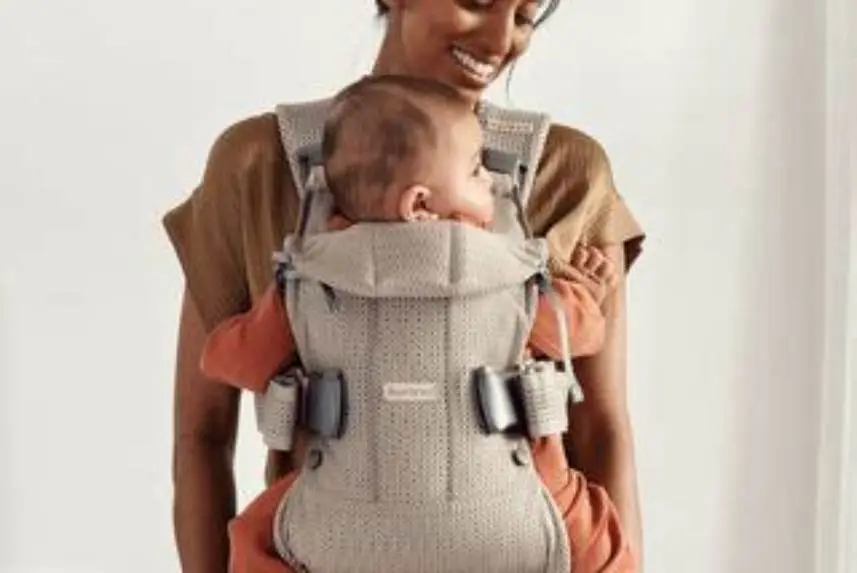
The Carrier One Air Mesh uses a 3D polyester mesh across the panels that contact baby and parent; BabyBjörn describes this fabric as intended to increase airflow compared with their canvas material. User reports and the manufacturer’s product pages note that the mesh feels cooler to many caregivers in warm conditions, but specific temperature reductions are not claimed by BabyBjörn and are not independently verified here. Treat any numeric cooling claim as conditional on ambient airflow and humidity rather than an absolute.
Carrier One (the non-mesh model) uses a heavier woven cotton-canvas blend with a denser surface and more absorbent fibres. That fabric will generally hold more moisture against the body and release it more slowly than a mesh; caregivers typically perceive it as warmer in active or hot use. BabyBjörn’s care and product descriptions state the canvas is chosen for durability and a softer tactile feel, which explains the difference in wearer impressions between models.
Performance of either fabric depends on environment. In dry heat the Air Mesh lets air pass more readily and can reduce clamminess; in very humid climates the mesh can saturate and feel less effective because evaporation is limited. Cotton absorbs sweat and may feel cooler briefly when dry, yet becomes heavier and slower to dry when saturated. Those are general physical behaviours of the fibre types, not proprietary temperature figures.
If you need a quick field check, BabyBjörn’s guidance and many experienced parents recommend testing both materials in the conditions you expect: brief wear indoors, a short walk in shade, and a longer errand in sun. The deciding factors are ambient humidity, direct sun exposure, and duration of continuous wear. The other half of this decision is can baby carrier be used from birth.
Weight and age limits for each model
Both BabyBjörn Carrier One and Carrier One Air Mesh carry the same labelled weight range on BabyBjörn’s product literature: from about 3.2 kg (7 lb) or the manufacturer-specified minimum (check the tag/manual) up to 15 kg (33 lb). Those numbers come from BabyBjörn’s official specifications and are the safe operational limits they supply; verify the exact minimum weight printed on the carrier and in the included manual before first use.
Minimum age recommendations depend on developmental milestones rather than a calendar date alone. BabyBjörn and paediatric guidance commonly advise waiting until a baby has stable head and neck control for an upright inward-facing carry, because the carrier’s support presumes the infant can hold the head without external propping. Head control is typically achieved between about 6 and 12 weeks for many babies, but individual variation is large; caregivers should use head/neck control as the deciding criterion and consult the product manual and healthcare provider if unsure.
The stated upper limit reflects the tested load that the carrier’s fabric, seams, buckles and straps are rated to support; that is why the manufacturer emphasises the weight cap. At higher weights fit and comfort change: make sure the waist belt is snug on the hips, the shoulder straps are adjusted and the baby’s legs are positioned ergonomically. The carrier manual contains fitting diagrams and step-by-step adjustment sequences to distribute load and reduce parent strain. We cover ergobaby omni breeze baby carrier review in its own article.
For safety standards and certification, check the product manual and the BabyBjörn site for the market where you live. Soft-structured carriers are commonly designed to meet regional standards for baby carriers; examples to look for include European standards and US/Canadian requirements. Always follow the manual’s instructions, registered warnings, and the cleaning and inspection guidance; if a local regulation or retailer lists a specific standard (for example EN or ASTM references), that information will appear in official documentation or on the product labelling.

Perfect Measuring Tape - The Original Body Tape Measure, White, 80 Inch
Measures up to 80 inches, suitable for checking parent torso length and waist circumference accurately.
Fit and adjustment options for parent and baby sizes
Both carriers accommodate parents between about 4’11" and 6’3" tall, thanks to adjustable shoulder straps and waist belts. The seat width and height adjust to fit babies up to toddler size comfortably.
Carrier One offers extra padded straps and a more structured waist belt, which suits parents who prefer a snug, cushioned fit for longer carries or heavier toddlers. It helps to understand ergobaby omni 360 cool air mesh review before going further.
The Air Mesh has less padding but more flexible fabric that molds closer to small framed parents while still distributing weight effectively.
For babies, both carriers support four carrying positions: front-facing in and out, back carry, and front carry with baby facing parent. Adjustments allow for leg spread and head support changes as the baby grows.
Parent torso length also influences fit; those with shorter torsos may find the Air Mesh's flexible fabric more accommodating, while longer torsos might benefit from Carrier One’s structured design for better weight distribution. For example, a parent 5'0" tall with a 26-inch waist might prefer the Air Mesh for its moldable fabric, whereas a 6'2" tall parent with a 38-inch waist might find the Carrier One’s adjustable straps and firm belt more supportive.
Babies with wider hips may require adjusting the seat width to maintain ergonomic positioning. Both carriers allow this, but Carrier One offers a slightly wider seat adjustment range of about 8 to 13 inches compared to Air Mesh’s 7 to 12 inches, which can be crucial for babies with larger leg spans to maintain the recommended 'M' shape for hip health.
| Feature | Carrier One | Carrier One Air Mesh |
|---|---|---|
| Parent height range | 4'11" - 6'3" | 4'11" - 6'3" |
| Shoulder strap padding | Thicker | Moderate |
| Waist belt support | Wide and padded | Narrower and lighter |
| Baby seat adjustments | Seat width and height adjustable | Same as Carrier One |
| Number of carry positions | 4 | 4 |
Which Baby Bjorn Carrier One air mesh vs carrier one model is better for hot climates
The Carrier One Air Mesh is clearly better suited for hot climates due to its highly breathable 3D mesh fabric that enhances airflow and reduces sweat accumulation. This makes it more comfortable for both parent and baby in temperatures above 75°F ambient.
Carrier One’s cotton fabric traps more heat and absorbs sweat, drying slower and potentially causing more discomfort during heat and humidity. However, it provides a cozier feel in cool or air-conditioned environments.
If you live in a region with regular heat waves or intend to use the carrier outdoors in summer, the Air Mesh will reduce overheating risk for baby and parent.
In contrast, parents in temperate climates or those who often wear carriers indoors with controlled temperatures might prefer Carrier One’s softer fabric and extra padding.
In addition to breathability, the weight of the carrier also affects comfort in hot weather. The Air Mesh weighs approximately 1.9 pounds, about 25% less than the Carrier One’s 2.5 pounds, which can reduce fatigue during extended use in heat.
Sweat management is critical in tropical climates where humidity often exceeds 70%. In such conditions, the Air Mesh’s polyester fabric dries quickly but can feel sticky if sweat is heavy and continuous. Parents might find that wearing a moisture-wicking undershirt beneath the carrier improves comfort. Conversely, the cotton Carrier One absorbs sweat but dries slowly, potentially leading to dampness that increases irritation over time.
- Superior ventilation in Air Mesh
- Lightweight feel in heat
- Faster drying fabric in Air Mesh
- Less padding in Air Mesh
- Carrier One feels warmer
- Air Mesh fabric can snag easier
How each carrier supports baby growth stages
Both carriers support newborns from 8 lbs onward with correct positioning and head support. They provide ergonomic hip support recommended for healthy spine development.
The four carry positions include inward facing for newborn security, outward facing for social babies from about 5-6 months, hip carry for toddlers developing balance, and back carry for heavier toddlers up to 33 lbs.
Carrier One’s padding and structure provide more support and comfort for larger toddlers during extended wear.
Air Mesh is lighter and more flexible, encouraging more movement and airflow for active babies but with slightly less cushioning for heavier stages.
Each carrier’s ability to adapt to baby growth helps parents avoid buying multiple carriers but demands correct adjustments over time.
- Step 1: Begin with front inward carry, using all head and neck supports for newborns.
- Step 2: Switch to front outward carry when baby shows good head control (around 5-6 months).
- Step 3: Use hip carry for toddlers learning to walk and look at (from 12 months).
- Step 4: Employ back carry for heavier toddlers or longer carrying sessions up to 33 lbs.
Baby Bjorn Carrier One air mesh vs carrier one: which fits newborns and hot weather best
The Baby Bjorn Carrier One Air Mesh wins for both newborn suitability and hot weather comfort. Its open mesh fabric significantly reduces heat buildup while maintaining the safety and ergonomic support needed for newborns as young as 8 pounds.
Carrier One remains a solid choice for parents prioritizing soft padding and structure, especially in cooler climates or indoor settings, but it can feel too warm for newborns in hot weather.
Both carriers require precise fit adjustments around the torso and waist to ensure security and comfort for parent and infant, especially as baby grows.
Choosing Air Mesh means accepting slightly less padding and a thinner fabric feel in exchange for breathability and cooler wear.
If your environment regularly exceeds 75°F or you expect physical activity while carrying, Air Mesh is the better pick to reduce risk of overheating and sweat discomfort in both you and your baby.
For newborns and hot weather, the Carrier One Air Mesh is the superior choice, balancing breathability and safe support.
Questions people still ask
Can the Carrier One Air Mesh be used for newborns under 8 pounds?
No, Baby Bjorn recommends starting at 8 pounds for both carriers. For smaller newborns, consider adding a newborn insert or consulting your pediatrician before use.
Is the mesh fabric durable for everyday use?
The Air Mesh is made of polyester designed for strength but is thinner than cotton. It resists tearing under normal use, but avoid snagging on sharp objects.
Does the Carrier One provide better back support for parents?
Carrier One’s thicker padding and structured waist belt generally offer more lumbar support during long wears, especially with older toddlers.
How do I clean each carrier?
Both carriers can be machine washed on a gentle cycle. The Air Mesh dries faster due to polyester fabric, while cotton Carrier One takes longer to dry fully.
Are there size restrictions for parents besides height?
Both carriers adjust for waist sizes approximately 25 to 50 inches, but parents with very small or large frames should test fit before purchase.