Will a temporal artery thermometer give accurate toddler temps
A temporal artery thermometer measures forehead skin temperature using infrared sensors and can give accurate toddler temps if used properly; its battery life usually lasts months but varies by model and frequency of use.
On this page (10 sections)
- What matters most
- What is a temporal artery thermometer
- No touch infrared thermometer accuracy for toddlers
- No touch infrared thermometer battery life replacement
- Why is my thermometer not working
- How to check temperature without thermometer
- Why we use mercury in thermometers
- What is the best forehead thermometer
- Are digital ear thermometers accurate
- Questions people still ask
Part of our guide on magnetic outlet cover that stays closed with fridge magnets nearby
The numbers
- Measurement type
- Infrared skin scan
- Use area
- Temporal artery/forehead
- Typical battery life
- 3-6 months typical
- Accuracy range
- ±0.2 to 0.5°F typical
- Age suitability
- Infants to adults
- Touch type
- Touch or no-touch
- Response time
- 1-3 seconds
What matters most
- Temporal artery thermometers use infrared to measure forehead skin temperature quickly and usually painlessly.
- Proper technique and conditions affect their accuracy, especially with toddlers who move or sweat.
- Battery life varies widely, often several months under regular use, but always check the manual.
- No-touch models reduce infection risk but watch for environmental factors like air flow that can skew readings.
- Troubleshooting includes cleaning the sensor and replacing batteries when readings become inconsistent.
What is a temporal artery thermometer
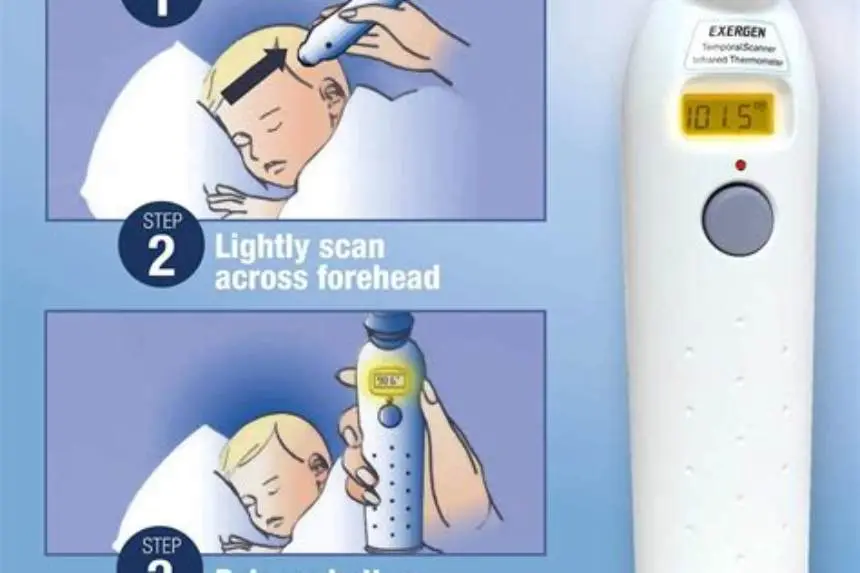
A temporal artery thermometer measures body temperature by detecting infrared heat emitted from the temporal artery on the forehead. This artery lies just under the skin and provides a close approximation of core temperature when scanned correctly.
The device uses an infrared sensor to pick up heat and converts it electronically into a temperature reading within 1 to 3 seconds. This quick reading minimizes disturbance to toddlers and infants, who often dislike longer or invasive methods.
Accuracy depends heavily on correct placement on the forehead, steady movement across the skin, and avoiding sweat or dirt that can insulate and affect infrared readings. The thermometer is usually held flat against or just above the skin, tracing from the center of the forehead toward the hairline.
No touch infrared thermometer accuracy for toddlers
No-touch temporal artery thermometers rely on sensing heat from the forehead without physical contact, which reduces infection risk but may lose accuracy if the child moves or if environmental factors interfere. For the detail, see our notes on bathing a baby safely.
Typical accuracy for toddlers ranges from ±0.2 to 0.5 degrees Fahrenheit compared with rectal thermometers, which are considered the gold standard. This range depends on correct distance and angle, as well as the child's skin condition and ambient temperature.
Toddlers who are sweaty, crying, or recently exposed to heat or cold sources may produce skewed readings. Repeating measurements and averaging can help, but parents should follow the device’s instructions carefully to confirm accuracy.
If frequent inaccurate results occur, cleaning the sensor lens and calibrating (if the device supports it) often restores reliability. Infrared forehead thermometers are convenient but less reliable when toddlers resist holding still. The other half of this decision is securing furniture to protect babies.
- Reduces infection risk
- Quick readings
- No physical discomfort
- Less accurate if toddler moves
- Affected by sweat or ambient temperature
- Needs proper distance and angle
No touch infrared thermometer battery life replacement
Most no-touch infrared temporal thermometers run on standard button or AAA batteries with an expected life of 3 to 6 months under typical family use. This varies by usage frequency, model design, and battery quality.
Battery replacement usually requires opening a small compartment on the device’s handle or back. Always use the type recommended by the manufacturer to avoid damage or leakage.
Some thermometers will give a low-battery warning, but others show inconsistent readings or fail to power on when batteries run low. Keep spare batteries of the specified type handy to avoid disruption, especially during illness.
Battery life shortens dramatically if the device is left on or used excessively, so switch it off immediately after reading.
- Common battery types
- Months of use per set
- Easy to replace
- No rechargeable option usually
- Battery life varies widely
- Low battery affects accuracy
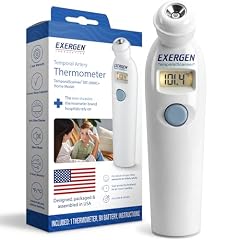
Exergen TAT-2000C+ Thermometer for Adults
Provides a temporal artery thermometer with a 9V battery included for immediate use and replacement.
Why is my thermometer not working
A temporal artery thermometer may fail to work for several reasons including dead or incorrectly installed batteries, dirty or scratched sensor lenses, or internal faults.
Environmental conditions such as extreme cold, heat, or high humidity can interfere with infrared sensors or electronic circuits, causing erratic readings or no response.
Regular cleaning with a soft cloth and alcohol swab can prevent dust and oils from degrading sensor performance. Avoid dropping or exposing the device to water, which can cause permanent damage.
If the device fails to power on or the screen remains blank despite fresh batteries, it may need professional repair or replacement. Consult the user manual for troubleshooting specific to your model.
How to check temperature without thermometer
In absence of a thermometer, you can gauge fever by palpating the child's forehead, neck, or chest for unusual warmth compared to your own skin.
Other symptoms like flushed cheeks, sweating, chills, lethargy, or irritability often indicate a higher temperature but are subjective and can vary widely.
Using a digital kitchen or bath thermometer to approximate body temperature is unreliable and not recommended. Instead, seek a medical thermometer or professional evaluation if fever is suspected and a thermometer is unavailable.
Checking pulse rate and breathing can supplement but not replace temperature measurement. For infants and toddlers, careful observation is critical as they can deteriorate quickly.
Why we use mercury in thermometers
Mercury has long been used in traditional glass thermometers because it expands uniformly with temperature changes and remains liquid over a wide temperature range (-38.8°C to 356.7°C).
Its high density makes readings clear and easy to read on a calibrated scale. However, mercury is toxic and poses health and environmental risks if the thermometer breaks.
Due to these concerns, most baby and medical thermometers today use safer alternatives like galinstan or digital sensors instead of mercury.
Mercury thermometers still offer precise readings but are generally not recommended for home use, especially around children, because of the risk of spills and exposure.
What is the best forehead thermometer
The best forehead thermometer balances accuracy, ease of use, speed, and durability. Models that allow both touch and no-touch operation increase safety while improving reliability.
Look for thermometers with accuracy claims within ±0.2 degrees Fahrenheit and fast response times under 3 seconds.
Features such as backlit displays, memory recall, and fever alerts add convenience but check that these do not compromise the sensor quality.
Thermometers from reputable brands with clear instructions and robust customer support usually outperform cheaper no-name devices in clinical accuracy and longevity.
Consider your toddler’s temperament: if they resist touch, a no-touch model is worth the trade-off in potential slight accuracy loss.
| Type | Accuracy | Ease of Use | Infection Risk | Typical Battery Life |
|---|---|---|---|---|
| Touch Temporal Artery | ±0.2–0.3°F | Moderate | Low | 3-6 months |
| No-Touch Infrared | ±0.3–0.5°F | High | Very Low | 3-6 months |
| Digital Contact | ±0.1–0.3°F | Moderate | Potential | 6+ months |
- Fast readings
- Multiple modes available
- Lower infection risk with no-touch
- No-touch slightly less accurate
- Some models pricey
- Requires proper technique
Are digital ear thermometers accurate
Digital ear thermometers measure infrared heat from the eardrum and are generally accurate within ±0.3 degrees Fahrenheit when used correctly.
They require proper insertion depth and angle, which can be challenging with squirming toddlers, risking inconsistent readings.
Earwax buildup or ear infections can also distort temperature readings, making repeated checks necessary.
Compared to temporal artery thermometers, digital ear devices are considered equally reliable but less convenient for quick, multiple checks in sensitive children.
Parents who can manage proper ear placement often find ear thermometers a good alternative, but toddlers who resist insertion may need a forehead or no-touch method.
Questions people still ask
How do I know if my temporal artery thermometer is accurate?
Compare readings to a reliable standard, such as a rectal thermometer, under stable conditions with a dry forehead. Consistent results within ±0.3°F indicate good accuracy.
Can environmental temperature affect my forehead thermometer reading?
Yes. Extreme heat, cold, or drafts can change skin temperature and infrared readings. Always measure in a stable indoor environment and avoid active sun or wind exposure.
Is it safe to use a temporal artery thermometer on newborns?
Yes, temporal artery thermometers are safe and non-invasive for newborns but may be less accurate if the skin is very moist or the baby is moving excessively.
Why does my thermometer give different readings each time?
Inconsistent readings often result from poor placement, movement, sweat, or a dirty sensor. Cleaning the lens and practicing steady technique usually fixes this.
How often should I replace batteries in my no-touch thermometer?
Replace batteries as soon as you notice dim displays or inconsistent readings, typically every 3-6 months with regular use.