Which bathtub faucet cover fits your baby’s tub and how to install it safely
Measure your bathtub faucet’s length and diameter precisely, then choose a cover type that matches those dimensions: typically padded or foam covers fit newborn tubs best. Install it firmly using straps or adhesive to prevent slipping or removal by your baby.
On this page (7 sections)
Part of our guide on tear-free baby shampoo with no sulfates
The numbers
- Faucet length
- 4-8 inches typical
- Diameter range
- 1-2 inches usual
- Cover types
- Foam, padded, inflatable
- Installation methods
- Straps, adhesive
- Baby age fit
- Newborn to toddler
What matters most
- Measure faucet length and diameter before buying a cover
- Foam and padded covers fit most newborn tubs
- Secure covers with straps or adhesive to stop slipping
- Some faucets need alternatives if covers don’t fit well
- Proper installation prevents safety hazards during bath time
How to measure bathtub faucets for covers
To choose the right bathtub faucet cover, start by measuring the faucet you want to cover. Use a tape measure to get the faucet’s length from base to tip and the diameter at its widest point. Faucets commonly range between 4 and 8 inches in length, depending on tub style, and their diameter usually falls between 1 and 2 inches, but yours might differ.
Measure carefully with the faucet dry and avoid including extra parts like handles or the spout tip if it extends irregularly. Accuracy matters because a cover too small won’t fit, and one too large might slip off or leave gaps exposing hard edges. Some covers are adjustable, but knowing precise measurements helps you pick the best fit.
Keep these measurements written down. If your faucet has an unusual shape or multiple components, take photos and note which part you want the cover to protect. This step ensures you search for covers that fit your actual faucet type and baby’s tub.
When measuring, consider if the faucet has any decorative elements or irregular curvatures that could interfere with a snug cover fit. For example, faucets with a flared base may require measuring the widest point separately to ensure the cover can accommodate this shape without slipping off. For the detail, see our notes on safe baby bath steps.
If your bathtub faucet has separate hot and cold knobs close to the spout, measure the total length including these if you intend to cover them as well. Some covers come with extensions or additional padding pieces for knobs, which can increase overall safety by preventing bumps on these protrusions.
Types of faucet covers and which fit newborn tubs
Bathtub faucet covers come mainly in foam, padded plastic, and inflatable varieties. Foam covers are lightweight and soft, usually shaped like animals or simple domes. They fit most standard faucets and newborn tubs because they mold slightly and cushion against bumps.
Padded plastic covers provide firmer protection and often have a plush or rubber exterior. They can resist water better and last longer but may not fit very short or thick faucets without gaps. Inflatable covers wrap around the faucet and can fit irregular shapes but require careful inflation to avoid leaks or slipping. The other half of this decision is small suv back seat cover.
Newborn tubs often have smaller, more compact faucets, so foam covers usually fit best. If your faucet is larger or uniquely shaped, padded or inflatable covers might perform better. Check the cover’s size range and shape compatibility against your measurements to pick the safest option.
Some newer faucet covers include antimicrobial treatments on their surfaces to reduce bacteria buildup, which can be a concern in damp bathroom environments. These covers might be preferable in households where hygiene is a priority, especially for newborn tubs where babies have more delicate skin.
Inflatable faucet covers require careful inflation to avoid over or under inflation. Over-inflation can cause the cover to become too firm, losing its cushioning effect, while under-inflation increases the risk of slipping off during bath time. Always follow manufacturer’s instructions for inflation levels to ensure optimal protection. Before you commit to anything, it is worth looking at fit nuby tub in small sink.
| Cover Type | Fit Range (Length)in | Shape Adaptability | Water Resistance | Baby Comfort |
|---|---|---|---|---|
| Foam | 4-6 | Good for standard shapes | Moderate | High, soft material |
| Padded Plastic | 5-8 | Limited for very short/thick | High | Medium, firm feel |
| Inflatable | Variable | Good for irregular shapes | High, if sealed well | Variable, depends on inflation |
- Soft and cushioned (foam)
- Good water resistance (padded)
- Fits irregular shapes (inflatable)
- Less durable (foam)
- May not fit all shapes (padded)
- Needs careful inflation (inflatable)

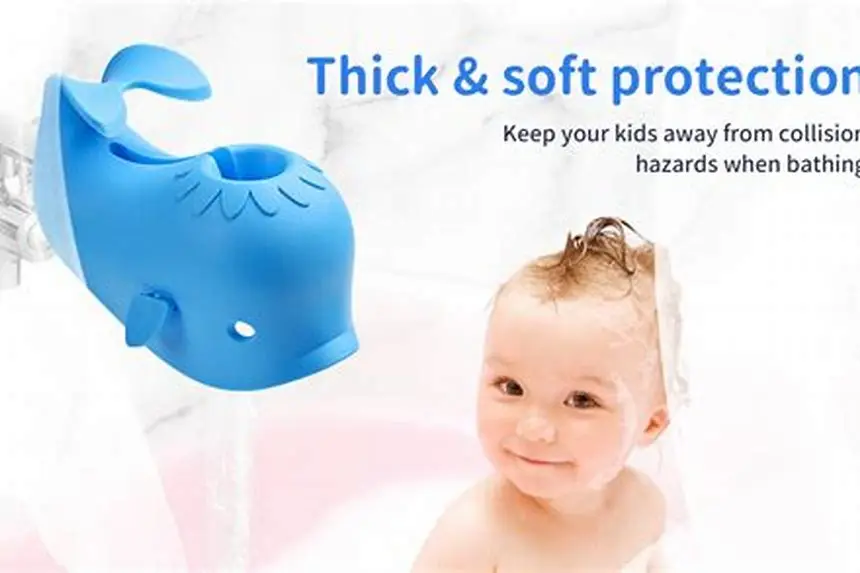
Adorila Whale Silicone Spout Cover for Bathtub Faucet
Fits faucet length 5.118 inches and width 2.362 inches, suitable for faucets 4-8 inches long and 1-2 inches diameter with secure notched straps to prevent slipping
Installation tips to prevent slipping or removal by children
Once you have the right cover, installation is critical. Most covers use adjustable straps, adhesive pads, or suction cups. Straps wrapped tightly around the faucet and secured with Velcro or buckles offer the most reliable hold, especially for active toddlers who might pull on the cover.
Adhesive pads provide a cleaner look but can weaken in humid bathroom conditions and leave residue. Suction cups work only on smooth surfaces, so many faucets won’t hold them well. Check the cover’s installation instructions and test the fit under dry conditions first.
After installation, tug gently on the cover to ensure it won’t come off easily. Repeat this check monthly because wear or water exposure can loosen attachments. Do not leave the baby unattended even with the cover installed, because no cover can replace supervision. The other half of this decision is remove cradle cap scales.
If you live in an area with hard water, mineral deposits can accumulate on adhesives or suction cups, reducing their effectiveness over time. Clean these parts regularly with a vinegar solution to maintain strong adhesion and prevent slipping.
For toddlers who are particularly curious or strong, consider double securing the cover by combining straps with adhesive pads. This hybrid method provides extra security and is harder for children to remove, enhancing safety during bath time.
- Straps: most secure, adjustable for tight fit
- Adhesive: neat but may deteriorate with water
- Suction: limited to smooth finishes
- Check monthly for looseness
Alternatives when no cover fits well
Some bathtubs or faucets have designs that make traditional covers impractical: very short, angular, or integrated faucets can’t be fully covered safely. In these cases, alternatives include rearranging the bath setup or using non-slip tub mats to soften falls around the faucet area.
Another practical option is to direct water flow away from the faucet with a handheld shower or detachable spout extender, preventing baby contact with hard edges. Installing a faucet guard made specifically for your model or applying foam pipe insulation around the faucet also works.
If no cover fits well, consider moving to a baby bathtub that integrates a built-in faucet guard or has a faucet positioned to avoid bumps entirely. This solution may require investing in new gear but improves safety substantially.
- Use non-slip mats to cushion falls
- Attach spout extenders or handheld showers
- Apply foam pipe insulation as padding
- Choose tubs with built-in faucet guards
How to baby proof bathtub faucet
Baby proofing a bathtub faucet means removing or covering any hard, sharp, or hot surfaces the baby might bump or burn against. Besides fitting a cover properly, lowering water temperature to 100°F or less prevents scalds. Installing anti-scald valves or temperature regulators inside the plumbing system is recommended for homes with children.
Keep the faucet cover clean and replace it at signs of wear or damage. Avoid slippery materials and make sure the cover does not interfere with water flow or controls. Teach older toddlers not to pull on or remove the cover to maintain safety.
Combining a secure faucet cover, temperature controls, and continuous supervision creates a safe bath environment for your baby. This layered approach is necessary because covers alone cannot eliminate risks entirely.
- Measure faucet length and diameter accurately.
- Select a cover type compatible with your faucet size and shape.
- Install the cover using straps or adhesive as specified.
- Check cover security by pulling gently after installation.
- Set water temperature below 100°F using a thermometer.
- Use anti-scald valves for added temperature control.
- Supervise baby continuously during bath time.
Questions people still ask
Can I use any faucet cover for all bathtub faucets?
No, faucet covers vary in size and shape. Measure your faucet first and choose a cover designed to fit those measurements to ensure safety and effectiveness.
How often should I check or replace the faucet cover?
Check monthly for looseness or damage. Replace if the cover tears, loses cushioning, or its attachments weaken to maintain safety.
Are adhesive faucet covers safe for humid bathroom conditions?
Adhesive covers can lose stickiness over time due to humidity and water exposure, making strap-secured covers generally safer.
What if my faucet is too short or oddly shaped for covers?
Consider alternatives like foam pipe insulation padding, spout extenders, or switching to tubs with built-in faucet guards.
Is supervising the baby still necessary with a faucet cover installed?
Yes, faucet covers reduce risk but do not eliminate it. Constant adult supervision during bath time is essential.