Bassinet seats per plane cabin: how many, and who fits
Two to eight, depending on the aircraft. A widebody usually has 4-8 bassinet positions in economy. A narrowbody has 2-4. They sit at bulkhead rows, not every row, and the airline caps the baby at roughly 20-22 lb before it will assign one.
On this page (8 sections)
- What matters most
- Why bassinet positions vary by aircraft, not by airline
- How many bassinet positions a widebody and narrowbody give you
- The weight and length limit the airline checks
- Why the bassinet is a separate booking from the seat
- When the bassinet positions are already taken
- What this means for your stroller and car seat
- Questions people still ask
Part of our guide on pockit air stroller airline limits
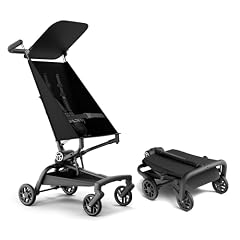
Mompush Jeto Ultra-Lightweight Travel Stroller Only 9.8lbs
Instead of gate-checking a full-size stroller, this 9.8 lb one folds to handbag size (17.7" x 20") so it
Check the specs on AmazonThe numbers
- Widebody economy
- 4-8 bassinet positions
- Narrowbody economy
- 2-4 bassinet positions
- Typical weight limit
- 20-22 lb (9-10 kg)
- Typical length limit
- About 30 in (76 cm)
- Where they sit
- Bulkhead rows only
- Fee to request
- Usually none
- When to request
- At booking, then reconfirm
What matters most
- Count the bassinet positions by aircraft type, not airline: widebody 4-8, narrowbody 2-4.
- The airline checks baby weight and length, commonly 20-22 lb and around
30 in, before assigning one. - A bassinet request is a note on your booking, not a seat pick, so call or add it in manage booking early.
- If the positions are gone, you keep your seat and hold the baby; ask again at the gate.
Why bassinet positions vary by aircraft, not by airline
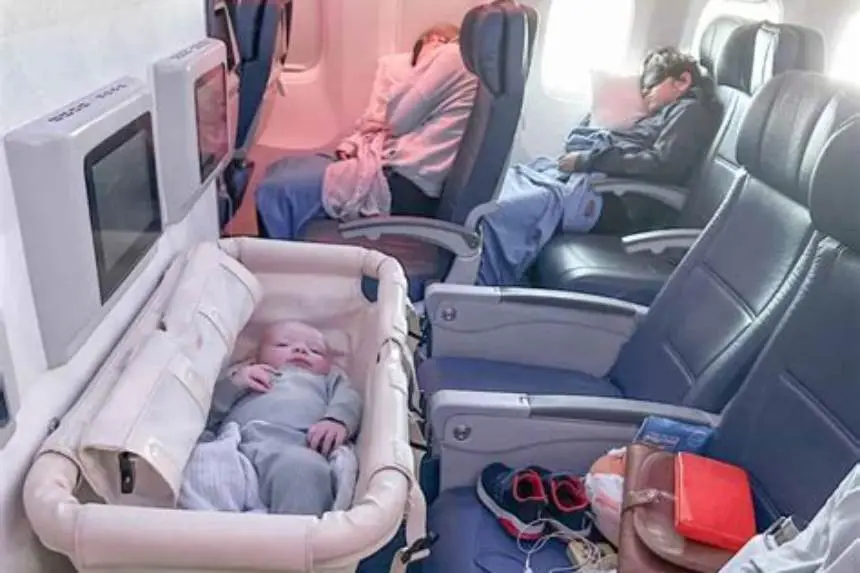
The bassinet does not sit on your seat. It clips to a bracket bolted into a bulkhead wall, the solid divider at the front of a cabin section. Only certain walls have the bracket and the clearance around it. A plane with more bulkhead walls has more positions.
So the count follows the airframe, not the paint job. The same airline flies several types in one day, and a 737 and a 787 on the same route carry different bassinet counts. Two airlines flying the same A330 end up with near-identical counts because the wall is the same.
This is why the gate agent cannot promise you one until they know your aircraft. Book a flight and the airline often shows the type only in the last days. Check the seat map: the bassinet rows show as the front row of a cabin block.
The aircraft type decides the count. A route swap to a smaller plane can remove positions overnight, and you find out when you check in. Before you commit to anything, it is worth looking at doona car seat approved airlines.
| Aircraft class | Examples | Typical positions in economy |
|---|---|---|
| Widebody | 787, 777, A330, A350 | 4-8 across the cabin |
| Narrowbody | 737, A320, A321 | 2-4 at front rows |
| Regional jet | CRJ, E175 | 0-2, often none |
How many bassinet positions a widebody and narrowbody give you
A widebody has two aisles and several cabin sections. Each section can carry its own bulkhead row. The bassinet positions cluster at the front row of economy and at a few mid-cabin dividers, and the total usually lands between 4 and 8.
A narrowbody has one aisle and fewer dividers. You tend to see 2 to 4 positions, and a smaller regional jet may have none at all. On those, the airline has nothing to clip a bassinet to and you hold the baby the whole way.
The count is positions, not bassinets. Airlines keep a stock of cradles and hand them out at the gate. A position exists before a cradle does, so a full flight can still have an empty bracket if the stock runs low.
On a widebody, the front economy row is the prize. It has floor space for a stroller, room to stand, and the bracket right above. On a narrowbody the same row exists, but there are only a couple of them.
- Widebody front economy row: usually the most positions, best floor space.
- Widebody mid-cabin divider: fewer positions, slightly less room.
- Narrowbody front row: 2-4 positions, book early.
- Regional jet: often no bracket, plan to hold your baby.
Mompush Jeto Ultra-Lightweight Travel Stroller Only 9.8lbs
Instead of gate-checking a full-size stroller, this 9.8 lb one folds to handbag size (17.7" x 20") so it comes into the cabin with you.
- Height 17.72 inches
- Length 39.76 inches
- Weight 10.08 pounds
The weight and length limit the airline checks
Before an airline assigns a bassinet, it checks two numbers: your baby's weight and length. The common cap is 20-22 lb (9-10 kg) and about 30 in (76 cm). Above that, the cradle is too small and the airline says no.
The cradle is a small fabric bed on a rigid frame. It has a printed weight limit on the side, usually in kilos. Crews are not guessing. If your baby sits near the limit, they may still allow it, but you should be ready for a refusal.
Age matters less than size. A heavy 4-month-old can pass the age rule and fail the weight rule. A light 10-month-old may still fit a cradle built for a 9 kg baby.
Weigh and measure your baby the week of the flight, not months before. The limits are checked at the gate. Growth in a few weeks can push a baby past the cap.
| Check | Typical rule | Why |
|---|---|---|
| Weight | 20-22 lb (9-10 kg) | Cradle frame limit |
| Length | About 30 in (76 cm) | Cradle size |
| Age | Often under 12 months | Seat and harness rules |
| Ticket | Lap infant, no seat | Bassinet is not a seat |

Baby Carrier Newborn to Toddler,Cotton Infant Carrier,7-40lbs Baby Carrier
If the bassinet row is full, this cotton carrier takes babies from 7 lb up, keeping your hands free through the airport without ever putting the baby down.
Why the bassinet is a separate booking from the seat
Seat selection and bassinet requests live in two different systems. You can pick a bulkhead seat on the map and still not have a bassinet, because the request is a special service note, not a seat attribute.
That split causes the mistake most parents make. They book the bulkhead row, believe the bassinet is included, and find out at the gate that someone else holds the bracket.
Request it the same day you book, by phone or in manage booking. The wording is usually 'bassinet' or 'infant bassinet'. You get a note on the booking, not a confirmation number you can trust.
Then reconfirm. Call about 72 hours before departure and again at check-in. Airlines don't guarantee bassinets, and a route change can wipe the note.
- Book the flight and the lap infant ticket.
- Add a bassinet request the same day, by phone or manage booking.
- Ask for a bulkhead seat at the same time, if the fare allows.
- Reconfirm the bassinet about 72 hours before departure.
- Check in early and ask again at the gate.
- note logs same day
- no fee in most fares
- reconfirm resets it
- no guarantee
- route change wipes it
- gate can still refuse
When the bassinet positions are already taken
You keep your seat and hold your baby. The lap ticket still works. The bassinet is a comfort item, not a boarding requirement.
Ask at the gate anyway. Families cancel, babies outgrow the weight limit, and one bracket can free up ten minutes before boarding. The gate agent holds the list.
If a family is bumped off the bassinet row, they can ask to move to another pair of seats with more floor room. A row of two on a widebody often beats a middle seat in a full block.
For a long flight with no bassinet, plan the hold. A carrier you can wear through security and during boarding gives you free hands. It also makes the onboard hold easier when your baby wants to sleep on you.
- Keep your seat: the lap ticket is unaffected.
- Ask at the gate: positions free up late.
- Move if you can: a two-seat row beats a middle seat.
- Wear a carrier: hands free for boarding and the hold.
What this means for your stroller and car seat
A full-size stroller usually will not go in the cabin. You gate-check it, which means you hand it over at the jet bridge and collect it when you land. It can arrive damaged, and it does count against nothing except goodwill.
A car seat is different. If you bought a seat for your baby, you can use an FAA-approved car seat in it. The approval is printed on the label: 'Certified for use in motor vehicles and aircraft'. Without that label, the crew can turn it away.
A bassinet row gives you floor space, but that does not make a full-size stroller cabin-legal. Cabin space is for a folded compact stroller or a carrier, not the travel system.
Check the label before you leave. The FAA approval label must be on the car seat. No label, no seat use, even with a ticket.
| Item | Cabin? | Notes |
|---|---|---|
| Full-size stroller | No | Gate-check at the bridge |
| Compact stroller | Sometimes | Check folded size and airline rule |
| Car seat, FAA label | Yes, with a seat | Look for the approval text |
| Car seat, no label | No | Crew can refuse it |
The bassinet is worth requesting, but never rely on it. Treat the carrier as your real plan.
Questions people still ask
Can I book the bassinet online?
Rarely. Most airlines take a bassinet request by phone or in manage booking as a special service note. Check-in and the gate are where it is confirmed. Book the lap infant first, then call.
Does my baby need to be under a certain age for the bassinet?
Age is usually under 12 months, but weight and length decide it. A 4-month-old over 22 lb is refused. A light 10-month-old often still fits. Airlines check the sleeping baby size, not the birthday.
Is the bassinet free?
The request usually carries no fee. You still pay for the lap infant ticket, which many airlines charge as a percentage of the adult fare plus tax. Ask the airline for the infant fare.
Can I use the bassinet during takeoff and landing?
No. Crews require you to hold your baby for taxi, takeoff, landing and any turbulence. The bassinet is for cruise only, and you take the baby out the moment the seatbelt sign comes on.
What if my flight has no bassinet positions?
You hold your baby for the whole flight. This is normal on regional jets. A wearable carrier makes it easier, and a window seat gives you a wall to lean against.