Which back seat cover fits a small SUV with baby gear
Small SUV back seats need covers with anchor access, washable surfaces, and room for car seat bases without blocking safety features.
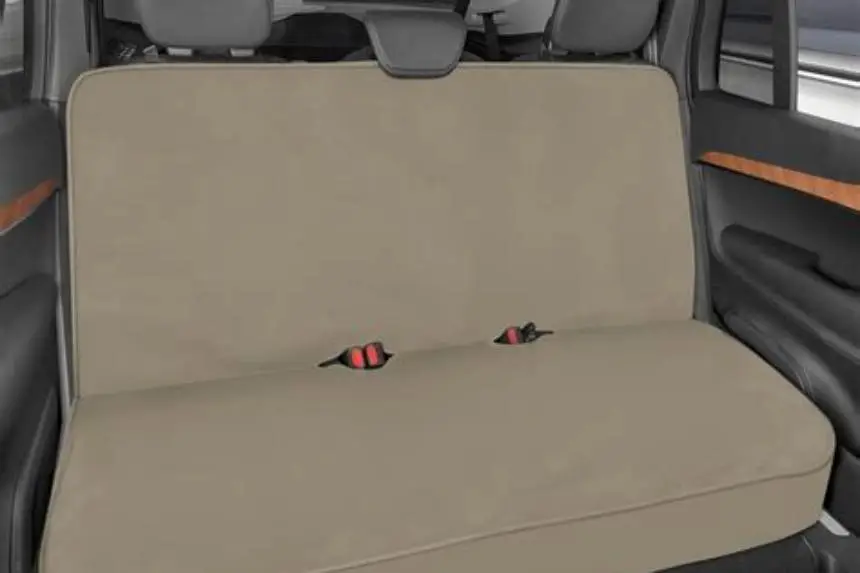
A small SUV back seat cover must span 45 to 52 inches wide, provide cutouts or flaps for LATCH anchors, clear the seat base by at least 1.5 inches, and wash at 140°F or hotter to kill bacteria from diaper leaks and spit-up.
On this page (8 sections)
- The short version
- How to measure a small SUV back seat for cover fit
- Which cover styles work best for small SUV back seats
- What materials resist baby-related messes in a small SUV
- How covers affect car seat installation and safety
- Cleaning requirements for covers exposed to baby messes
- Installation challenges specific to small SUVs
- Questions people still ask
Part of our guide on strollers compatible with compact car racks
Most covers advertised as universal block the LATCH anchors or bunch under a car seat base in a small SUV's tighter rear cabin.
| Small SUV seat width | 45 to 52 inches typically |
|---|---|
| LATCH anchor clearance | Required for safe installation |
| Wash temperature needed | 140°F or hotter |
| Base clearance minimum | 1.5 inches under seat |
| Best material | Quilted polyester, waterproof back |
The short version
- Measure your back seat width at the widest point: small SUVs range from 45 to 52 inches, and a cover that's too narrow leaves gaps.
- Look for anchor-compatible designs with labeled cutouts or flaps so you can install car seats without fighting the cover fabric.
- Quilted polyester or canvas with a waterproof backing handles spit-up and diaper blowouts better than vinyl, which cracks in heat.
- Bench-style covers stay flat under car seat bases; hammock styles bunch and interfere with base stability in tight cabins.
- Machine-wash at 140°F minimum to sanitize, and avoid covers that require hand-washing or dry cleaning.
How to measure a small SUV back seat for cover fit
Start by measuring the bench width from one door jamb to the other at the widest point of the seat cushion, usually just behind where the seat back meets the bottom. Small SUVs like the Honda CR-V, Mazda CX-5, and Toyota RAV4 measure 48 to 52 inches across the rear bench. Subcompact models like the Hyundai Kona or Nissan Kicks run narrower, often 45 to 48 inches. A cover spec'd at 56 inches will bunch and wrinkle in a 48-inch cabin, creating folds that trap crumbs and liquid.
Next, measure the seat depth from the back rest to the front edge of the cushion. Most small SUV rear seats run 17 to 19 inches deep. If you plan to use a car seat, measure the base footprint as well. An infant seat base typically adds 14 to 16 inches of depth, so the cover must lie flat underneath without riding up the seat back or bunching at the front edge. Write down all three numbers before you shop.
Locate the LATCH anchors by running your hand into the crack between the seat back and cushion. They sit 11 to 14 inches apart in most small SUVs, positioned behind metal or plastic guide loops. Mark their locations on your diagram. A cover without cutouts or flaps at those exact points will force you to either cut the fabric yourself or wrestle the anchor straps through tight gaps, and both options void most warranties and compromise the installation.
Check for headrest interference as well. Some covers have tall backs that interfere with the lower headrest positions common in small SUVs, especially if the headrests sit only 24 to 26 inches above the seat cushion. Measure headrest height with the posts fully lowered, since raising them to clear a cover reduces rear visibility and annoys adult passengers. We cover keeping baby safe in tub in its own article.
Which cover styles work best for small SUV back seats
Bench-style covers lie flat across the seat cushion and up the seat back, secured with straps around the headrests and tucked into the seat crack. They work well in small SUVs because they don't take up vertical space or interfere with the front seat backs. When you install a car seat on top, the base compresses the cover evenly and the fabric stays put. Look for a design with elastic edges or silicone grip dots on the underside to prevent sliding when a toddler climbs in and out.
Hammock-style covers attach at four points (two at the top of the rear seat back and two on the back of the front seat headrests) creating a sling that catches debris and protects the rear footwell. They're popular with dog owners but problematic with car seats. The fabric bunches under the base and reduces the contact area between base and vehicle seat, which can affect installation tightness. In a small SUV's tighter cabin, the hammock also blocks your rearview mirror more than a flat cover does.
Bucket seat covers fit individual seats and work only if your small SUV has a 60/40 or 40/20/40 split bench and you install the car seat on one side. You leave the opposite bucket uncovered or use a second cover. This setup lets you fold down the uncovered section for cargo, which matters when you're hauling a stroller and grocery bags. The downside is cost (you're buying two covers instead of one) and installation time doubles. If that sounds like your situation, read up on checking stroller size for mazda 3 trunk next.
Avoid covers with built-in pockets or organizers that add bulk behind the front seats. Small SUVs already have limited rear legroom, often 35 to 38 inches of space, and a bulky cover steals another inch or two. That might not sound like much, but it's enough to prevent a rear-facing car seat from achieving the correct recline angle without jamming the front passenger seat uncomfortably far forward.
What materials resist baby-related messes in a small SUV
Quilted polyester with a polyurethane or TPU backing handles spit-up, diaper leaks, and spilled milk better than any other common material. The quilting creates small pockets that contain liquid before it spreads, and the waterproof backing stops it from soaking into the vehicle's upholstery. Look for a material weight of 600 to 900 denier: heavy enough to resist punctures from dropped toys or car seat buckles, but still flexible enough to tuck into seat cracks without creating stiff ridges.
Canvas covers in the 10- to 12-ounce range are tougher and last longer, but they're harder to install in a small SUV because the heavy fabric resists tucking and folding. They make sense if you expect heavy use: three kids in and out daily, or a car seat moved between vehicles multiple times a week. Canvas also develops a worn, soft texture over time that some people like and others find grimy. It needs washing more often than polyester because the surface texture traps crumbs.
Vinyl and faux-leather covers shed liquid instantly, which sounds ideal until you realize that means the liquid runs straight down into the seat crack or onto the floor mat instead of being absorbed. Vinyl also cracks in hot climates after six to twelve months of sun exposure, even with window shades. The material gets sticky in summer heat (uncomfortable for a toddler's bare legs) and cold enough in winter to feel unpleasant through clothing. I'd skip vinyl unless you live somewhere with year-round mild temperatures and can park in a garage.
Neoprene, the wetsuit material, shows up in premium covers and performs well with liquids, but it's expensive and tricky to clean. Food particles stick in the textured surface, and neoprene takes two to three times longer to air-dry than polyester after washing. In a small SUV where you might need to reinstall the cover quickly to pick up a passenger, that drying time becomes a real inconvenience. Neoprene makes sense for beach trips and swimming lessons, not everyday baby gear protection.
| Material | Liquid resistance | Wash temp limit | Drying time | Durability |
|---|---|---|---|---|
| Quilted polyester | Excellent with backing | 160°F | 1-2 hours | 3-5 years |
| Canvas | Good, absorbs then dries | 140°F | 3-4 hours | 5-8 years |
| Vinyl or faux leather | Sheds but doesn't absorb | Hand wipe only | Minutes | 1-2 years, cracks |
| Neoprene | Excellent | 120°F | 4-6 hours | 4-6 years |
How covers affect car seat installation and safety
A back seat cover must not interfere with LATCH anchor access or introduce slack into the car seat installation. The National Highway Traffic Safety Administration requires that nothing compress more than one inch under the car seat base when you apply installation force. A thick or puffy cover can act as a cushion, allowing the base to shift in a collision. This is why quilted covers with thin batting (around 0.25 to 0.5 inches thick) are safer than heavily padded designs.
Look for covers with clearly labeled cutouts or zipper flaps at the LATCH anchor points. The cutout should be at least 3 inches wide to accommodate both the anchor strap and your hand as you thread it through. Some covers use elastic-edged slots that you pull aside, then release to close around the strap. That design works well as long as the elastic doesn't apply pressure to the strap itself, which could cause it to loosen over time.
Seat belt installations require a flat, smooth surface where the belt crosses the car seat base. A cover with raised seams, thick quilting lines, or decorative piping can create a bump under the belt path, preventing the belt from lying flat. When the belt crosses a ridge, it can slip or migrate during normal driving, reducing installation tightness. Run your hand along the cover's surface in the area where the seat belt will cross: you should feel only the base fabric and backing, no ridges or lumps.
Some parents ask whether they can install the car seat first, then drape the cover around it. Don't. That approach hides the LATCH anchors and seat belt buckles, making it impossible to check the installation or adjust the straps without removing the entire cover. It also tends to bunch the cover fabric under the base edges, creating the very compression problem you're trying to avoid. Always install the cover first, then the car seat on top of it.
If your car seat manual says 'do not use seat protectors or covers under the base,' follow that instruction. Some manufacturers prohibit them because their crash testing assumed direct contact between base and vehicle seat. In practice, a thin cover with a slip-resistant backing rarely causes problems, but you're technically voiding the seat's warranty if the manual forbids it. Check your manual before buying any cover.
Cleaning requirements for covers exposed to baby messes
Machine-wash the cover at 140°F or hotter to kill bacteria from diaper leaks, spit-up, and spilled milk. Most bacteria and viruses die within ten minutes at that temperature. Covers rated only for cold or warm water won't sanitize, which matters when you're dealing with fecal matter or vomit. Check the care label before buying: if it says 'hand wash' or 'spot clean only,' you'll regret it the first time you face a serious mess.
Polyester and canvas covers usually tolerate hot water and tumble drying on low heat, which gets them back in service within two to three hours. Waterproof backings can delaminate if you use high heat, so keep the dryer on the low or delicate setting and check the cover every twenty minutes. Some parents prefer to air-dry in the sun, which adds UV sanitization and takes four to six hours in warm weather. Plan to own two covers if you rely on air drying, so you always have a clean one ready.
Treat stains immediately, even if you can't wash the cover right away. Blot liquid with a clean towel, then spray the area with an enzyme cleaner designed for pet or baby messes. Let it sit for ten minutes before blotting again. Enzyme cleaners break down the proteins in milk and feces that cause lingering odors. Skip bleach and hydrogen peroxide on colored covers: they fade the fabric and can damage waterproof backings.
Remove the cover every two to four weeks for a full wash, even if it looks clean. Crumbs, dust, and moisture accumulate in the quilting and seat cracks, creating conditions where mold and mildew can start. You won't always see it, but you'll smell it. In humid climates or if you use the car daily with a baby, wash every two weeks. In dry climates with occasional use, four weeks is fine.
- Hot water: 140°F minimum to sanitize after diaper leaks or vomit
- Enzyme cleaner: breaks down milk and feces proteins that cause odors
- Low heat drying: prevents delamination of waterproof backing, check every 20 minutes
- Two-week cycle: prevents mold in humid climates or with daily baby use
Installation challenges specific to small SUVs
Small SUV rear seats often have shallower seat cracks than larger vehicles (sometimes only 1 to 1.5 inches deep) which makes it harder to tuck the cover securely. If the fabric won't stay anchored in the crack, it will pull out when a toddler climbs onto the seat or when you tighten a car seat base. Look for covers with a stiff plastic or foam anchor strip sewn into the edge that slides into the crack. That strip holds better than fabric alone.
Headrest posts in small SUVs sometimes sit closer together than in full-size vehicles, leaving only 5 to 6 inches between posts instead of the 7 to 8 inches that cover straps expect. If the cover's attachment straps are pre-sewn at fixed positions, they might not align with your headrest posts. Adjustable straps with sliding buckles solve this, but add a minute or two to installation time. Test-fit the cover in your vehicle before cutting off any tags, so you can return it if the straps don't reach.
Rear seat backs in small SUVs often fold down in a 60/40 or 40/20/40 split for cargo space. A cover that wraps around the seat back and secures to the back side of the seat will interfere with folding. If you fold the seats weekly to haul strollers, a crib box, or other large baby gear, choose a cover that attaches only at the headrests and tucks into the seat crack, leaving the seat back free to hinge forward. You'll sacrifice some coverage on the seat back, but gain the ability to fold the seat without removing the cover.
Some small SUVs have built-in armrests or cupholders that drop down from the center of the rear seat back. A cover that extends across the full width of the seat will hide the armrest release latch or prevent the armrest from folding down completely. If your rear passengers use that armrest, look for a cover with a center cutout or one that ends just below the armrest hinge. Otherwise, you'll have to peel back the cover every time someone wants to lower the armrest.
Questions people still ask
Can I use a dog hammock cover with a car seat in a small SUV?
You can, but it's not ideal. The hammock fabric bunches under the car seat base and reduces the contact area with the vehicle seat, which can affect installation tightness. It also blocks more of your rearview mirror in a small SUV's tighter cabin. A flat bench cover works better for car seats and still protects the footwell from most messes.
Do I install the cover before or after the car seat?
Always install the cover first, then the car seat on top. Installing the cover afterward hides the LATCH anchors and seat belt buckles, making it impossible to check or adjust the car seat installation. It also bunches the fabric under the base edges, creating compression that can reduce installation tightness.
How do I know if a cover is too thick for safe car seat installation?
After installing both the cover and car seat, perform the one-inch test: push down and pull forward on the base at the belt path. If the base moves more than one inch, the cover is too thick or too slippery. Look for covers with thin batting, around 0.25 to 0.5 inches, and a slip-resistant backing.
Will a 56-inch cover fit my Honda CR-V or Toyota RAV4?
It will fit but won't look right. The CR-V and RAV4 rear seats measure around 48 to 52 inches wide, so a 56-inch cover will bunch and wrinkle. That creates folds that trap liquid and crumbs. Measure your bench width and buy a cover sized within two inches of that measurement.
Can I bleach a cover that smells after a diaper blowout?
Skip bleach on colored covers: it fades the fabric and can damage waterproof backings. Instead, wash at 140°F or hotter with enzyme cleaner, then air-dry in direct sunlight. UV rays help kill bacteria and neutralize odors. If the smell persists, soak the cover in a 50/50 vinegar-water solution for an hour before washing.