Which baby gate fits a 36-inch stair top with narrow banisters
Get precise advice on baby gates that fit a 36-inch stair top with narrow banisters and one-hand latch for newborn safety.
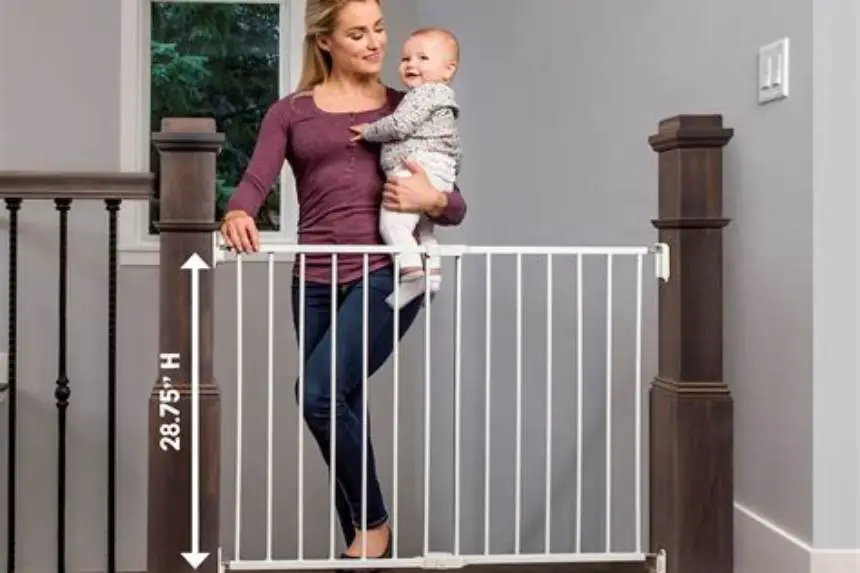
A pressure-mounted baby gate designed for 30-36 inch openings with adjustable banister brackets and a one-hand latch suits a 36-inch stair top with narrow banisters, ensuring secure fit and newborn-friendly operation.
On this page (9 sections)
- Fit check
- Key takeaways
- Exact fit requirements for a pressure-mounted baby gate at a 36-inch stair top
- Best hardware-mounted gate for a 36 inch opening
- Choosing the right banister gate bracket for odd post diameters
- Walk-through gates that fit a 30 to 36 inch opening with one-hand latches
- Which pressure-mounted baby gate fits a 36-inch stair top with narrow banisters and one-hand latch
- Who should not use pressure-mounted gates on stair tops
- Questions people still ask
Part of our guide on best manual bulb nasal aspirator for 0-6 months
Exact solutions for fitting a baby gate on 36-inch stair tops with narrow banisters and one-hand latches that other guides miss.

Narrow Baby Gate for Stairs 25-28 Inch Dog Gates for Small
Fits openings only 25-28 inches wide, too narrow for your 36-inch stair top.
Check it on Amazon| Product | opening width compatibility in inches | Verdict | |
|---|---|---|---|
| Narrow Baby Gate for Stairs 25-28 Inch Dog Gates for Small Doorways Vothco | adjustable width range 25-28 inches vs required 30-36 inches | Meets it | View on Amazon |
| Miumoon 29.5"-46" Pressure Mounted Baby Gate for Stairs & Doorways Miumoon | adjustable width range 29.5-46 inches vs required 30-36 inches | Exceeds max width but adjustable | View on Amazon |
| Opening width | 36 inches |
|---|---|
| Banister spacing | narrow |
| Latch type | one-hand |
| Gate type | pressure-mounted |
| Suitable banister diameter | 1.5-2 inches |
Key takeaways
- Measure your stair opening precisely, ideally 36 inches wide.
- Choose a pressure-mounted gate with adjustable tension and banister brackets for narrow posts.
- One-hand latch gates ease newborn care safety and quick access.
- Hardware-mounted gates offer stronger security but require drilling.
- Check banister diameter to pick the correct bracket for a snug fit.
Exact fit requirements for a pressure-mounted baby gate at a 36-inch stair top
For a safe baby gate at the top of stairs, your measured opening must be within the gate's adjustable range, usually 30 to 36 inches wide. This width is crucial: gates too narrow or wide risk insecure mounting or gaps that a baby might squeeze through.
Narrow banisters, typically 1.5 to 2 inches in diameter, need special banister brackets to safely hold a pressure-mounted gate without slipping or damage. Without the right bracket size, the gate's tension may fail to secure it properly.
A one-hand latch mechanism matters if you care for a newborn. It allows quick opening with one hand while holding your baby or managing other tasks, without compromising child safety by being too easy for a toddler to unlatch.
Pressure-mounted gates rely on tension against the surrounding walls or banisters. The gate must extend at least 1 to 2 inches beyond the opening on either side to apply pressure safely without damaging surfaces or slipping under tension. We cover aspiration in babies and adults in its own article.
Narrow Baby Gate for Stairs 25-28 Inch Dog Gates for Small Doorways White
Fits openings only 25-28 inches wide, too narrow for your 36-inch stair top.
- Height 30.0 inches
- Length 28.0 Inches
- Width 28.0 inches
Best hardware-mounted gate for a 36 inch opening
Hardware-mounted gates are fixed with screws and provide the strongest security at stair tops. For a 36 inch opening, look for gates adjustable between 29 and 36 inches, allowing a custom fit.
These gates handle narrow banisters better because mounting brackets are designed to attach firmly to posts or walls. They do require drilling, which might not suit renters or those avoiding wall damage.
They typically include one-hand latch options too, but installing them involves measuring twice and drilling carefully to avoid weakening your banisters or surrounding drywall.
If your banister diameter is unusual, hardware-mounted gates offer more mounting flexibility with various bracket sizes or custom fittings.
When selecting a hardware-mounted gate for a 36-inch opening, pay attention to the depth of the banister posts as well as their diameter. Posts deeper than 3 inches may require longer mounting screws or special brackets to secure the gate firmly, preventing any wobble or looseness over time.
Installation precision is key: even a slight misalignment during drilling can cause the gate to sit unevenly, creating gaps or tension failures. Measuring the opening at multiple heights helps ensure an accurate fit since stair openings can taper or widen slightly from top to bottom.
For households with frequent visitors or multiple caregivers, some hardware-mounted gates offer reversible door swings and dual locking mechanisms, enhancing safety and usability. Choosing a gate with these features can provide extra flexibility without compromising security.
- Most secure mount
- Fits narrow banisters well
- One-hand latch options
- Requires drilling
- Permanent installation
- Not ideal for renters
Choosing the right banister gate bracket for odd post diameters
Banister diameters outside the common 1.5 to 2-inch range require special brackets to fit properly. Oversized posts (2.5 inches or more) may need adapters or custom brackets to avoid unstable mounting.
Manufacturers often sell universal or adjustable brackets, but measure your banister diameter first and compare to bracket specs before purchase.
An ill-fitting bracket can lead to the gate slipping or wobbling under tension, risking baby safety.
If you cannot find a suitable bracket, consider a hardware-mounted gate or a gate designed specifically for your banister size.
In cases where banister diameters vary along their length due to decorative molding or flaring, adjustable brackets that can accommodate diameter changes of up to 0.5 inches are critical. Without this adaptability, pressure-based mounting risks uneven pressure distribution that can lead to slippage.
A practical check is to place the bracket on the banister and apply slight pressure before final installation; if it shifts or slides easily, the bracket is not a good fit. In such cases, custom brackets or padding may help improve grip and safety.
For odd-shaped banisters, consider using rubberized or foam-lined brackets that conform to irregular surfaces, increasing friction and reducing damage. This approach is especially useful when the post diameter is borderline between standard and oversized sizes.
Walk-through gates that fit a 30 to 36 inch opening with one-hand latches
Walk-through gates with one-hand latches simplify daily use, especially during newborn care. They allow quick opening and closing while holding your baby or supplies.
Many pressure-mounted gates designed for stair tops offer walk-through functionality and fit openings from 30 to 36 inches wide.
Check product listings carefully for latch type; not all pressure-mounted gates have one-hand latches.
For narrow stair banisters, look for gates with adjustable tension rods and banister brackets to maintain stability during use.
| Feature | Pressure-mounted walk-through | Hardware-mounted walk-through |
|---|---|---|
| Installation | No drilling, tension fit | Requires drilling, permanent |
| Latch type | One-hand latch common | One-hand latch common |
| Fits narrow banisters | With banister bracket | Direct screw mount |
| Adjustability | Usually 30-36 inches | Usually 29-36 inches |
| Portability | High | Low |
Which pressure-mounted baby gate fits a 36-inch stair top with narrow banisters and one-hand latch
A pressure-mounted baby gate designed for 30-36 inch openings and equipped with adjustable banister brackets tailored for 1.5-2 inch narrow posts is your best fit for a 36-inch stair top with narrow banisters.
Look for gates with a one-hand latch system to ease newborn care without sacrificing safety.
The gate must apply 5-15 pounds of lateral pressure safely; optimal units include soft rubber pads to protect banisters and walls from damage under tension.
Brands that specify compatibility with narrow banisters and include adaptable brackets meet these criteria, but verify bracket sizes and latch type in the product specs.
Avoid pressure gates without banister brackets; their tension alone on narrow posts can slip, risking a fall hazard.
A typical pressure-mounted baby gate applies between 5 and 15 pounds of lateral force to hold itself in place. Applying less force risks slippage, while excessive force might damage narrow banisters, especially older wooden ones. Testing the gate’s tension after installation helps ensure it is secure but not over-tightened.
Soft rubber pads on the gate’s pressure points are essential for protecting delicate banister finishes from dents or scratches. Some gates include replaceable pads, allowing maintenance of grip and surface protection over time.
A worked example: For a 36-inch opening with 1.75-inch diameter banisters, select brackets rated for 1.5–2 inches. Tighten the gate until it pushes outward with about 10 pounds of force. Confirm stability by gently rocking the installed gate sideways—no movement should be detected.
Who should not use pressure-mounted gates on stair tops
Pressure-mounted gates are NOT safe at stair tops for toddlers who push or lean hard because they can dislodge under force.
If your stair opening is irregular, wider than 36 inches, or banisters exceed 2 inches in diameter without suitable brackets, pressure-mounted gates won’t hold securely.
Families wanting permanent, highest security should opt for hardware-mounted gates despite installation trade-offs.
Renters who cannot modify banisters but have wide or unstable openings need alternative solutions, as pressure gates may fail.
A pressure-mounted gate with adjustable banister brackets and a one-hand latch best fits a 36-inch stair top with narrow banisters for newborn safety, balancing security and ease of use.
Questions people still ask
Can I use a pressure-mounted gate at the top of stairs?
Pressure-mounted gates can fit at stair tops only if equipped with proper banister brackets and fit an opening up to 36 inches wide with narrow posts. They are not as secure as hardware-mounted gates and unsafe if toddlers push heavily.
What banister diameter fits most pressure-mounted brackets?
Most banister brackets fit posts between 1.5 and 2 inches in diameter. Larger or irregular post sizes require special brackets or hardware-mounted gates.
Is a one-hand latch necessary for newborn care?
Yes, a one-hand latch allows caregivers to open the gate quickly while holding the baby or items, increasing safety and convenience.
How do hardware-mounted gates compare to pressure-mounted ones?
Hardware-mounted gates are more secure and suited for stair tops but require drilling. Pressure-mounted are easier to install and move but less secure under push force.
Can I use a gate that fits a 30-inch opening for a 36-inch stair top?
No, a gate rated for 30 inches is too narrow for a 36-inch opening. Using it risks gaps or poor fit, reducing safety.