Running with a jogging stroller: what actually changes
Yes. Expect a meaningfully higher effort at the same pace. As a rule of thumb, most runners need to slow down 30–60 seconds per mile, but your result depends on stroller weight, child weight, wheel setup, wind, and terrain. Downhill momentum can reduce leg effort, though controlling the stroller still takes work.
On this page (9 sections)
- What matters most
- Why running with a jogging stroller takes more effort
- Your stride and posture change during a stroller run
- Fixed front wheels need less steering effort
- Downhill momentum can reduce leg effort
- Regular strollers are not designed for running
- Age, weight limits, and weather need attention
- A gradual routine makes stroller running easier
- Questions people still ask
Part of our guide on baby jogger city mini gt2 single to double
The numbers
- Stroller weight range
- 20–35 lbs depending on model
- Rule-of-thumb pace change
- Often 30–60 seconds per mile slower
- Downhill comparison
- Momentum can reduce leg effort, but control still takes work
- Typical child weight limit
- 50–75 lbs depending on model
- Minimum age guidance
- Often 6 months, subject to the stroller manual
- Fixed-wheel advantage
- Less steering correction on straight paths
What matters most
- A jogging stroller adds push resistance from its frame, child, and stored gear.
- Your stride shortens, and your cadence often rises to keep you moving smoothly.
- A fixed front wheel needs less steering correction and upper-body effort on straight paths.
- Alternate pushing hands every few minutes, or use both hands when control matters.
- Regular strollers are parking tools, not running equipment.
- Wind, clothing, child weight, stroller weight, and terrain change the effort you feel.
Why running with a jogging stroller takes more effort
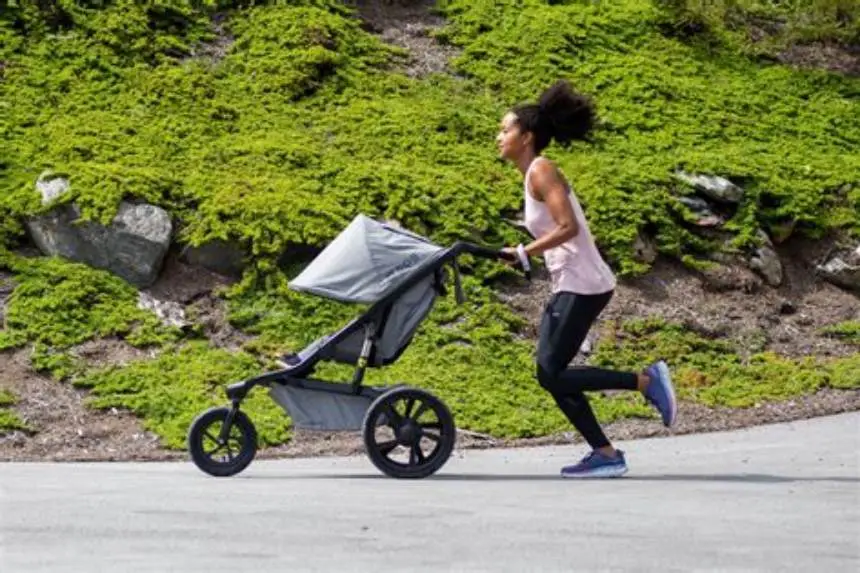
A stroller adds weight ahead of your body. You push the frame, child, and gear while keeping the stroller on line. That creates more work than running without a load.
Expect your heart rate to run higher than usual at the same pace. Exact effort varies with stroller weight, child weight, wheel resistance, surface, wind, and hills. A heavy child on grass feels different from a light stroller on smooth pavement.
Your shoulders, arms, chest, and core help manage the handle. Your legs still provide the main drive, but your upper body now controls another moving object. That can make your neck and shoulders tire before your legs.
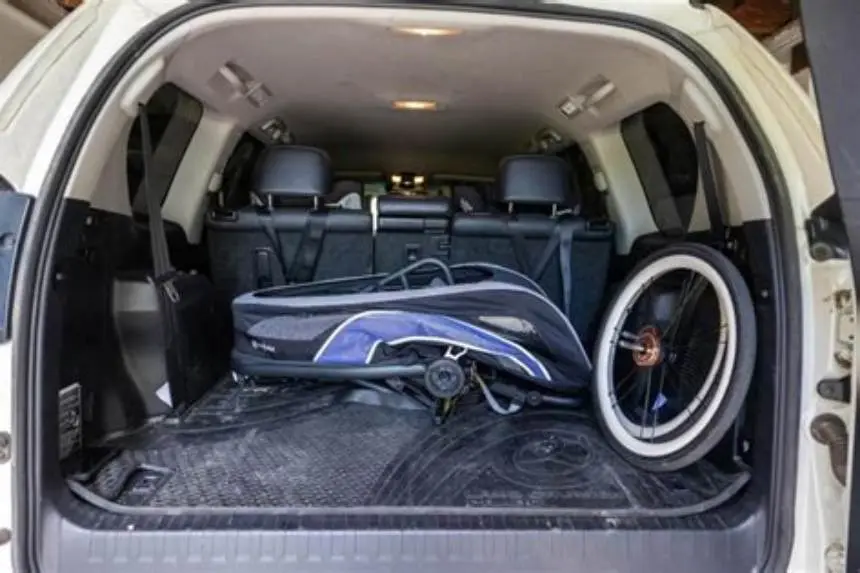
Treat the pace estimate as a starting point, not a measurement. Run an easy route and compare breathing, heart rate, and recovery with a similar solo run. Adjust your pace from there. People in this spot often ask about checking folded dimensions against your trunk as well.
Your stride and posture change during a stroller run
Your stride often changes when you push a stroller. The handle limits your arm swing and can shorten your reach. Your rhythm may change as your arms no longer swing freely. Test your usual pace instead of assuming a fixed slowdown.
Two-handed pushing gives you steadier control and a more even shoulder position. Keep your elbows soft and your chest lifted. Let the stroller roll beside your body, rather than reaching far ahead. Small changes matter over several kilometres.
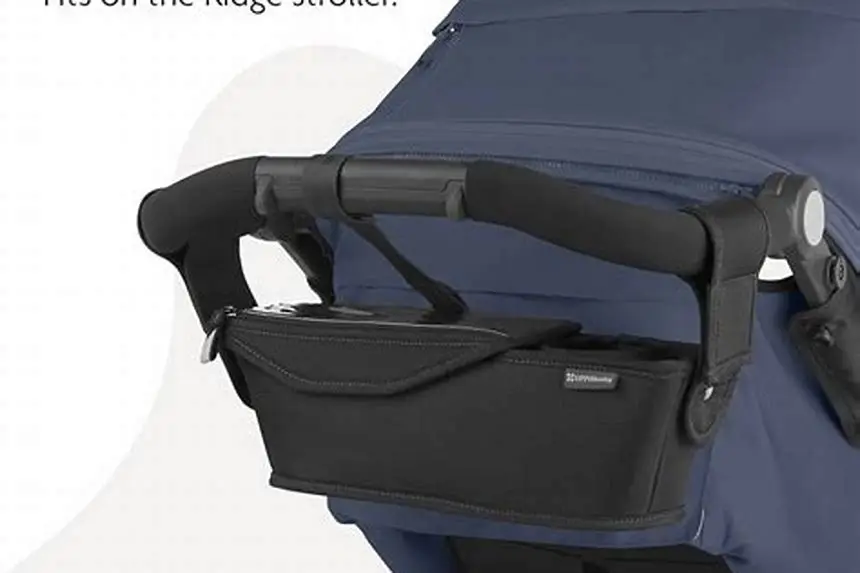
One-handed pushing frees one arm, but it can load your body unevenly. Your steering shoulder may rise, and your trunk may turn toward the handle. Switch hands every few minutes on a clear, level path. Use both hands near crossings, turns, rough ground, and crowded areas. There is more on stroller with console pocket in a separate guide.
Protect your lower back and wrists. Keep the handle close, avoid bending from the waist, and steer with relaxed hands. Stop if pain changes your stride or grip. Running with reduced visibility can also increase stress, so choose routes with clear sightlines and safe road crossings.
Use the stroller's wrist strap when you run, if fitted. Keep it attached without pulling your shoulder forward. A chest strap can help on models designed with one, but it should feel secure rather than restrictive.
Fixed front wheels need less steering effort
A fixed front wheel requires less steering correction on a straight path. The stroller tracks forward, so your hands and upper body do less work holding the line. That directional benefit is real, but it doesn't remove the push resistance. Before you commit to anything, it is worth looking at taking a kid trailer on paris metro.
A swivel front wheel turns more easily in tight spaces. It helps on winding paths, crowded sidewalks, and routes with frequent changes. The trade-off is more steering input when you want the stroller to travel straight.
Choose the wheel setup for your usual route. Fixed wheels suit open paths and steady running. Swivel wheels suit routes where turning matters more than straight-line efficiency.
Fixed wheels can catch on roots, edges, or rough ground if you approach badly. Slow down, keep both hands ready, and follow the stroller maker's instructions for locking or releasing the wheel.
A fixed wheel is not automatically safer everywhere. Good control depends on the surface, speed, visibility, and your ability to stop.
| Wheel Type | Steering Effort | Straight-Line Ease | Maneuverability | Best Terrain |
|---|---|---|---|---|
| Fixed | Less correction on straight paths | Easier to hold a line | Needs more planning for turns | Open park paths and steady routes |
| Swivel | More correction when tracking straight | Needs more active steering | Easier in tight spaces | Winding paths and crowded areas |
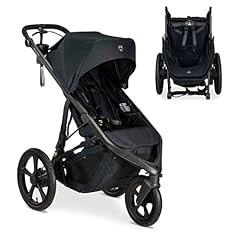
BOB Gear Wayfinder Jogging Stroller
When you want to actually run rather than walk, the front wheel locks solid and the wrist strap plus hand brake keep the stroller with you on downhills, so you are not fighting steering correction or a runaway on slopes.
Downhill momentum can reduce leg effort
A gentle downhill can reduce the pushing force needed from your legs. Gravity helps the stroller roll, especially on a smooth surface. The same momentum can make stopping harder. Keep the descent familiar and leave space ahead.
Shorten your stride and keep your body upright. Don't let the stroller pull your shoulders forward. Use the approved hand brake if your model has one, but keep your pace slow enough to stop without it.
Downhill running still increases impact and control demands. It isn't a substitute for easy interval training. A stroller can roll faster than you expect, especially with a heavier child or a smooth path.
Route shape changes the whole effort. Climbs demand more force, while descents return some momentum. Wind matters too. A broad stroller can create noticeable resistance against a headwind, even on level ground.
Check the tyres before every longer run. Use the pressure printed on the tyre sidewall or listed in your stroller manual. Underinflated tyres increase rolling resistance and can make steering feel heavy. Overinflation can reduce comfort and grip, so don't guess beyond the stated range.
Choose roads with clear sightlines and visible crossings. Avoid downhill approaches where parked cars hide you from traffic. Slow before every crossing, keep both hands ready, and confirm drivers can see you before entering the road.
Regular strollers are not designed for running
Standard strollers are not designed for running speeds. Their small swivel wheels can shimmy or catch at jogging pace. A sudden veer can disturb your balance and make the stroller hard to control.
Regular stroller brakes are parking brakes only. They are meant to hold a stationary stroller, not manage speed or sudden stops while running. Don't use the parking brake as a downhill speed control.
Regular strollers also wear quickly under running's impact loads. Their frames and wheels are not tested for repeated running impact. A stroller may still roll, but wear can change its handling before damage is obvious.
Jogging strollers usually have larger wheels, a longer wheelbase, and a frame designed for running use. They still require careful handling. Check the manual before running, and inspect tires, fasteners, wheel locks, and the harness.
Keep the child secured with the manufacturer's harness. Use the parent wrist strap on every run. Stop if the stroller pulls, rattles, veers, or develops play in a wheel.
Age, weight limits, and weather need attention
Many jogging stroller manuals set a minimum age of 6 months for running. Infants need head and neck support suited to the stroller's design. Follow the exact manual for your model, including any separate guidance for walking and running.
Weight limits commonly range from 50–75 lbs, depending on the stroller. Count the child and any stored gear if the manufacturer says the limit includes both. A heavier load changes steering, braking, and the effort needed to push.
Dress the child for the weather, not for your effort. Your body warms quickly while running, but the child sits still. Use breathable layers in cold weather and shade, ventilation, and suitable clothing in warm weather.
Wind deserves its own check. A large canopy can catch a headwind, while a crosswind can affect tracking. Choose a sheltered route when conditions are strong, and check the stroller's stability before continuing.
Rain changes grip and visibility. Wet surfaces lengthen stopping distance and can make painted lines, leaves, and smooth paving slippery. Skip the run if conditions make control uncertain.
A gradual routine makes stroller running easier
Start on a smooth, flat route. Keep the first sessions short enough to assess your shoulders, wrists, back, and breathing. Add distance only after the load feels controlled.
Warm up without the stroller if you can. A brief easy jog prepares your legs and lets you check the route. Then attach the stroller and begin at a pace you can hold comfortably.
Keep your gaze ahead instead of staring at the front wheel. Relax your grip, keep your shoulders low, and let the stroller roll rather than pulling it toward you.
Alternate hands on clear, straight sections. Use both hands for turns, crossings, rough ground, descents, and crowded areas. Stop if your form becomes twisted or your grip starts to fail.
Mix stroller runs with solo runs. Solo running lets you practise unrestricted arm swing and faster pacing. Stroller running adds practical resistance, but it should not replace every session.
Questions people still ask
Can I run with a jogging stroller if I'm a beginner runner?
Yes, if the stroller is designed for running and you build gradually. Start with an easy, flat route and focus on control rather than pace. Expect a meaningfully higher effort at the same pace, so use the rule-of-thumb pace adjustment in the main answer. Run solo when you need to build basic running tolerance without the added load.
Does a jogging stroller work for twins or a second child in a carrier?
Use a stroller rated for the combined load. Check whether the stated limit includes children, gear, or both. A second child in a carrier changes your balance and adds load directly to your body. Use the carrier maker's running guidance, and don't assume a setup approved for walking is approved for running.
Should I do all my runs with a jogging stroller, or just some?
Mix stroller and solo runs. Solo runs let you practise speed and natural arm movement. Stroller runs teach you to control a moving load. Reduce the stroller sessions if your shoulders, hips, back, or wrists stay sore between runs.
What's the best way to warm up for a stroller run?
Warm up with easy movement before attaching the stroller when possible. Check the harness, wrist strap, tires, and wheel lock. Start the stroller portion slowly, then settle into an effort you can control. Don't repeat the pace adjustment as a separate rule.
Will stroller running train me for faster solo running?
It can build tolerance for pushing and controlling resistance, but the stroller changes your arm swing and stride. Keep speed work solo if you want to practise race form. Use the stroller for easy running and practical strength, not for every hard session.