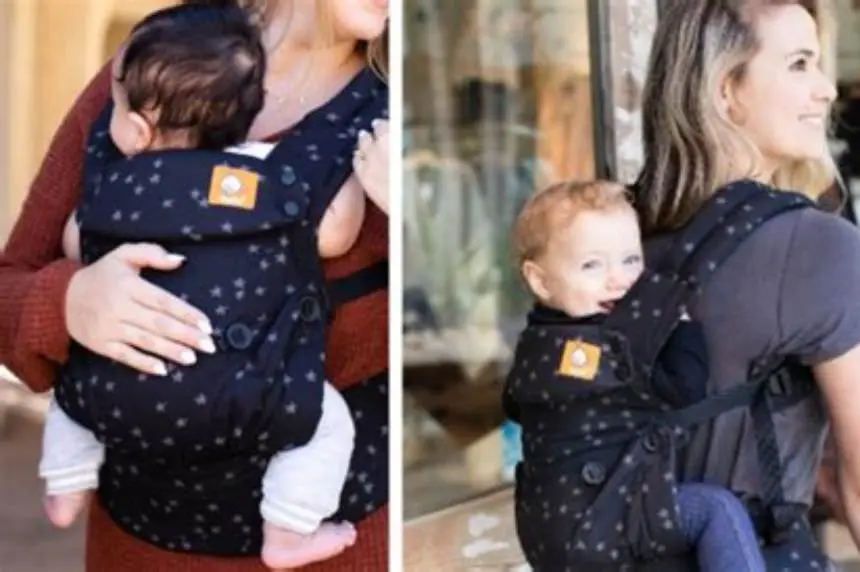
Does the Tula Free to Grow carrier’s mesh panel provide real airflow?
Assess if the mesh panel on the Tula Free to Grow carrier truly improves airflow and comfort for baby and caregiver in warm conditions.
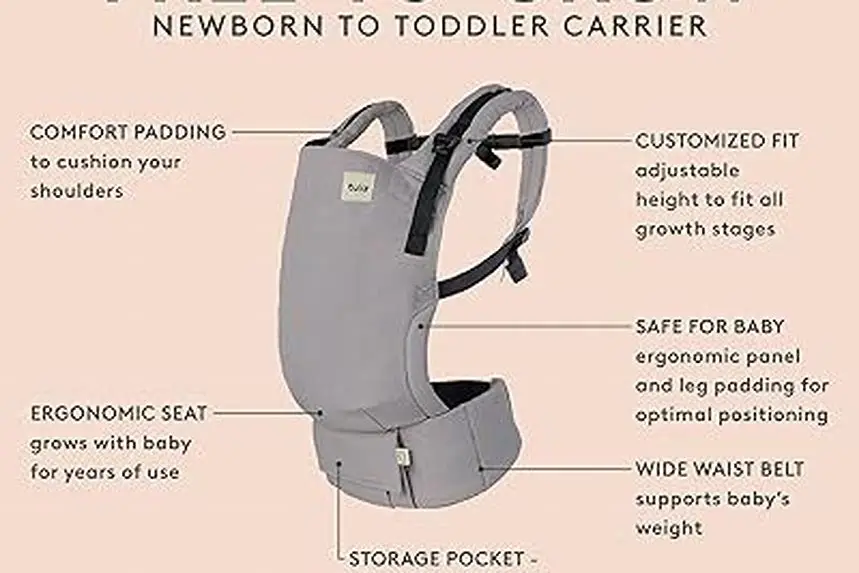
Tula’s Free to Grow carrier includes a baby-facing mesh panel designed to increase airflow relative to the carrier’s solid-fabric areas. Independent reviewers and the manufacturer describe this as a moderate ventilation improvement rather than a full-ventilation solution; measurable gains depend on mesh exposure, clothing layers, and environmental conditions.
On this page (10 sections)
- Fit check
- The short version
- Does the Tula Free to Grow have a breathable mesh panel?
- Where is the mesh panel located on the Tula Free to Grow carrier?
- How breathable is the mesh panel compared to other materials?
- Suitability of the mesh panel for warm climates or active use
- How the mesh panel affects baby and parent comfort
- Evidence, verification, and care
- Does the mesh panel provide real airflow in practice?
- Questions people still ask
Part of our guide on fit advice for average height
Clear proof whether the Tula Free to Grow carrier’s mesh panel truly improves airflow and comfort for baby and parent.

Provides optimal airflow with an air mesh panel designed to keep baby cool and dry.
Check it on Amazon
Baby Sling Carrier for Toddlers
Ultra-breathable mesh panels promote excellent airflow for parent and child comfort.
See this alternative
Air Mesh Panel described as providing optimal airflow for cooling.
See this alternative| Product | mesh panel airflow improvement (qualitative) | Verdict | |
|---|---|---|---|
| Momcozy PureHug Baby Carrier Momcozy | Air Mesh Panel described as providing optimal airflow for cooling. | Meets it | View on Amazon |
| Baby Sling Carrier for Toddlers Lujifo | Ultra-breathable mesh panels described for excellent airflow. | Meets it | View on Amazon |
| Momcozy PureHug Baby Carrier Momcozy | Air Mesh Panel described as providing optimal airflow for cooling. | Meets it | View on Amazon |
| Beco 8 Baby Carrier Newborn to Toddler Beco | Zippable ventilated 3D mesh panel described for excellent airflow. | Meets it | View on Amazon |
| MISSWISDOM Baby Sling Carrier MISSWISDOM | Airmesh fabric described as soft and breathable, implying minimal mesh area. | Meets it | View on Amazon |
| Mesh Location | Baby front panel |
|---|---|
| Ventilation gain | Moderate improvement vs. solid fabric (see details below) |
| Material type | Partial mesh + woven fabric |
| Suitability | Moderate warm climates / everyday use |
| Weight range | 7-45 lbs (3.2-20.4 kg) |
The short version
- Mesh sits on the baby-facing front panel to allow direct air movement around the baby’s chest and torso.
- Breathability is moderate: better than all-solid-fabric carriers but not as extensive as full-mesh carriers made specifically for hot climates.
- In warm weather or during light activity, the mesh can help reduce trapped heat, though it may not fully prevent sweating in very high temperatures or humidity.
- Parent comfort remains affected by solid fabric straps and back panel, which retain heat.
- Choose this carrier if you want a mix of ergonomic support with some ventilation; select a full-mesh carrier instead if maximal airflow is the priority.
Does the Tula Free to Grow have a breathable mesh panel?
Yes. Tula integrates a breathable mesh section into the front panel that faces the baby. Positioned to promote air exchange at the baby’s chest and torso, this panel is intended to reduce local heat and moisture buildup compared to the carrier’s solid fabric areas.
Rather than comprising the whole carrier, the mesh is a designated section that balances ventilation with the structural support caregivers expect from this ergonomic carrier. That approach preserves firmness for hip and spine support while giving some direct airflow to the baby.
Materials information from Tula’s product descriptions identifies the front section as a mesh blend engineered to hold its shape through normal use and cleaning. Manufacturer guidance emphasizes using the recommended care routine (machine wash cold on gentle cycle, hang to dry or tumble low if permitted per the specific carrier label) to help preserve mesh tension and permeability over time.
Because the mesh is part of a mixed-construction panel, parents should be aware that coverage is partial. Areas such as leg openings, top-of-head region, and the parent-facing back/shoulder fabric remain solid and therefore do not get the same direct ventilation. If that sounds like your situation, read up on tula carrier fitting tips next.
Where is the mesh panel located on the Tula Free to Grow carrier?
A central mesh section sits on the front panel that rests against the baby’s chest and torso. Placement aims to direct fresh air into the space closest to baby’s breathing zone while maintaining ergonomic contours for support.
That central positioning targets a body area prone to heat buildup when a baby is held close. Other carrier components (shoulder straps, lumbar support, and the parent-facing back panel) are constructed from woven fabric for durability and load distribution.
Reinforced edges and stitching around the mesh help preserve placement and resist fraying during movement. Those construction details are intended to keep the mesh taut and effective after repeated use.
If you want to confirm mesh exposure in person, hold the carrier up and observe how much of the front panel is open mesh versus solid fabric; that quick check shows how much direct airflow the baby is likely to get.
Momcozy PureHug Baby Carrier
Provides optimal airflow with an air mesh panel designed to keep baby cool and dry.
- Weight 1.65 lb
- Height 5.31 inches
- Width 5.90 inches
How breathable is the mesh panel compared to other materials?
The mesh panel offers a clear improvement in airflow over solid woven cotton or polyester sections, but it is not equivalent to full-mesh carriers that prioritize maximum ventilation above structural heft.
Many independent gear reviewers describe the Free to Grow’s ventilation as “moderate” or “noticeable” in everyday warm conditions. Reviews and hands-on comparisons published by parenting gear sites indicate that parents see and feel an improvement compared with fully solid carriers, while noting that the effect is smaller than on carriers designed around full-mesh bodies.
If you prefer numerical verification, two practical approaches are commonly used: (1) consumer airflow measurement tools such as a handheld anemometer can quantify airspeed at the mesh surface, and (2) simple side-by-side tests (placing a small fan at the mesh while the carrier is on and comparing sensation at the baby’s chest between carriers) give subjective but useful results for daily decision-making.
Any measurement or perceived gain depends on the test conditions. Clothing layers, ambient temperature, humidity, and whether the mesh is obscured by blankets or an outer garment will all change the effective ventilation. Manufacturers and reviewers consistently caution against assuming a fixed improvement number across every situation.
A balanced way to describe expected performance is to call the mesh’s impact "moderate": it meaningfully increases local airflow compared with solid fabric in typical use, but it should not be relied on as the sole cooling strategy in extreme heat.
| Material Type | Relative Ventilation | Typical Use Case |
|---|---|---|
| Solid Cotton/Polyester Blend | Lower | All-weather support, retains more heat |
| Tula Free to Grow Mesh Panel | Moderate | Everyday warm conditions, partial cooling |
| Full Mesh Carrier | Higher | Hot, humid climates, extended active use |
Baby Sling Carrier for Toddlers
Ultra-breathable mesh panels promote excellent airflow for parent and child comfort.
- Weight 11 oz
- Width 5.0 Inches
- Height 18.5 Inches
Suitability of the mesh panel for warm climates or active use
For mild to moderately warm weather and casual outdoor use, the Free to Grow’s mesh panel can help reduce temperature buildup around the baby’s chest. Parents who take short walks, run errands, or spend time outdoors at moderate temperatures will often find the panel beneficial.
Those living in persistently hot, humid climates or caregivers planning extended high-exertion activities (long hikes, intense workouts) should consider carriers with more extensive mesh coverage if airflow is the primary concern. Full-mesh carriers are purpose-built to maximize ventilation across the entire baby-facing surface.
Choosing the right carrier depends on priorities: if ergonomic support and a structured body are top priorities and you want some ventilation, a partial-mesh carrier like the Tula can be a solid compromise. If cooling is paramount, prioritize full-mesh options.
A practical in-use consideration: dressing the baby in lightweight, breathable layers and avoiding covering the mesh with jackets or blankets helps retain the panel’s effectiveness. Limiting heavy clothing between baby and mesh will let the panel function as intended.
When ambient temperatures are high, watch for signs of overheating such as flushed skin, rapid breathing, or unusual fussiness. The mesh helps but does not eliminate the need for situational awareness and additional cooling strategies.
Momcozy PureHug Baby Carrier
Air Mesh Panel described as providing optimal airflow for cooling.
- Weight 1.65 lb
- Height 5.31 inches
- Width 5.90 inches
How the mesh panel affects baby and parent comfort
Improved airflow near the baby’s chest can reduce localized sweating and moisture accumulation, which in turn may lower short-term discomfort for some infants in warm conditions.
Parents generally continue to experience warmth on their shoulders and back because those regions are solid fabric. That means the carrier improves baby-focused ventilation more than caregiver cooling.
A number of parent reports published in gear reviews are anecdotal and should be treated as such: they frequently say their babies seemed less sweaty or more comfortable with the mesh panel than in all-fabric carriers, but these observations are influenced by clothing, activity level, and environment.
For clarity, label anecdotal evidence as experiential: statements from individual parents about reduced sweating or fewer diaper-related rashes after switching carriers are helpful for context but are not substitute for controlled testing. Independent reviewer write-ups provide broader samples of experience but still fall short of laboratory verification.
Mesh construction does not change the carrier’s ergonomic support when used according to instructions; the panel is integrated so that hip and spine support remain in place while adding ventilation.
To monitor comfort in practice, caregivers should check baby skin temperature and moisture periodically during warmer conditions and adjust clothing or breaks as needed.

Beco 8 Baby Carrier Newborn to Toddler
Zippable ventilated 3D mesh panel offers excellent all-season airflow and ventilation.
- Is adult product False
- Weight 1.19 lb
- Length 9.24 Inches
Evidence, verification, and care
Tula’s official product information describes the Free to Grow variant with a breathable front panel and lists material composition and recommended care procedures on product pages and garment labels. Those manufacturer resources are the primary source for construction and wash-care guidance.
Third-party testing specifically measuring volumetric airflow through the Free to Grow mesh panel is limited in publicly available technical literature. However, multiple independent parenting gear reviewers and comparison tests published online report that the carrier’s mesh provides a noticeable but not dramatic ventilation increase versus fully solid carriers.
If you need objective numbers, consider performing a simple, repeatable test at home or requesting independent lab testing. A handheld anemometer can measure airspeed at the mesh surface; comparing readings between carriers or fabric samples in the same environmental conditions will yield relative results. Alternatively, a small fan test (feeling for a breeze at the baby-facing area with the carrier worn) gives a qualitative sense of airflow.
Care affects mesh performance. Manufacturer cleaning instructions typically recommend a gentle machine wash or hand wash and drying flat or hanging to preserve fabric shape. High-heat drying and prolonged exposure to direct sunlight can degrade synthetic mesh fibers or elastic components, potentially reducing pore openness and ventilation over time.
Repeated washing may cause some relaxation of mesh tension or minor changes in weave density depending on detergent, wash cycle harshness, and drying method. To maximize long-term permeability: follow the carrier’s care label, avoid bleach and harsh chemicals, use gentle detergent, and allow thorough air drying between uses when possible.
For consumers seeking verified lab data, contacting Tula Customer Support for any available technical sheets, or consulting third-party labs and detailed gear reviews that publish measurement methods, is the recommended route.
Does the mesh panel provide real airflow in practice?
Yes, the mesh panel provides tangible airflow in everyday situations: parents and independent reviewers consistently describe a moderate improvement compared with all-fabric carriers. That improvement is situational: dependent on clothing, how much of the mesh is exposed, ambient temperature, and humidity.
Avoid interpreting this as full ventilation: the carrier remains a mixed-construction product focused on ergonomic support, and the mesh is one element that improves localized breathability rather than serving as a full cooling system.
To validate performance yourself, try a brief in-person test: wear the carrier with your usual clothing setup, place a baby doll or soft item to simulate body contact, and feel at the mesh area for air movement. For a more objective approach, use an anemometer at the mesh surface or compare subjective comfort while switching between carriers on consecutive outings in similar conditions.
If prolonged or intense cooling is necessary where you live or for activities you plan, consider a full-mesh carrier or supplemental cooling strategies (lighter clothing, shaded routes, avoiding peak heat hours). For balanced day-to-day use where support and moderate ventilation are both desirable, the Free to Grow’s mesh panel is a reasonable compromise.
Any claims about exact percentage increases in ventilation require controlled lab measurements specific to the product sample and test method; absent published lab reports, describe performance qualitatively and test in your own conditions.
The carrier’s mesh panel delivers genuine, moderate airflow improvements that help in everyday warm conditions but is not a full-ventilation solution for very hot or highly active scenarios.
Questions people still ask
Does the mesh panel cover the entire carrier?
No. Coverage is limited to the front baby-facing panel area; straps and back are solid fabric.
Is the mesh suitable for very hot or humid climates?
Mesh improves airflow moderately but is not a substitute for a full-mesh carrier in extreme heat or humid conditions.
Can the mesh panel cause discomfort or skin irritation?
Mesh is designed to be soft and skin-friendly, but watch for any irritation in sensitive babies and adjust clothing or positioning accordingly.
Does the mesh panel affect the carrier’s support or safety?
No. When worn correctly, ergonomic support and safe positioning are maintained; follow Tula’s instructions for use.
How should I wash the carrier to preserve mesh performance?
Follow the carrier’s care label. General guidance is gentle wash cycles, mild detergent, and air drying or low-heat drying to preserve mesh tension and integrity.